

The thirty-third edition of the wine-and-food project “Vino uz Žlicu” (Wine by the Spoon) was held in Samobor, a favourite gastronomic destination of Zagreb residents — and of guests from across the border, in Slovenia.
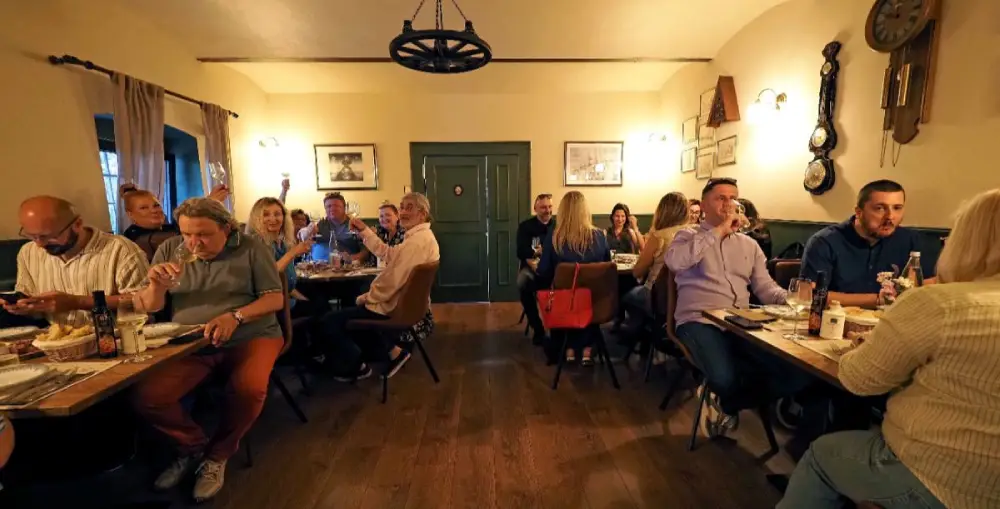
The evening’s host was the restaurant Pri Staroj Vuri, set in the 19th-century Šojka villa surrounded by greenery and a park. Decorated in an old-world spirit with ethnographic objects and clocks, the restaurant nurtures the tradition of Samobor cuisine. It is now run by Domagoj Vujnović, a young restaurateur with international experience who has given traditional dishes a more contemporary culinary stamp.
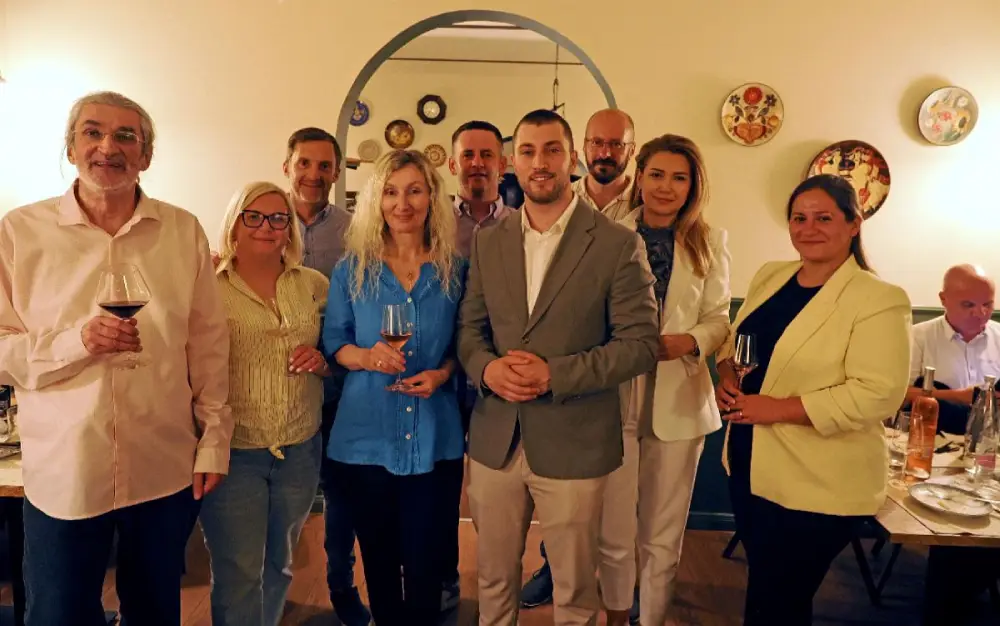
“We want to restore the restaurant’s old glory while holding to tradition, culture and history. We have modernised the kitchen a little, but with no intention of turning it into fine dining. Local specialities will remain the foundation of our cooking, but prepared and presented in a more modern way,” said Domagoj Vujnović.
Before dinner, guests had the chance to taste the widely known Samobor Bermet Philipecz, the most recognisable drink of this region. Its rich aromatics — a blend of wine, spices and herbs — and its characteristic bitterness and sweetness proved an ideal introduction to the wine-and-food evening. Bermet once again confirmed why, for decades now, it has been an inescapable part of Samobor tradition and identity. It was presented by Antun Filipec, the seventh generation of the well-known Samobor family that has produced Bermet for more than two centuries — a kind of trademark of Samobor. Bermet is an aromatised bitter-sweet wine made from selected grape varieties from the Samobor hills, wormwood, southern fruits and ingredients the Filipec family keeps as their strictest secret.
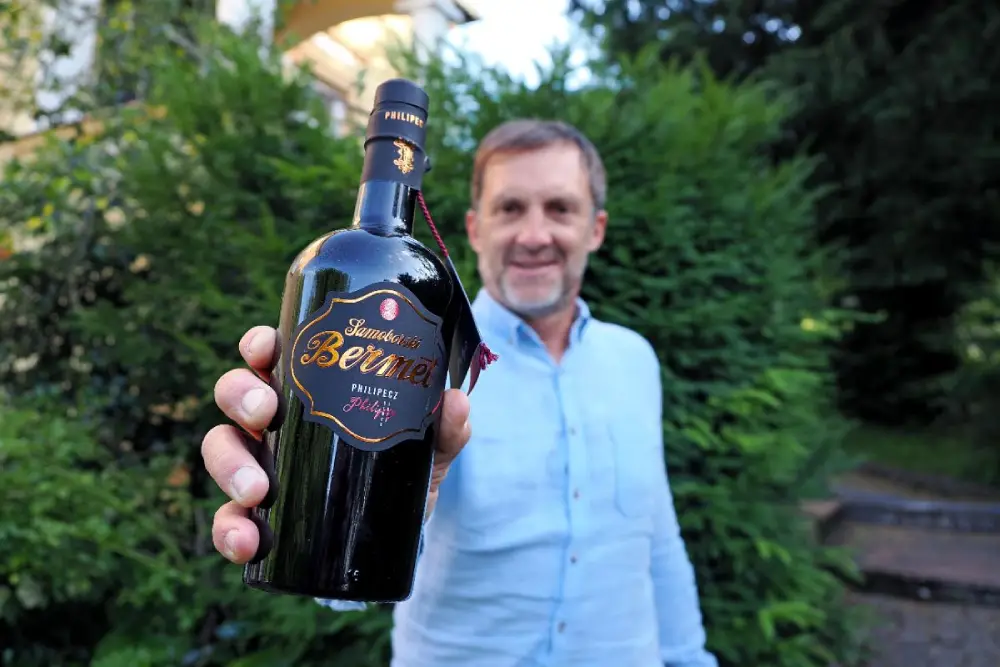
It is enjoyed as an aperitif or digestif, and given the popularity of spritzes, Antun has devised a refreshing Bermet Spritz from Bermet, the Joco sparkling wine and tonic. It is drunk well chilled with ice, while in the digestif version it is recommended chilled to 14°C, without ice or lemon. Under the brand Philipecz — as the family name was once written — the family also produces Samobor mustard, prepared from crushed mustard seed cooked with a specially made grape must. In addition, their cellar boasts fine wines: Cuvée Roko Prestige, Rosé Tia, Pinot Gris, Graševina, Frankovka, Cabernet Sauvignon and the aforementioned Joco sparkling.
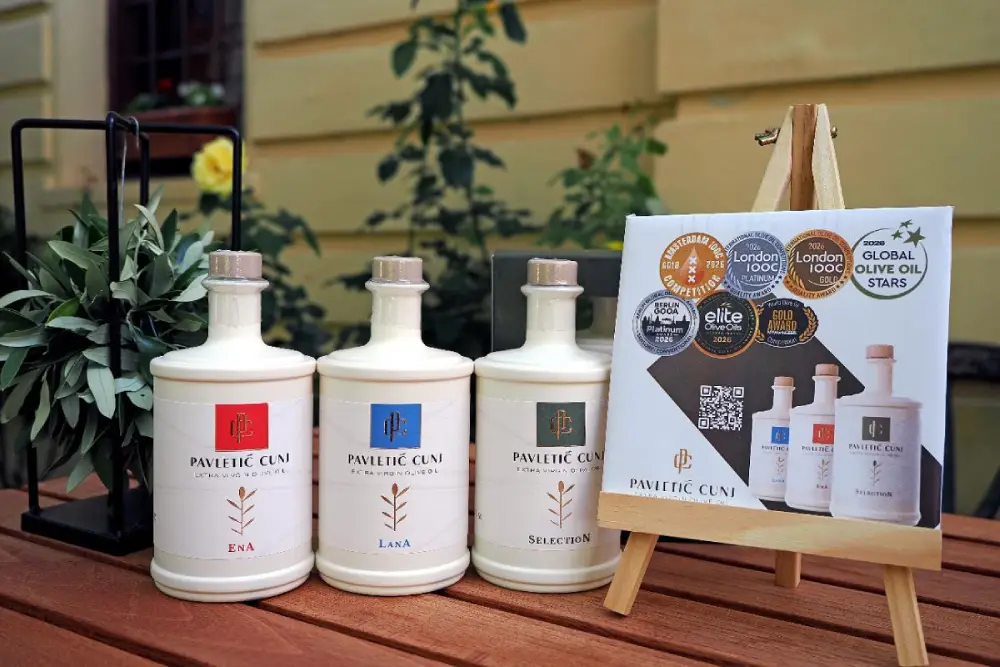
With home-made bread came a selection of extra-virgin olive oils from Pavletić Cunj, which stood out for their freshness, fruity character and harmonious pungency. The Krbavčić family farm sits at the very north of Istria, near Buzet. Nikolina Krbavčić Ratoša presented the oils — Ena (Leccino), Lana (Istarska Bjelica) and Selekcija (Istarska Bjelica, Leccino and Pendolino). The family grove of 400 trees in the village of Cunj is the only olive-growing oasis in that part of Istria, where Mediterranean mildness meets a sharp mountain climate, creating perfect conditions for top-class olive oil. Notes of Mediterranean herbs and green olive came through nicely at the start of the evening, showing how much a quality olive oil can enrich the gastronomic experience.
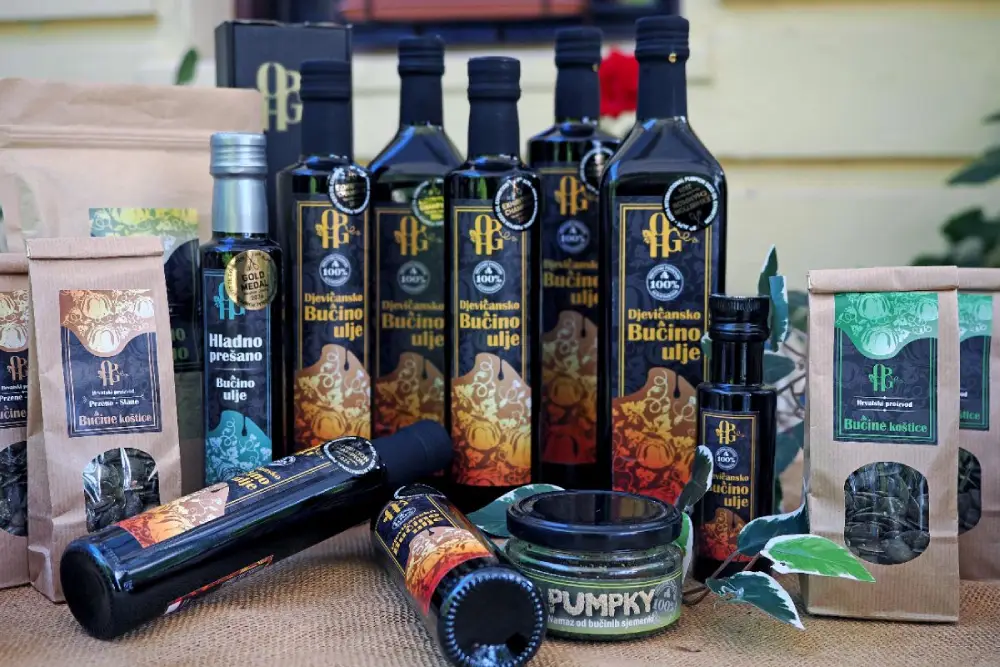
Also tasted was the pumpkin seed oil of OPG Hukavec from Šašinovec near Sesvete, produced from carefully processed seeds of home-grown pumpkins. Spouses Renata and Dražen Hukavec have been producing pumpkin seed oil for 11 years, helped by their daughters. They grow pumpkins on 15 hectares and produce between 2,500 and 3,000 litres of oil a year. Alongside hot- and cold-pressed pumpkin seed oil, they offer salted and chocolate-covered pumpkin seeds and pumpkin seed flour. At the 8th international Alpe-Adria pumpkin seed oil show in Varaždin, in the largest field yet, OPG Hukavec’s virgin pumpkin seed oil was named champion. Its pronounced nutty aroma, full texture and recognisable scent fitted beautifully with the home-made bread and further underlined the continental character of the evening.
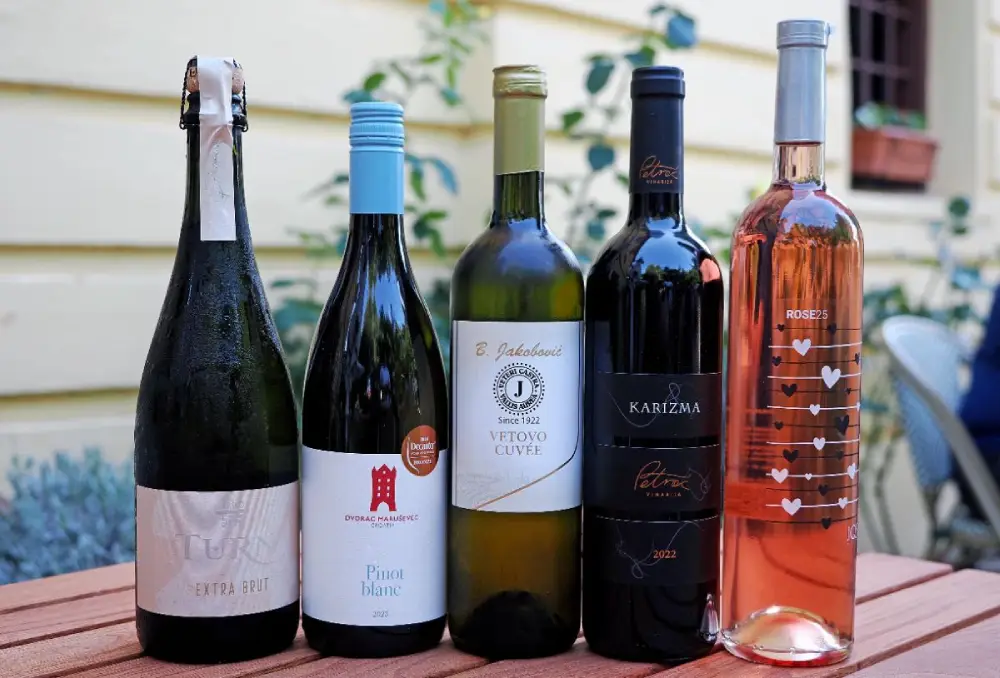
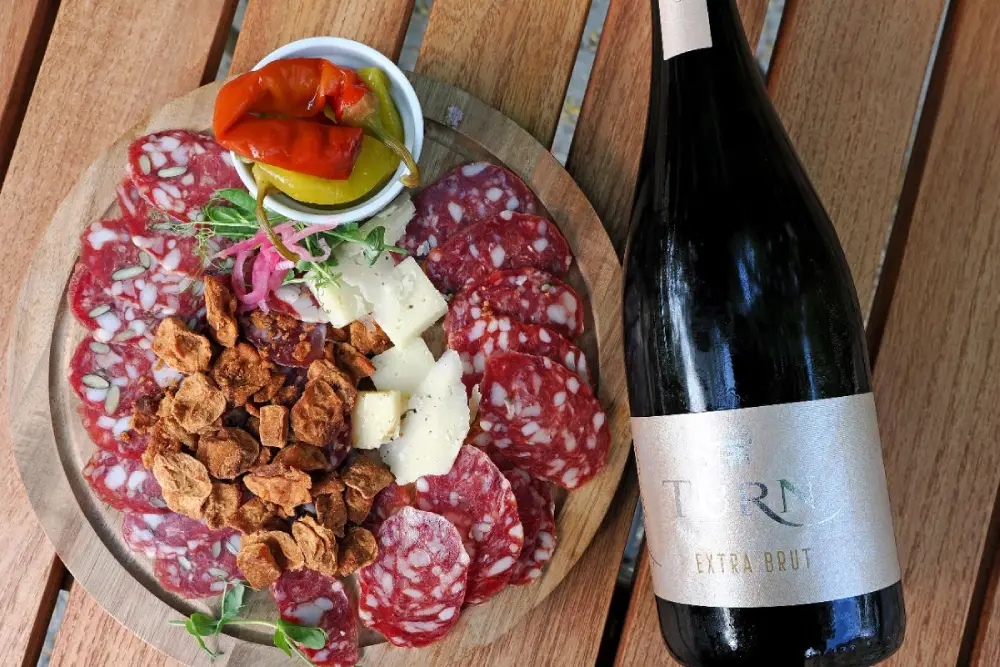
The first course brought cured delicacies from the Samobor area by the producer Igomat alongside the Turn Premium Extra Brut sparkling wine of Klet Krško. Among the traditional meat products were Samobor salami with pumpkin seeds, Samobor salami with walnuts and the classic Samobor salami. Finely sliced, richly aromatic and pleasantly salty, they paired excellently with an elegant sparkling wine of lively acidity and fine bubbles. The Turn Premium Extra Brut brought the needed freshness and playfulness, opening the dinner in the best possible way. It is made from the Kraljevina variety by the classic method, aged one year in stainless steel and a further two years in the bottle before release. Oenologist Gašper Repše noted that Klet Krško brings together around 200 grower families who tend 200 hectares of vineyards in the Dolenjska region near the Croatian border. Their wines are slowly entering the Croatian market, beginning with Cviček, which they have protected internationally. Their headquarters are in Krško, and the cellar is in the historic wine cellar of the 18th-century Šrajbarski Turn castle, after which their premium Turn line of more ambitious wines and sparklers is named.
Next came risotto with courgettes and courgette flower alongside the Pinot Blanc 2023 of Maruševec Castle. The gentle flavours of courgette and the creamy texture of the risotto linked very harmoniously with a fresh, elegant wine that brought notes of tropical fruit and pleasant minerality. The Pinot Blanc further underlined the refinement of the dish, creating a balanced and elegant pairing. Oenologist Marija Martinez pointed out that their Pinot Blanc has a more intense, slightly straw colour gained through ageing, yet has kept its freshness. A true spring wine for a spring risotto! Maruševec Castle is 15 km from Varaždin, surrounded by an impressive park and highly sought after for events and weddings. The complex now operates as Maruševec Estate. It is owned by the Slovenian branch of the noble Pongratz-Lippitt family and, besides its tourism offering, has a forest, a farm of Turopolje pigs and a winery with around a dozen labels. Thanks to its Baroque architecture and preserved setting, Maruševec Castle is often used as a film backdrop; some scenes of “Glembajevi” were shot there, and recently the docudrama “Zrinski”.
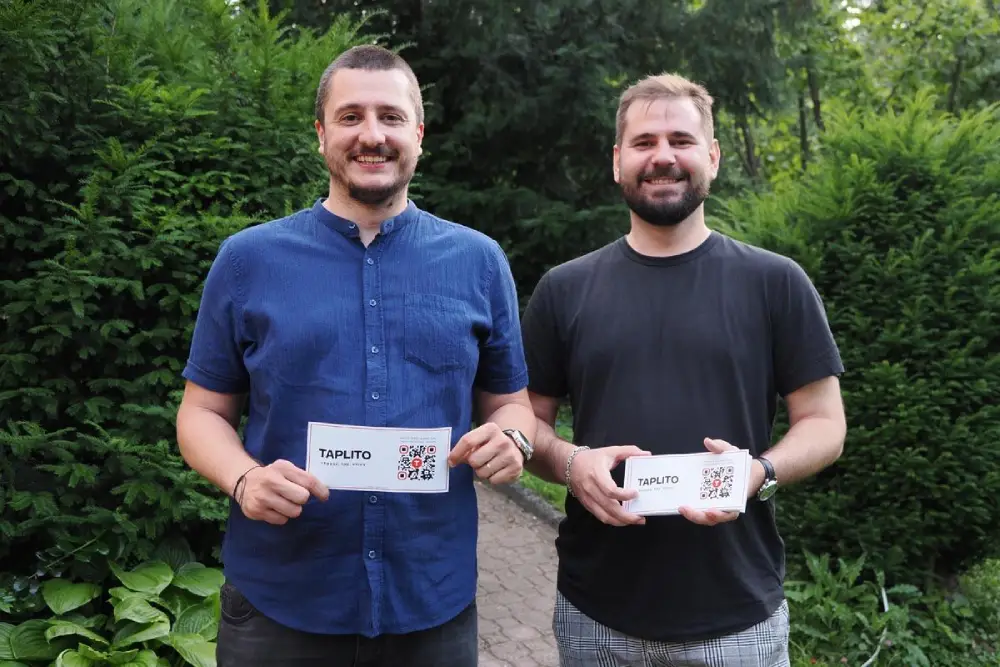
The evening also featured a presentation of the Taplito app, a modern digital solution for hospitality, discussed by Sandro Kalaica and Valentino Dujić. It is a Croatian B2B platform that lets guests view the menu, order and pay via a QR code — without, they stressed, installing any app. The system is linked to the Remaris till, works directly in the mobile browser (Safari, Chrome), and is aimed at restaurants, cafés and bars looking to achieve fast, efficient service. The Taplito presentation showed how digital tools are increasingly becoming an important part of modern hospitality.
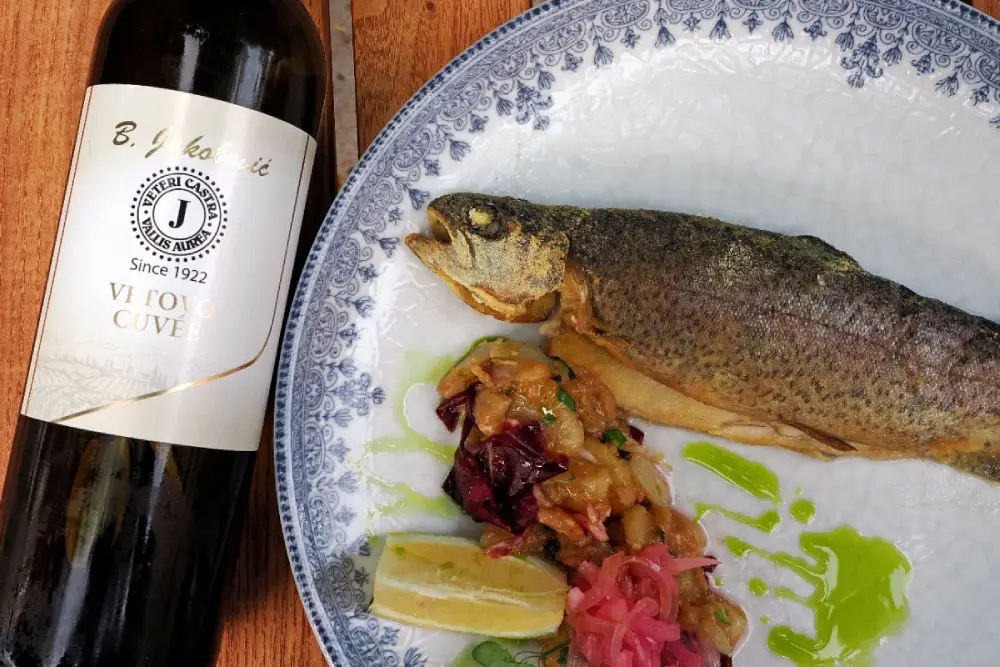
The third course was trout in cornmeal alongside the Jakobović Vetovo Cuvée 2024. The crisp crust and juicy fish flesh joined nicely with a wine defined by freshness, fruitiness and a pleasant fullness. The Vetovo Cuvée showed enough character to follow the aromatics of the dish while keeping a lightness that further underlined the quality of the trout. The wine was presented by Maja Jakobović, who handles the family’s marketing side while her brothers Filip and Nino work in the vineyard and cellar. Behind them is a century-old tradition; the modern winery was founded by their father Branko Jakobović, and they trade under the B. Jakobović label. The Vetovo Cuvée, a blend of four varieties (Graševina, Chardonnay, Pinot Gris and Rhine Riesling), is named after their village in the Kutjevo wine district, considered among the finer sites. Each of those varieties gave its best qualities to the bottle — a distinctive bouquet and a mix of fresh fruit scents and aromas. In the glass the wine leans closer to a fuller off-dry than a dry style, precisely because of its pronounced fruitiness and roundness.
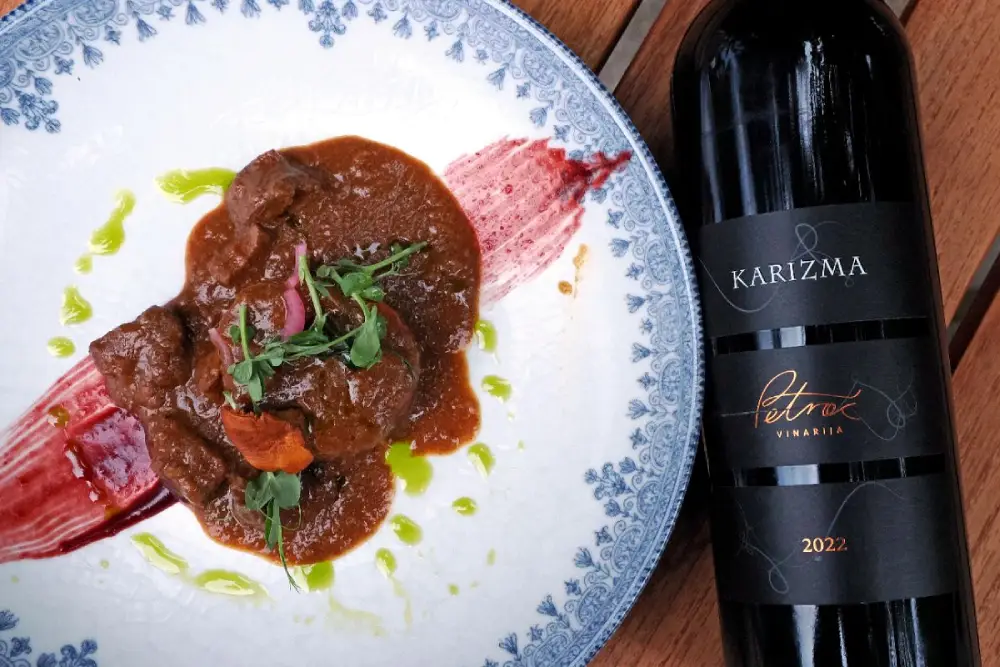
Game goulash with dumplings alongside Petrač Karizma 2022 made a truly special pairing, so it is no surprise that the journalists and guests present at the 33rd Vino uz Žlicu voted it the best. The rich, aromatic, slow-cooked venison and wild boar called for a wine of stronger character, and Karizma proved an excellent choice. Ripe fruit notes, good structure and harmonious tannins linked very nicely with the intensity of the dish. Karizma is the flagship of the Petrač winery from Hršak Breg near Krapinske Toplice and ranks among the finest reds of Zagorje. Nenad Trifunović, the popular blogger Vinopija, speaking of Karizma, called it one of the best Croatian Bordeaux blends — and it is especially interesting that it comes from Zagorje, where before Petrač no one grew quality red varieties seriously. It is a blend of 70% Cabernet Sauvignon and 30% Merlot aged in oak barrels, which gives the wine added complexity and roundness. The nose is dominated by blackcurrant, blueberry and plum jam, with fine notes of vanilla. “All in all, a very drinkable, serious wine, a classic Bordeaux,” Trifunović added.
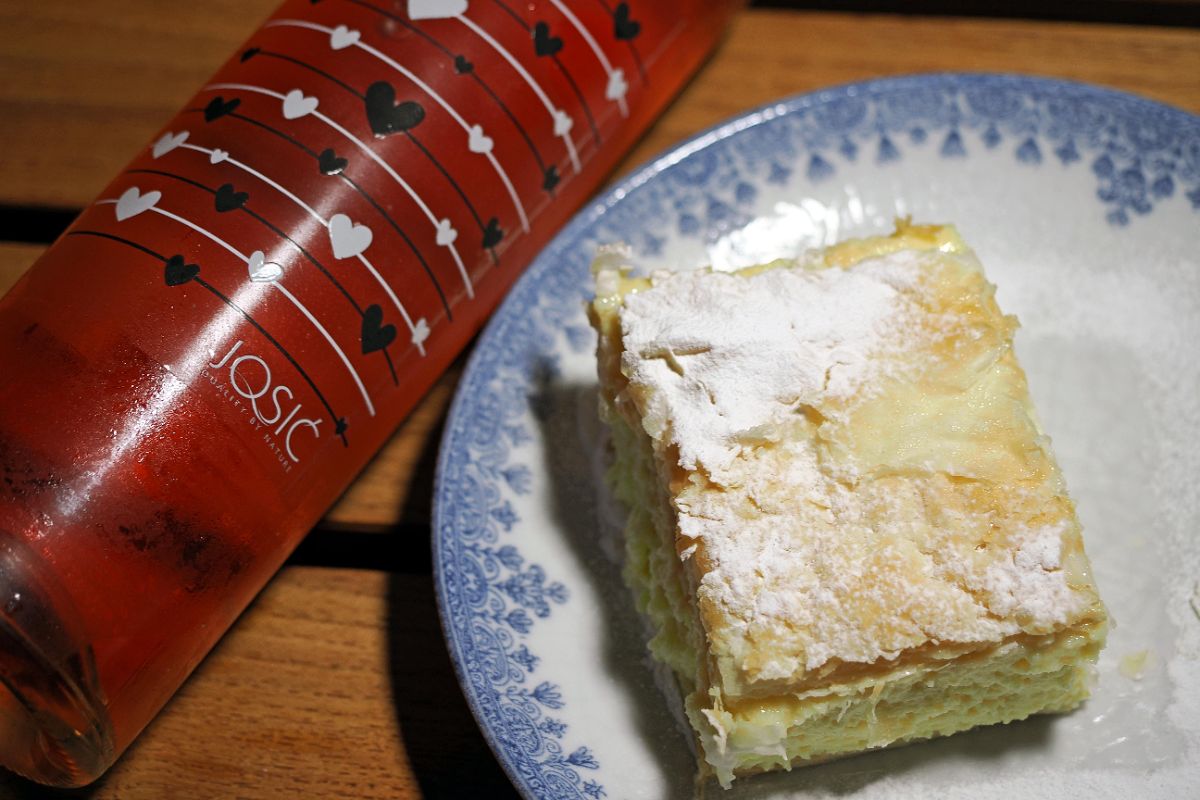
He also presented the last wine of the evening, Josić Rosé Dea Pannonium 2025, served with the inescapable Samobor cream slice. The light cream and crisp puff pastry complemented the fruity character of the rosé beautifully, dominated by notes of strawberry, raspberry and red berries. The wine’s freshness kept the end of the dinner from being too heavy, so this pairing brought a characteristic Samobor conclusion to the gastronomic story. “This wine is an absolute hit, Josić’s best-selling wine and the most popular rosé in Croatia,” Trifunović noted. “If someone asked me how to make the most successful wine on the market, I would recommend a sweetish rosé that appeals to women. But how it is done, you would have to ask winemaker Damir Josić, because many have tried something similar and failed. His Rosé is made from four varieties — Cabernet Sauvignon, Cabernet Franc, Syrah and Merlot — in which sweetness and acidity are superbly balanced.” It should be added that Damir Josić, who trained at the renowned Italian gastronomy school ALMA, actively took part in creating this pairing. Ahead of agreeing to take part in the event, we sent him the recipe for the Samobor cream slice, which he made at his restaurant in Zmajevac in Baranja, tasted it with the Rosé and was pleasantly surprised by the combined flavours. Perhaps, after this experience, the Samobor cream slice will find a place among the desserts at his restaurant.
The wine-and-food project Vino uz Žlicu, organised by Renata Cisar and Mustafa Topčagić, successfully wrapped up its 33rd edition amid good spirits and socialising in a relaxed, rustic setting. The restaurant Pri Staroj Vuri was a splendid host, confirming that it is the right choice for enjoying top gastronomic delicacies and wines — more than reason enough to return to this Samobor oasis.
FAMA / Photo: Nikola Zoko