


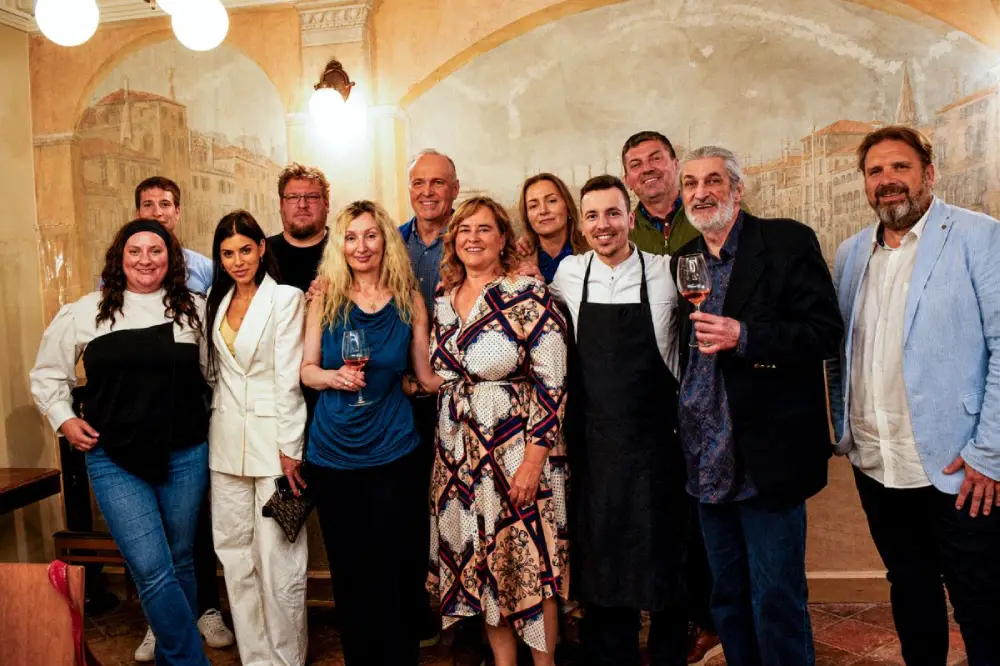
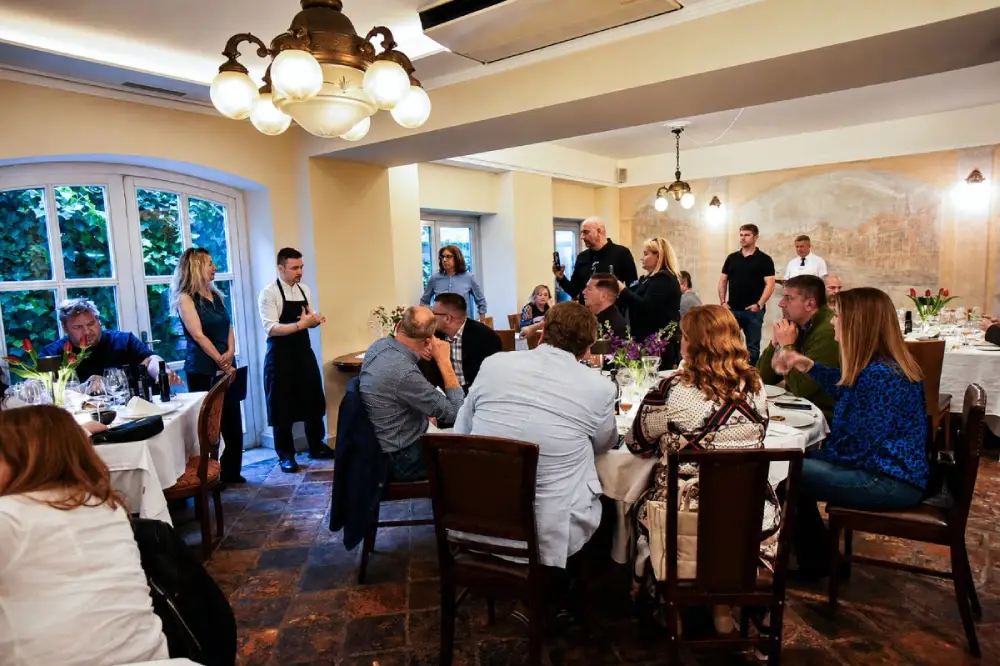
The thirty-second edition of the eno-gastro project Vino uz žlicu was held in Zagreb, at the renowned Gallo restaurant, owned by Iva and Renato Tomlinović.
Gallo is considered one of the essential addresses of Zagreb’s gastronomic scene, known for its elegant ambience, refined Mediterranean cuisine and carefully conceived dishes that combine local ingredients with a contemporary approach to cooking, all overseen by chef Siniša Jevrosimov. Special emphasis is placed on the freshness of ingredients, seasonality and precisely balanced flavours, which is why the concept of the Vino uz žlicu project fits naturally into the philosophy of this Michelin-recommended restaurant. The young chef stressed that it is the ingredients that dictate the kitchen’s tempo, so they focus on the very best they can obtain from the Adriatic Sea and from local continental suppliers. Gallo also bakes its own bread in several highly imaginative versions: sourdough, rice bread and porcini brioche with butter.
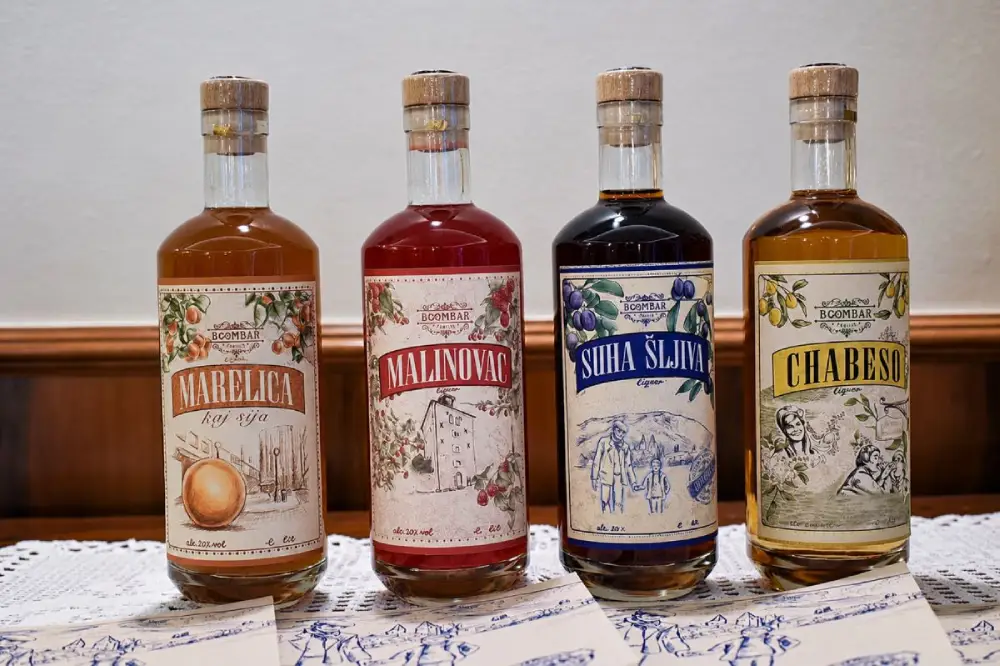
Before the start of the 32nd Vino uz žlicu, the eno-gastro project run by Renata Cisar and Mustafa Topčagić, guests’ appetites were opened by the premium liqueurs of the Zagreb brand Boombar familia. Kristina Ćurić, who together with her husband Antonio has run the distillery for 15 years, presented their new liqueurs: Chabeso (with the addition of ripe elderflower and the finest Neretva lemons), Malinovac (captivating with the full flavour of fragrant raspberries and its sweetness), Marelica (of lavish aromas and an entirely new taste) and Suha šljiva (from the finest plums, ideally dried and macerated). All the liqueurs contain 20% alcohol, and Chabeso and Malinovac stand out as they revive the tradition of old Zagreb liqueurs and further underline the city’s character. The playfulness and pronounced aromatics of the Boombar familia liqueurs proved an excellent introduction to the eno-gastronomic evening, creating a relaxed atmosphere and preparing the palate for the sequence of dishes and wines.

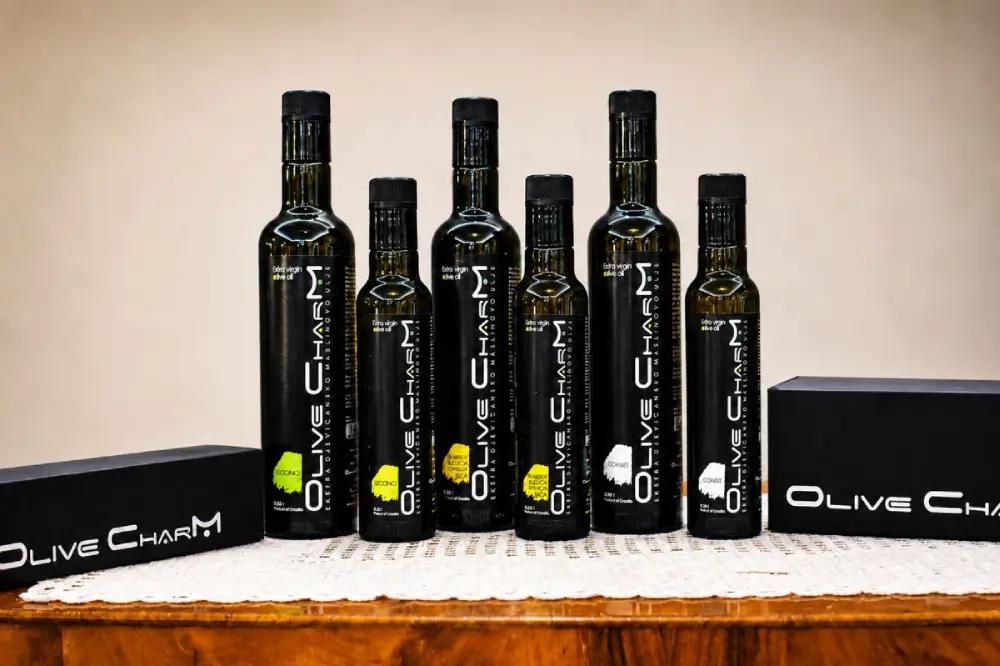
Guests also tasted the extra virgin olive oil Olive Charm from Umag, which with its fresh, fruity and elegantly piquant character rounded off the opening part of the evening beautifully. The married couple Gabriela Žic Turković and Aleksandar Turković have nurtured this family tradition for 25 years, and their brand was named in keeping with the belief that their oils bring a special charm to life. Of the six labels in their range, Gabriela Žic Turković presented Odabir (an ideal blend of six different varieties), Leccino (of pronounced fresh, fruity olive flavour) and Blend 3S (Istarska bjelica, Istarska črnica and Buža). This olive oil cultivates a pronounced aromatics of Mediterranean herbs and freshly cut grass, with a harmonious bitterness and piquancy that came especially to the fore alongside bread and light bites. Olive Charm showed just how important a top-quality olive oil can be as a gastronomic element and a kind of prelude to what follows.
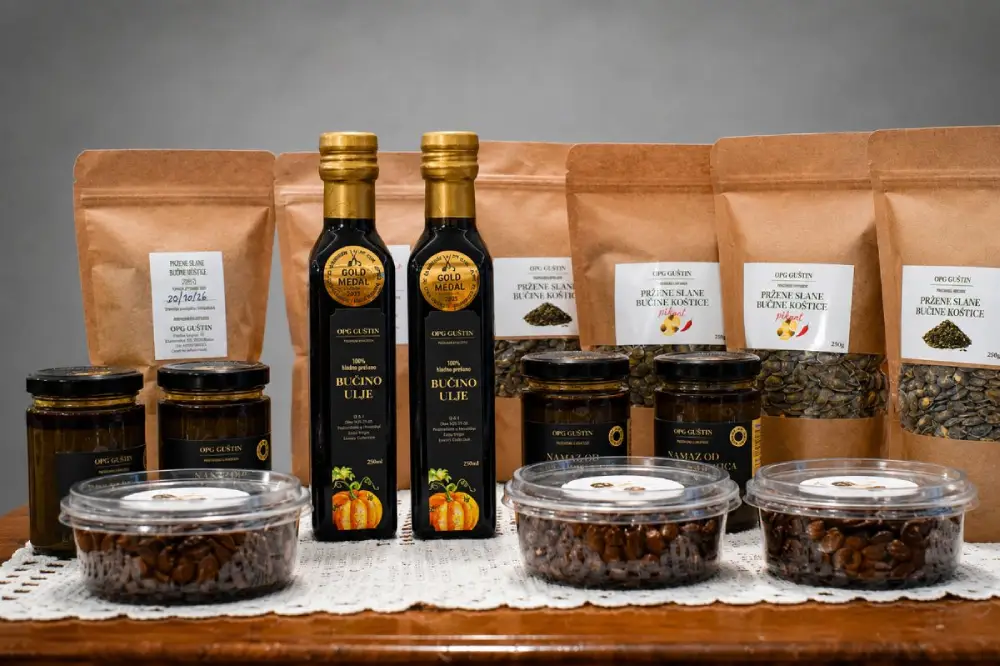
Alongside warm homemade bread rolls, guests also tasted the premium pumpkin-seed oil of OPG Guštin from Karlovac. Owner Josip Guštin, who began producing pumpkin-seed oil modestly five years ago, today already cultivates pumpkins, barley and other high-quality raw materials for his products on 14 hectares. Alongside hot- and cold-pressed oil, the varied range also includes roasted salted pumpkin seeds, spreads made from roasted seeds, pumpkin flour, honey, barley porridge, and, for true sweet tooths, pumpkin seeds in chocolate. In recent years OPG Guštin has become ever more recognisable among genuine lovers of healthy homemade products. Their pumpkin-seed oil, of authentic aroma and flavour, is lovingly produced from carefully roasted seeds and distinguished by pronounced nutty notes and full aroma. It splendidly complemented the selected delicacies and once again confirmed how much a quality pumpkin-seed oil can enrich the gastronomic experience.
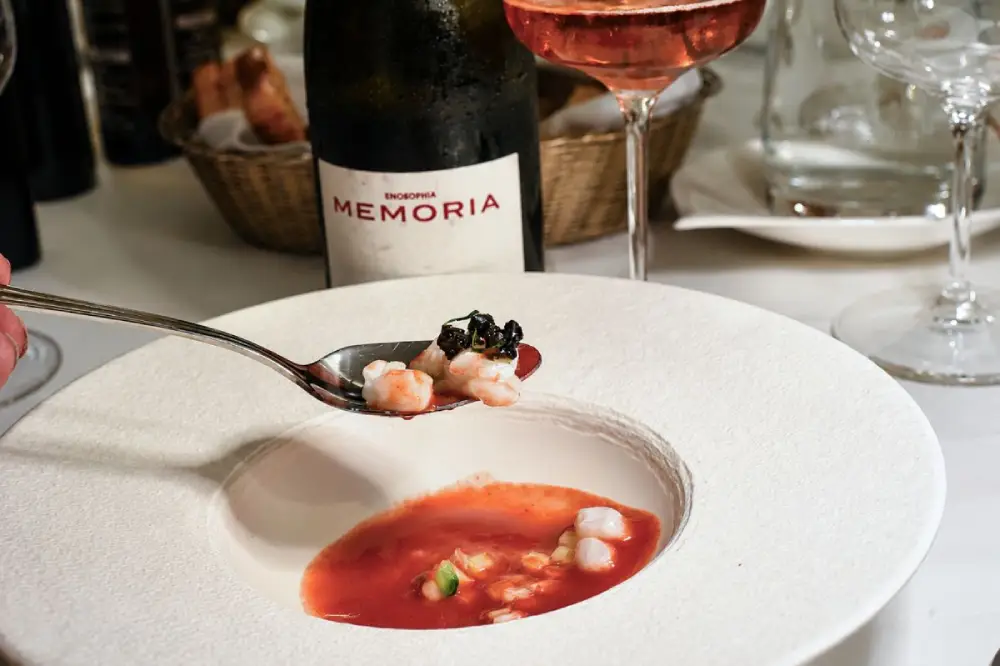
The dinner began with a refreshing strawberry Gazpacho with pieces of monkfish, served with the Enosophia Memoria Rosé Brut. The union of the fruity freshness of the strawberries and the delicate texture of the fish was superbly accompanied by the elegant rosé sparkler with its fine perlage and lively acidity. Memoria Rosé Brut offered notes of red berries and citrus freshness, creating a very harmonious and light introduction to the dinner. The sparkling wine, made from 100% hand-picked Frankovka from Feričanci in Slavonia, was presented by its representative for the Zagreb region, Hrvoje Sarić. The vintage was 2021, and the grapes were first processed in stainless-steel tanks before, a year later, the wine was drawn off into bottle. It aged for three years on the fine lees, then was disgorged with the addition of expedition liqueur. The result is a sparkling wine of pronounced freshness and a harmony of medium body with a lovely finish.
The dinner began with a refreshing strawberry Gazpacho with pieces of monkfish, served with the Enosophia Memoria Rosé Brut. The union of the fruity freshness of the strawberries and the delicate texture of the fish was superbly accompanied by the elegant rosé sparkler with its fine perlage and lively acidity. Memoria Rosé Brut offered notes of red berries and citrus freshness, creating a very harmonious and light introduction to the dinner. The sparkling wine, made from 100% hand-picked Frankovka from Feričanci in Slavonia, was presented by its representative for the Zagreb region, Hrvoje Sarić. The vintage was 2021, and the grapes were first processed in stainless-steel tanks before, a year later, the wine was drawn off into bottle. It aged for three years on the fine lees, then was disgorged with the addition of expedition liqueur. The result is a sparkling wine of pronounced freshness and a harmony of medium body with a lovely finish.
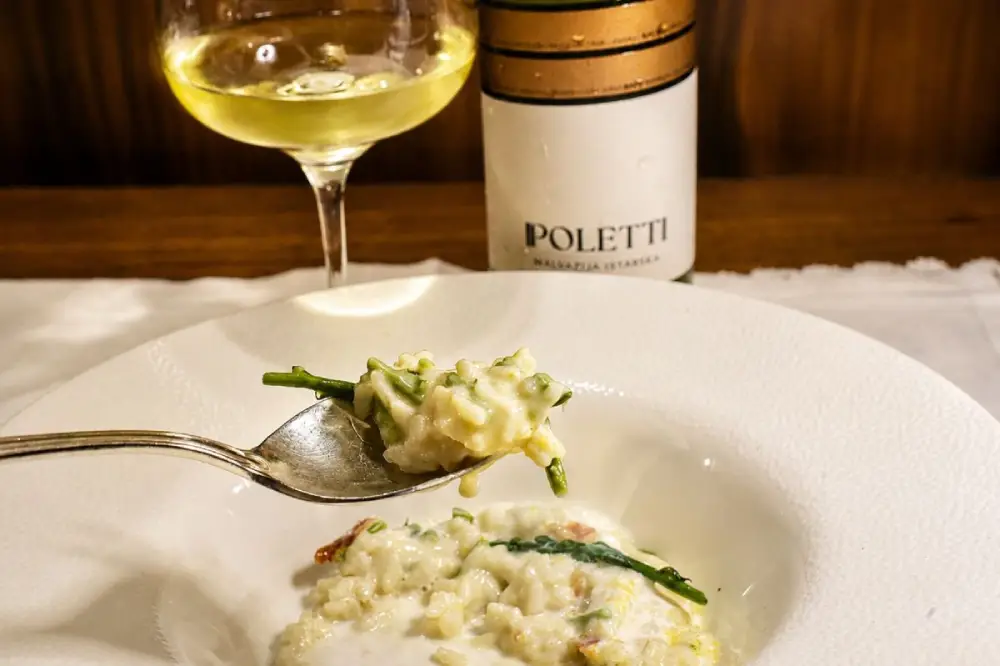
Next came a Risotto of wild asparagus with Pag cheese foam and egg yolk, alongside Poletti Malvazija 2025. The freshness and herbal quality of the asparagus paired very nicely with the pronounced fruitiness and minerality of the Malvazija (Malvazija Istarska, Istria’s flagship white). The wine further emphasised the creaminess of the risotto, while its fine acidity kept the whole pairing fresh. Poletti Malvazija proved an elegant and precise companion to this spring dish, and was presented in person by Peter Poletti from Višnjan in Istria. ‘My father told me: make the kind of wine you want to drink! I still hold to that philosophy today,’ he said in his inspired address. He noted that his son Matteo is the eighth generation of the family devoted to wine since 1786. This is also highlighted on the wine labels, along with a listing of the ancestors’ names. ‘We do not suffer from a craving for size and quantity; we do not want to be slaves to the work but to enjoy it,’ he summed up the Poletti family’s guiding thread.
As part of this eno-gastronomic evening, LogBook was also presented, a new digital platform for smart hospitality, promoted by Maja Šarić and Vedran Jakominić, both with previous experience in hospitality. This platform, Maja Šarić emphasised, is a Croatian product, intended for hospitality operators whom it can greatly help in their day-to-day business. The app was created as a response to the concrete challenges restaurateurs often face, for instance a lack of time, disconnected systems, too much administration and too little clear oversight. The goal is to unite all key processes into a single platform that is simple, intuitive and adapted to the real pace of hospitality.
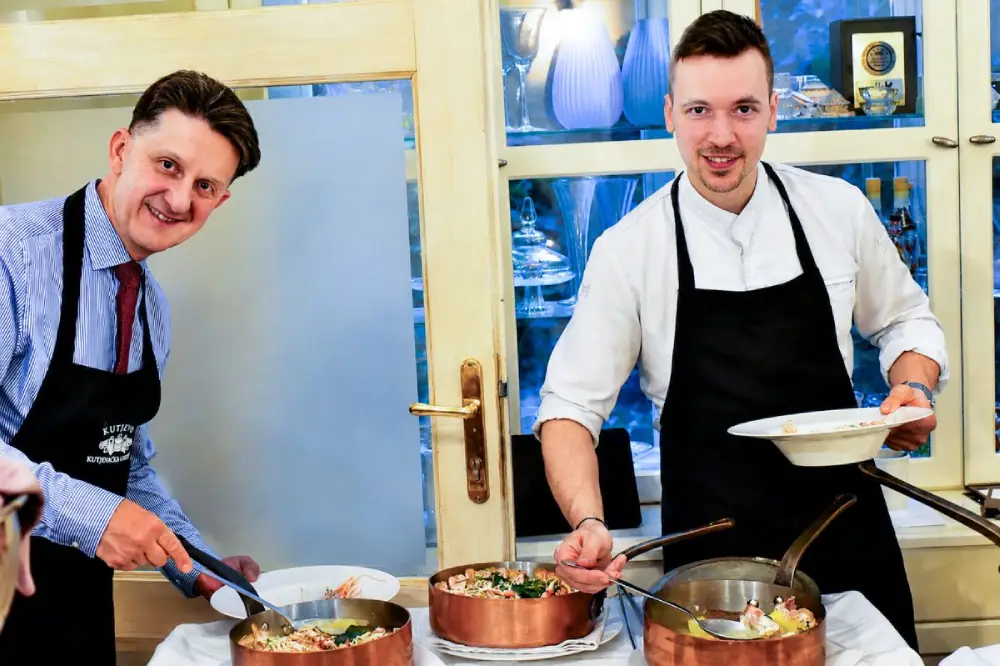
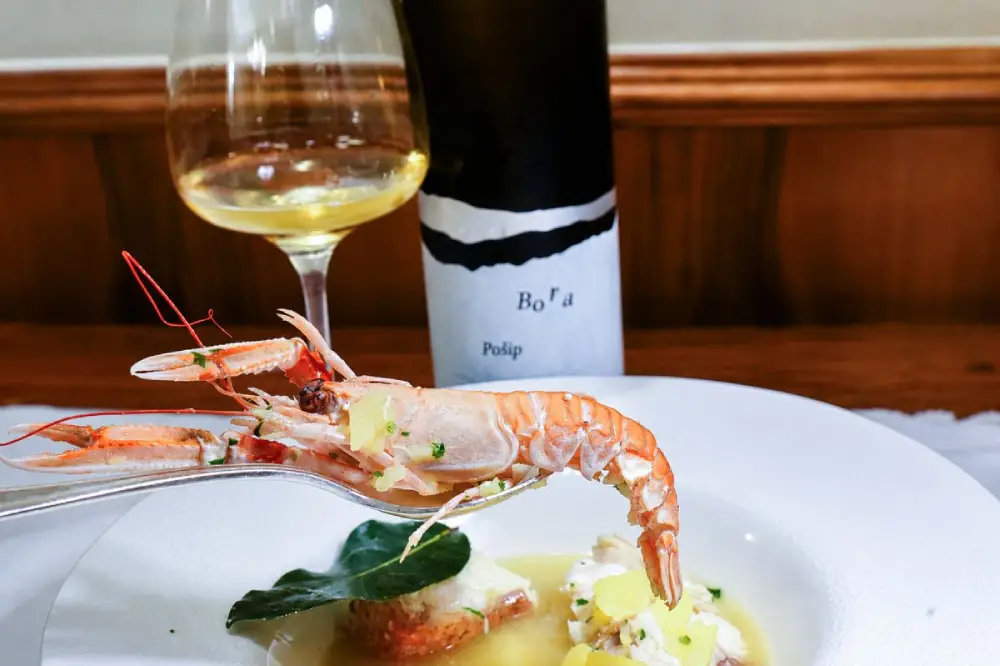
The third course brought a Gregada of scorpionfish, red sea bream and langoustine, attractively presented by chef Siniša Jevrosimov and his team, alongside Bora Pošip 2025. This traditional Dalmatian dish of rich yet refined flavours paired beautifully with the Pošip of pronounced freshness and Mediterranean character from the winery in the Benkovac–Stankovci vineyard district. Bora Pošip offered delicate fruity notes of dried apricot, accompanied by floral and herbal aromas, and a minerality that further underlined the character of the fresh fish and the aromatics of the gregada. This pairing was voted the best in the selection of eno-gastro journalists and bloggers. ‘The Bora winery accepts only excellence and leaves nothing to chance, and so it is with this Pošip. The benchmark for Pošip is Korčula, yet this one from Bora is also marked by varietal recognisability. It has more freshness and body, but it is elegant and does not lack character,’ stressed sommelier Tomislav Jakopović, presenting the wine from Podgradina, from a vineyard warmed on one side by the mild currents of the Novigrad Sea and lashed on the other by the Velebit bura wind.
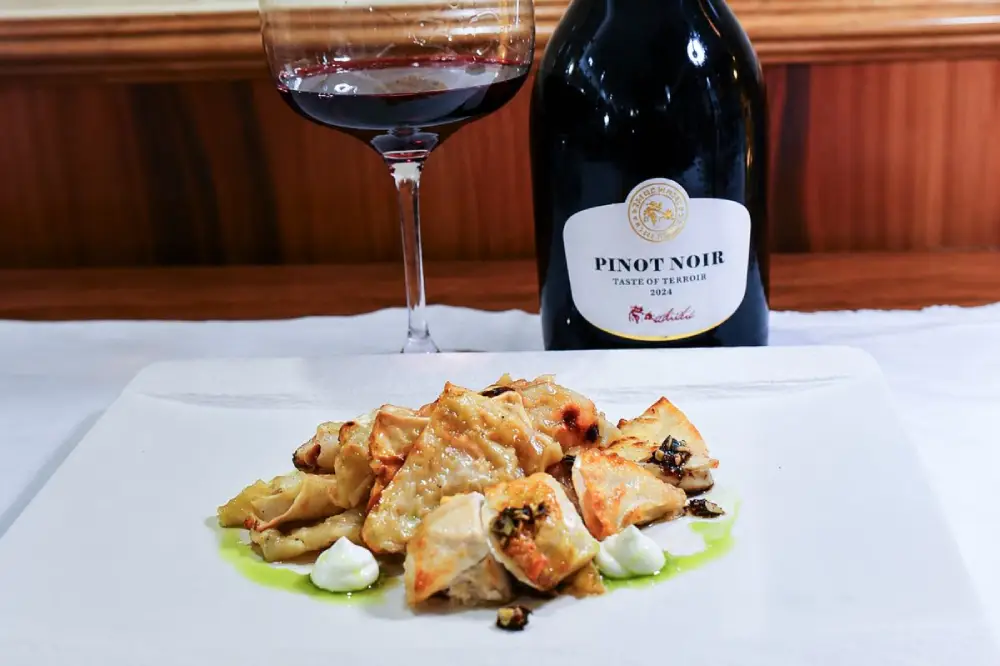
The Cockerel with mlinci pasta and pumpkin seeds, served with Šoškić Pinot noir 2024, drew special attention from the guests. The juicy, aromatic cockerel meat, with rustic mlinci and the crunch of pumpkin seeds, paired very nicely with the elegant Pinot noir of fine tannins and pronounced fruit notes. Šoškić’s Pinot noir showed enough freshness and structure to keep up with the richness of the dish, yet enough elegance not to take over the plate. The Pinot comes from the Rebri site on Plešivica, where great attention is paid to work in the vineyard and to low yields in order to preserve the quality of the grapes. After fermentation, the wine ages 12 months in 500-litre barrels, then a further six months in bottle, developing complexity and balance. It is a young, clear, ruby-coloured wine with aromas of ripe cherries, marasca sour cherry, butter, wood, toast and stewed plums, with notes of earth and baked raspberry tart. On the palate it is soft, fresh and fruity, with a delicate minerality and fine, ripe tannins.
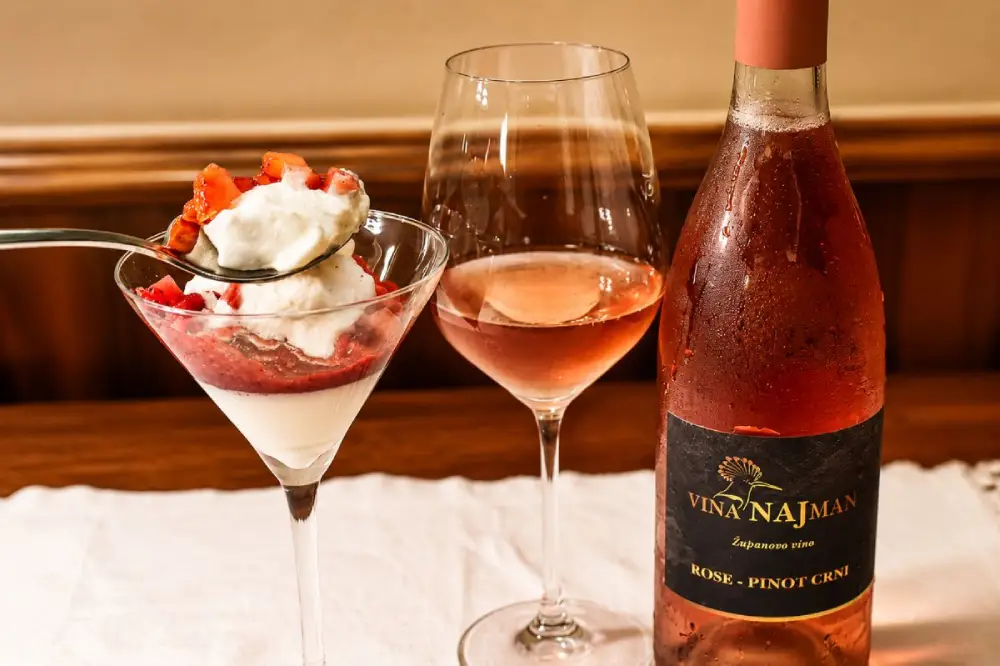
To close the evening, a Panna cotta with strawberries and strawberry jam, made in-house at Gallo, was served with Najman Rosé Pinot crni semi-sweet 2024. The creamy texture of the dessert and its gentle sweetness married very nicely with the fruity character of the semi-sweet rosé, in which notes of strawberry, raspberry, pomegranate and red berries dominate. The wine’s pleasant freshness kept the pairing from feeling heavy, so the evening ended on a light, harmonious and very elegant note. The Najman winery is located in Martinkovec near Varaždinske Toplice, where they have nurtured a winemaking tradition since 1983. Dragutin Najman, a civil engineer by profession, sought a weekend respite from the city bustle of Varaždin in the vineyard with his wife Štefica. Over time this grew into a passion, and their wines first won over friends and then numerous awards. The head vine-grower and cellarman is his son-in-law Siniša Hajsok, who tends every vine, and it is effort and positive energy that keep the quality of the wines at the top.
To close the evening, a Panna cotta with strawberries and strawberry jam, made in-house at Gallo, was served with Najman Rosé Pinot crni semi-sweet 2024. The creamy texture of the dessert and its gentle sweetness married very nicely with the fruity character of the semi-sweet rosé, in which notes of strawberry, raspberry, pomegranate and red berries dominate. The wine’s pleasant freshness kept the pairing from feeling heavy, so the evening ended on a light, harmonious and very elegant note. The Najman winery is located in Martinkovec near Varaždinske Toplice, where they have nurtured a winemaking tradition since 1983. Dragutin Najman, a civil engineer by profession, sought a weekend respite from the city bustle of Varaždin in the vineyard with his wife Štefica. Over time this grew into a passion, and their wines first won over friends and then numerous awards. The head vine-grower and cellarman is his son-in-law Siniša Hajsok, who tends every vine, and it is effort and positive energy that keep the quality of the wines at the top.
Yet another edition of the Vino uz žlicu project once again united top gastronomy, intriguing wine labels and the producers behind them, confirming that good food, wine and good company remain the finest way to discover new flavours and stories from the world of eno-gastronomy.
Photo: Julio Frangen