

For years now, food has been cooked with love at Bistro Fotić on Gajeva Street in the heart of Zagreb, where locals and visitors alike enjoy homemade meat and fish dishes as well as fine stews and pasta. It was founded and successfully run by the Badrov family of photographers, and since late last year it has been owned by the Khouri family. The new owners have no wish to change much; rather, they want to raise the level of service. They also intend to preserve the distinctive décor, because guests love to dine in such an atmosphere.
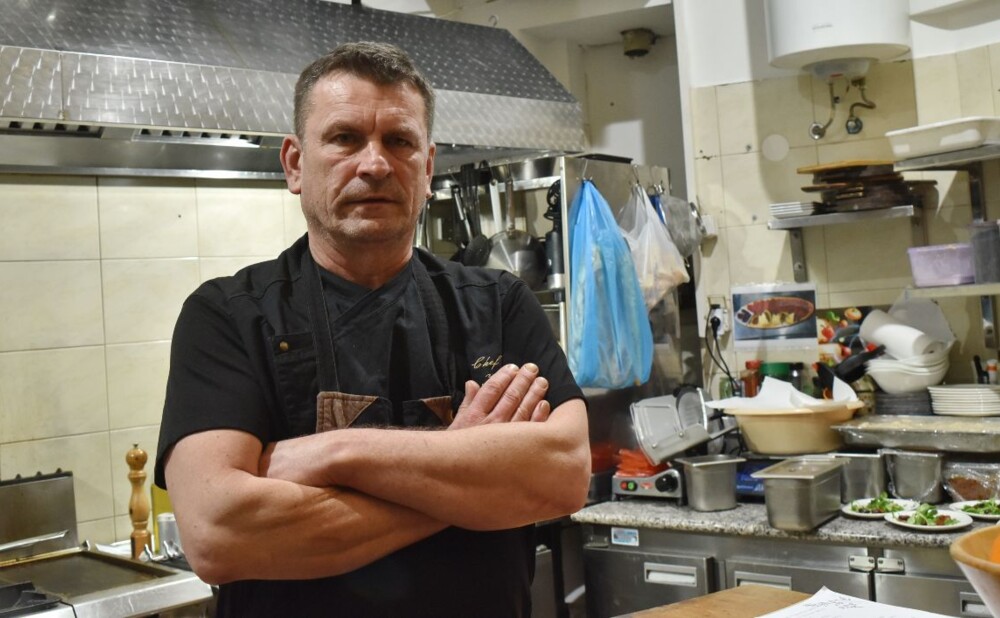
The wine list consists almost exclusively of Croatian wines, with just a single prosecco and one champagne. Most of the staff were retained, and the former chef Alen Krnetić has returned. Together with his team he devised and executed a menu based on home cooking for the 29th edition of Vino uz žlicu (Wine by the Spoonful), an eno-gastronomic project that founders Renata Cisar and Mustafa Topčagić have been running for seven years. The gathering at Fotić opened with a selection of rakijas and liqueurs from the Istarska kapljica distillery in Kaštelir. 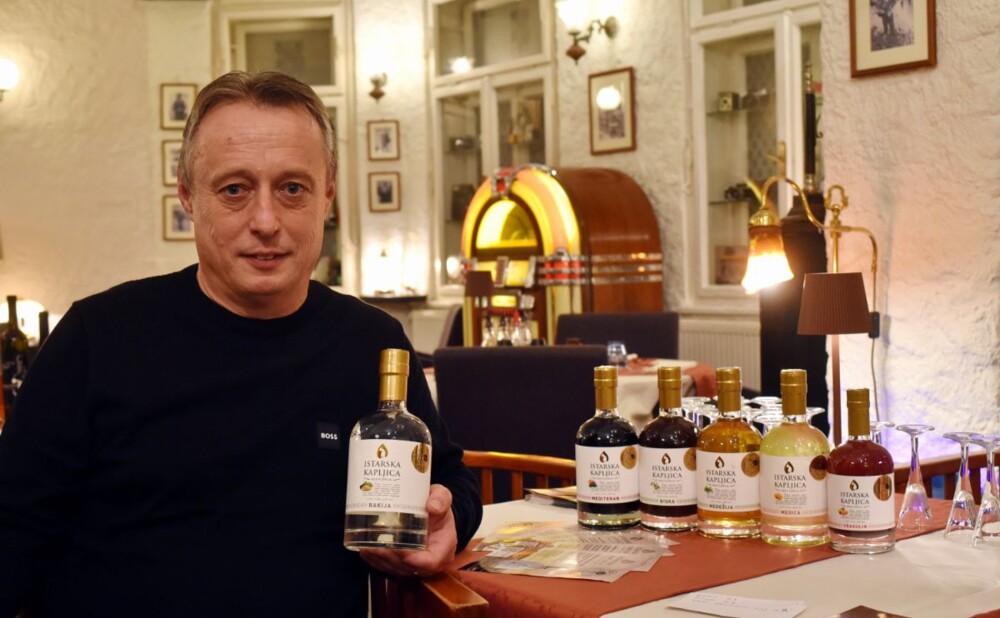
The base ingredient for their line of drinks is a rakija made by distilling the whole grape cluster rather than the pomace, as is usually the case, stressed co-owner and director Goran Špehar. From 18 labels, Špehar presented the rakijas Lozovača, Medica, Medežija and Biska, together with the liqueurs Mediteran and Vragulin. The story of Istarska kapljica itself began with Lozovača, which, he says, he is the only one in Istria to produce; Medica is made with the finest acacia honey; Medežija follows an old recipe with 26 indigenous medicinal herbs and mistletoe leaf; and Biska is likewise made the traditional way, by macerating mistletoe leaf in grape rakija. The Mediteran liqueur (honey and Teran) is sweetened with acacia honey, while the Vragulin liqueur is a blend of grape rakija with ginger and chilli, rounded out with rosehip and honey.
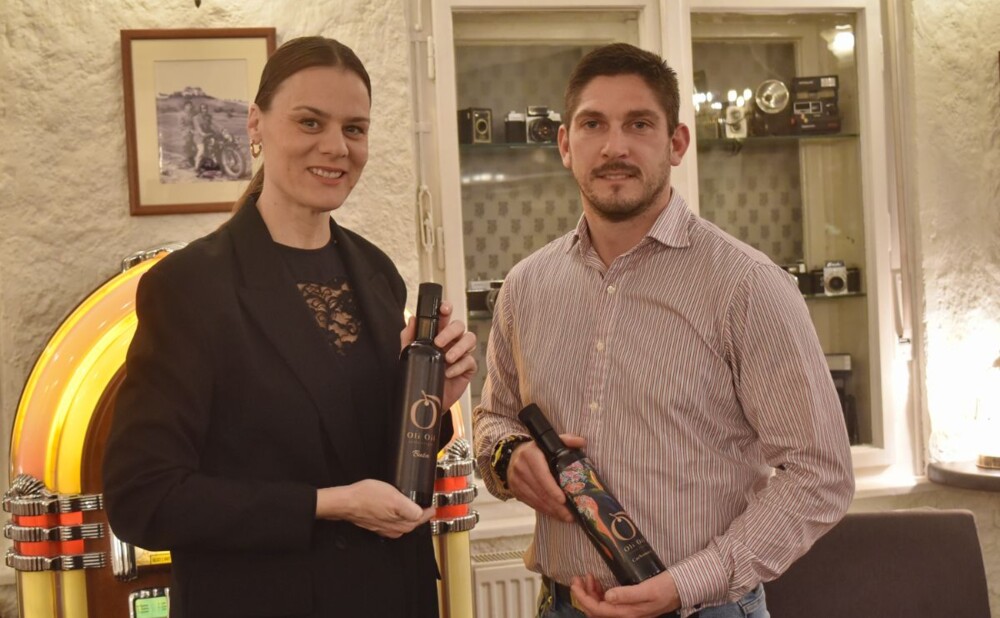
With the fine homemade bread baked daily at Bistro Fotić, we tasted natural extra-virgin olive oil and pumpkin-seed oil. Olive grower Patrick Pereša from Fažana in Istria presented the Oli Oil brand with the single-variety oils Carbonaca, Leccio del Corno and Buža, along with a blend of varieties. The groves lie around Vodnjan, an area known for its long olive-growing tradition.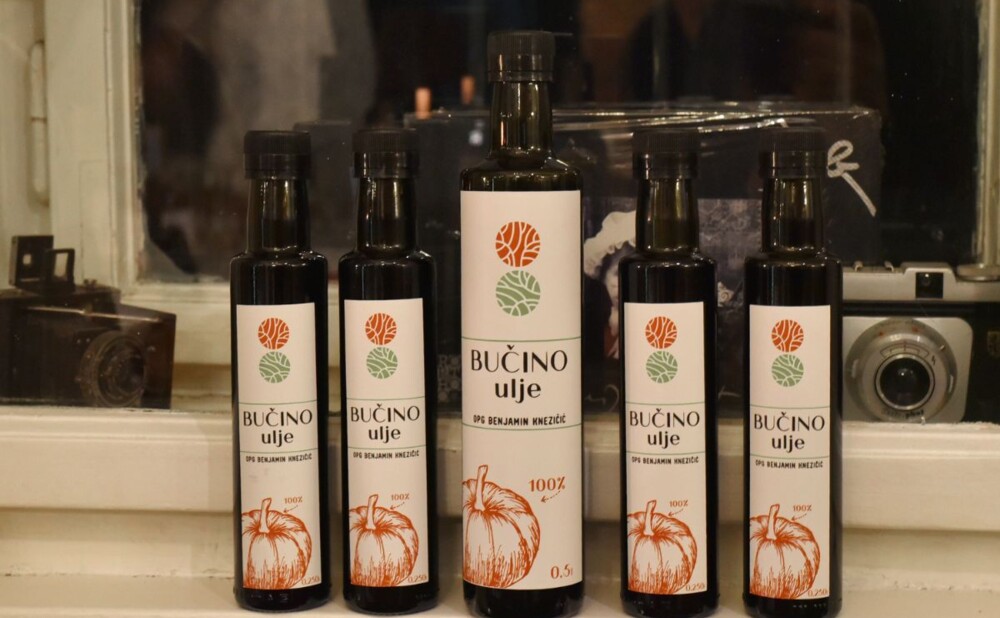
Alongside the tasty bread, we also tasted the homemade pumpkin-seed oil of the Benjamin Knezičić family farm from Gašinci near Đakovo. They grow the pumpkins themselves and cold-press the seeds, preserving the oil’s freshness and nutritional value: it is rich in vitamins, minerals and antioxidants and a perfect addition to many dishes.
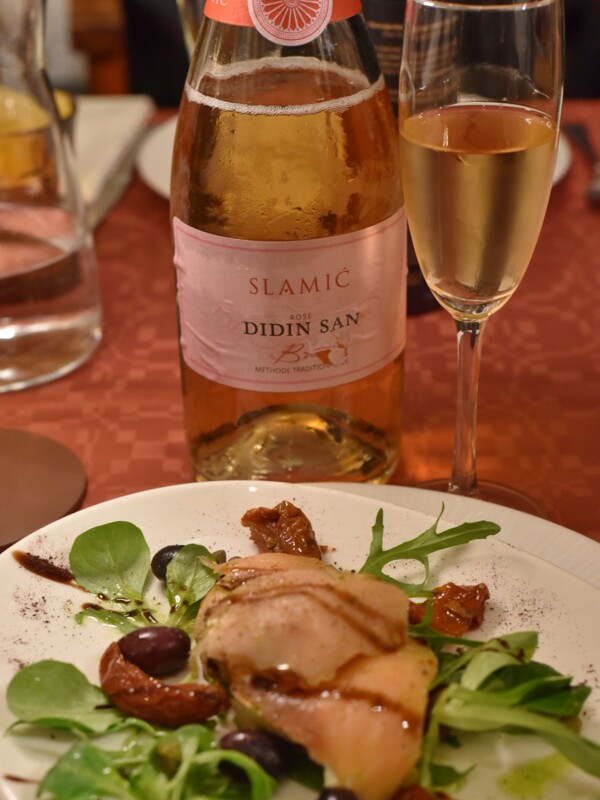
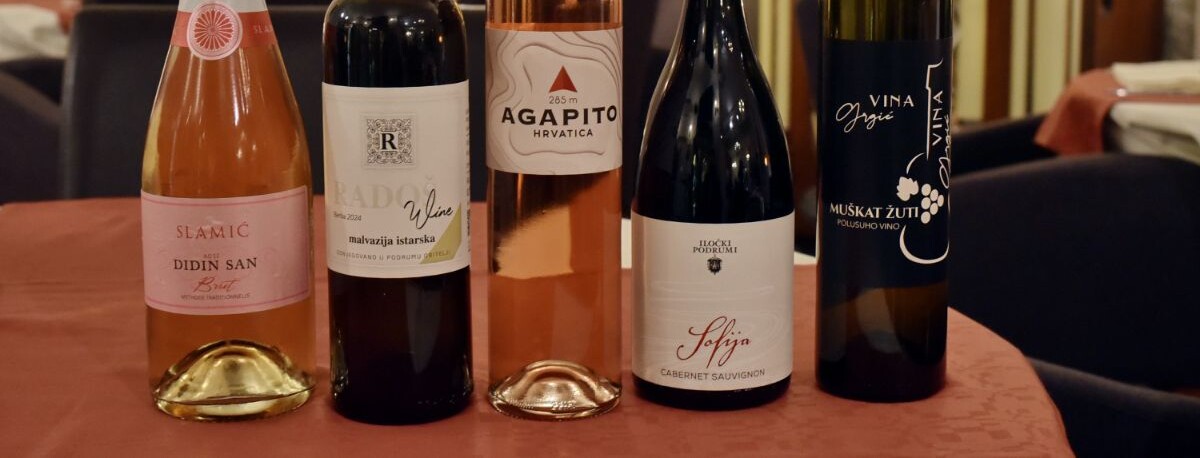
The Didin san Rosé brut sparkling wine of the boutique family winery Slamić accompanied a smoked-salmon bruschetta as the first course of this Vino uz žlicu. The sparkling wine is made by the traditional method of bottle fermentation from organically grown grenache noir in Nadin near Zadar. The winery was started by Dane Slamić, who inherited vineyards in Ljubostinje in the hinterland of Šibenik from his father; the work was continued by his son Davor, and grandson Luka has since joined them. Today they also have several smaller vineyards in Donje Polje near Vrpolje. The Slamić family offers six labels of organic wines that also reflect the authenticity of their terroir.
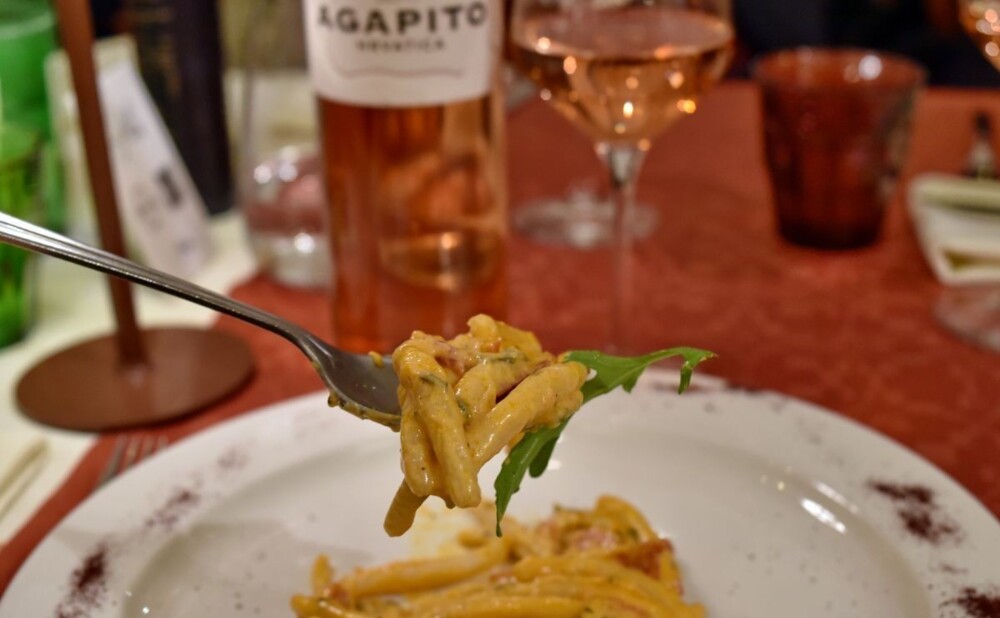
The meal continued in an Istrian vein. Pljukanci (hand-rolled pasta) in a prosciutto and sage sauce were served with the Hrvatica Rosé 2024 of the Agapito winery from Marčenegla near Buzet. It is run by Paolo Agapito, who continues a family tradition begun in the 19th century. They focus on indigenous, somewhat forgotten varieties such as Duranija, Trbljan, Likant and Muškat Crni. Hrvatica, too, which had been on the verge of extinction, preserved on just a few vines. Fermentation was spontaneous, without added yeasts, and the wine interwove beautifully with the flavour of the succulent sauce. Most of the journalists present pronounced this pairing of wine and food the most successful of the evening. The Agapito winery is on its way to obtaining organic certification.
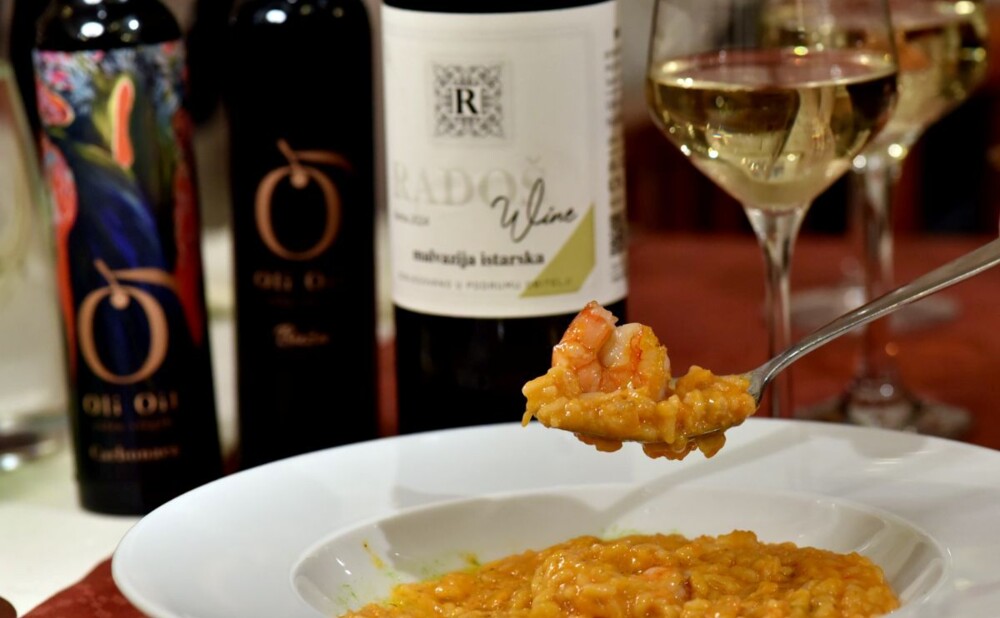
The colours of Istria were also defended by the family winery Radoš from Kaštelir, presented by the couple Sabina and Dejan. Dejan is the fourth generation to make wine, and they have nine labels from the varieties Malvazija, Chardonnay, Teran, Borgonja, Merlot and Muškat Žuti. On this occasion they showed their Malvazija 2024, which paired well with a risotto of Adriatic prawns. Besides at the cellar door, their wines can be tasted in restaurants around Kaštelir and along the Istrian coast, and they also plan to present themselves on the Zagreb hospitality scene.
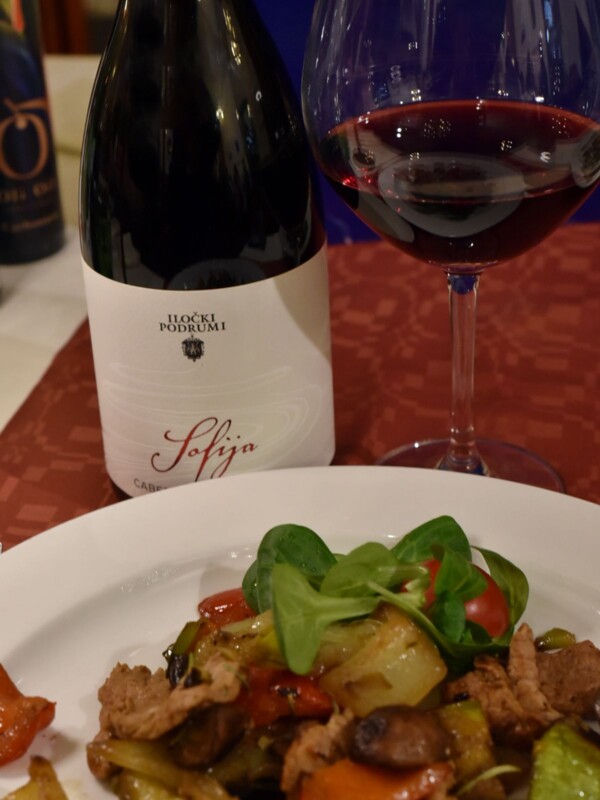
From Iločki podrumi came the Cabernet Sauvignon 2021 from the Sofija range, intended for the HoReCa sector, which also includes a Graševina and a white Cuvée. The grapes come from the Ilok site closest to the Danube, named after Countess Sofija Odescalchi, who was responsible for the restoration of Principovac Castle in the 18th century. The wine was presented by Antonia Glavan Petanjek of the Iločki podrumi marketing team, who emphasised that it had spent two years in Slavonian oak. It is marked by aromas of plum, ripe sour cherry, gentle vanilla and smoke, with silky tannins, and it was served with delicious marinated veal fileki (medallions) and grilled vegetables.
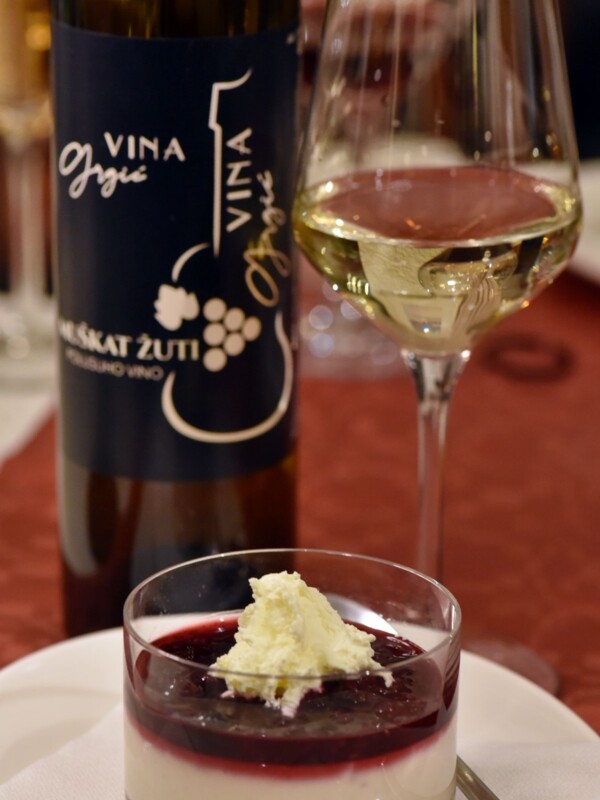
From the Bjelovar–Bilogora region came the young winemaker Marin Grgić. He is the first in his family to take up wine more professionally, making it from eight varieties. For a sweet end to the evening, alongside a panna cotta with wild berries and walnut, he served a semi-sweet Muškat Žuti 2024. Much of the credit for the wine’s creation goes to his wife Andrea, who keeps watch in the cellar during fermentation. It is, as Marin put it, their love wine.
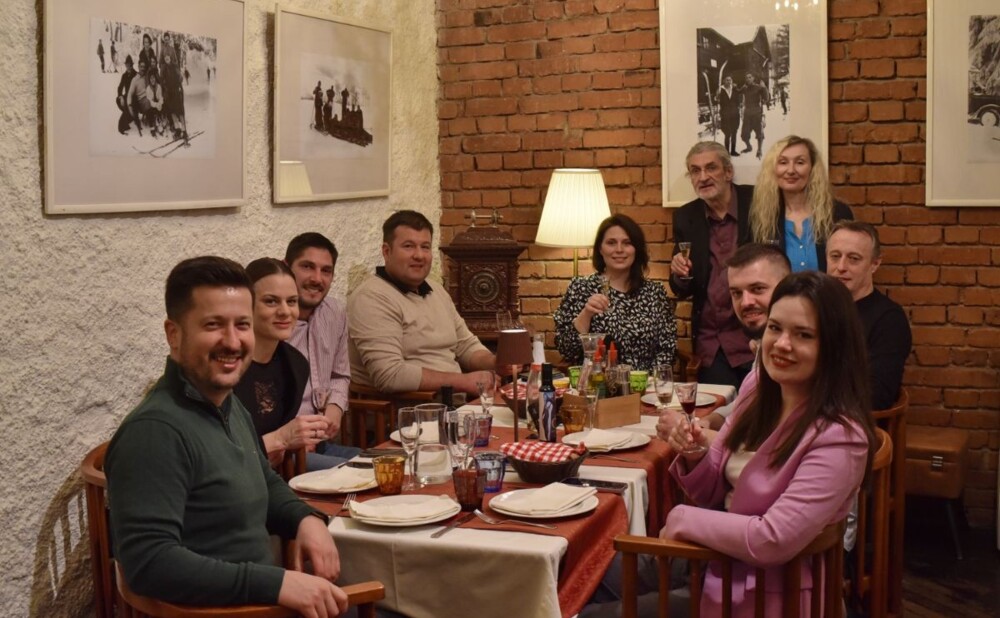
Bistro Fotić proved a splendid host, confirming itself as the right choice for enjoying top-class dishes and wines, spirits and olive and pumpkin-seed oils. The eno-gastro project ‘Vino uz žlicu’ carries on, and we look forward to the milestone 30th edition at the end of February in Velika Gorica.
Prepared by: Renata Cisar and Mustafa Topčagić
Photographs: Julio Frangen