

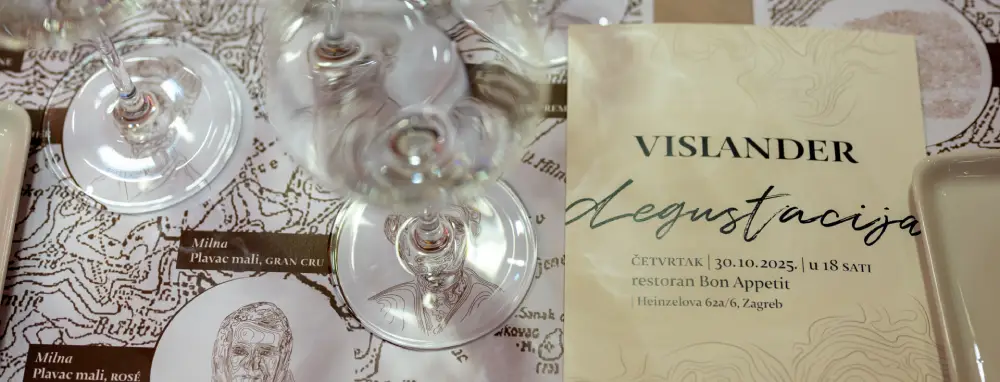
As if the four seasons could be recognised in the Plavac wines of the Vis winery Vislander from its four vineyard sites, that was what the comparative tasting of the 2021 and 2019 vintages revealed. From the sandy Ljubišće site, the 2021 vintage yielded a springtime Plavac with a fruity nose dominated by the variety’s characteristic plum, with a lovely mineral freshness. This wine will sate hunger and gladden the soul. At Voščice, meanwhile, sand is mixed with crljenica, the local red terra rossa soil, and the yield is a touch higher, so the 2021 Plavac is lighter-bodied but with more herbal notes. It is better suited to cooler summer-evening sipping alongside fresher pršut (dry-cured ham) and a younger cheese with capers and rock samphire, for instance. These two wines were aged between 12 and 15 months in 500-litre barrels. 
The Milna site, for its part, offered from 2021 an autumnal wine, more layered, fuller and stronger. There the soil is skeletal, that is, with more coarse particles such as stones, gravel and gravelly dust, overlain by clay-loam deposits. Grapes from the Tihobraće vineyard, where the karst is covered by 30 to 40 metres of sand, gave an even more intense Plavac with pronounced but fine tannins. The Plavac wines from these two sites aged in 225-litre barrels and will go on sale in two years. 2021 was markedly dry on Vis, so the alcohols run between 15 and 15.5 percent. Now on sale are the wines from the fresher and wetter 2019 vintage, which sit between 13 and 14.5 percent. For that reason they are, naturally, less robust and drink more easily. It should be noted that the 2021 Plavac wines will surely soften by the time they reach the market. 
Marko Vojković, co-owner of the Vislander winery, said that his forebears began working with wine on Vis back in the 19th century. The current generation set out on this venture some 15 years ago in the old Vis cellars (konoba), and the end of the beginning, as he put it, came in 2018. That was when they completed a modern winery, which allowed them to make serious use of wooden barrels and of techniques previously beyond their reach. He vividly demonstrated the difference in the second part of the presentation, in which he offered a vertical of seven Plavac wines between the 2020 and 2012 vintages. These wines could not, of course, be compared in the same detail as those in the horizontal tasting, but it was plain that they travel gracefully through time and that each has its own personality. 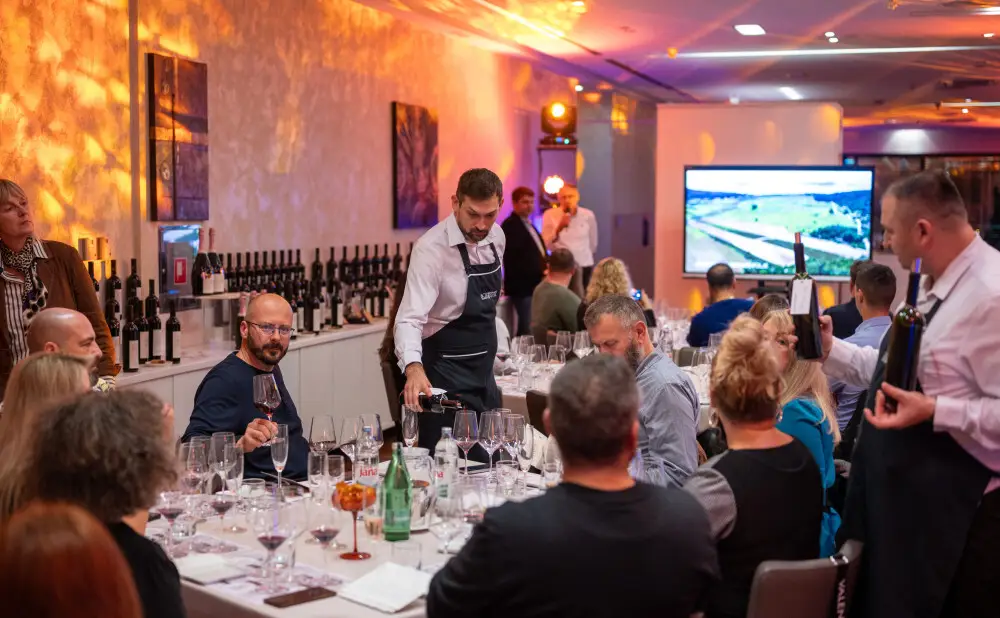
Thus the Plavac from Milna 2020 has a fine maritime nose. On the palate 15.5 percent alcohol dominates; it has lovely acidity for the variety, but it needs some time in bottle for those two parameters to become fully reconciled. For now they still each pull a little in their own direction. Ljubišće 2018, with a gentle 13.5 percent alcohol, is a good wine from a relatively poorer year. Milna 2017 and Tihobraće 2016 were aged primarily in stainless steel in the cellar, then in 2018 transferred to the new winery to age in wooden barrels. Tihobraće surprised with its freshness and very dark colour, which Plavac wines usually lose with the years. 
The three most mature Plavac wines were a pleasant surprise as well. The 2015 is a blend of grapes from the Milna and Tihobraće sites and has a beautiful nose, floral at first, then fruity too. And its finish is exceptionally long. In Milna 2013 a gentle touch of brett can be sensed. So gentle that open-minded wine lovers will not be troubled by it, as in the finest aged Bordeaux reds. Milna 2012 has become a wintry wine, suited to the climate it comes from and to an evening gathering in a warmed cellar over a pisma (song) and, this time, mature pršut. I hope presentations like these will draw people to drink Plavac and buy it, so that it stays here rather than going off to export, concluded Marko Vojković, bringing to a close a wonderful gathering that, it is worth noting, opened with a rosé sparkling wine, Viško bonda, made by the classical method and aged two years on the lees in bottle. It is from the native white variety Kuč, seasoned with Plavac Mali crni. 
Photographs: Josip Posavec
01.11.2025.