

 Written by: Tomo Jakopović
More and more New World countries are trying to open regulatory space for wines with a lower alcohol content, while European and Croatian regulations already recognize the possibility of wines with a lower alcoholic strength.
Chile, for example, is introducing a category of wine with a lower alcohol content, covering products with 8.5 percent alcohol and above. The regulation has been signed and is under review by the local control institution before it takes effect.
Until now, Chilean regulations required at least 11.5 percent alcohol for a product to be called wine at all, which made it difficult to market wines that meet the growing demand for lighter styles. For classic Chilean wine, that minimum threshold remains unchanged.
The new threshold of 8.5 percent is aligned with the standard of the International Organisation of Vine and Wine, and answers a request the industry has been repeating for years.
The background is familiar well beyond Chile. Wine consumption is falling, and younger consumers are increasingly mindful of moderation, physical and mental health, and calorie intake, so wine has lost its status as an everyday drink in part of the market. The wine sector needs to take the rising demand for low-alcohol wines seriously, because it looks less like a passing fad and more like a response to changing consumer habits.
Low-Alcohol Wines: Passing Trend or the Future of Winemaking?
The Croatian market is still at the very start in this category, but the potential is there. Our wine tradition is strongly tied to wines of pronounced character and higher alcohol, but that does not mean low-alcohol wines have to compete with them. They can be an addition to the existing offer, particularly interesting for younger consumers, gastronomy and tourism.
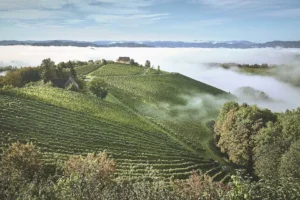
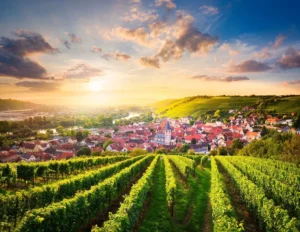
The biggest challenge will be quality. It is not enough simply to reduce alcohol. The wine must keep its aroma, freshness, structure and balance, and achieving that requires harmony in the grape between sugars, acids, pH value and phenolic ripeness. Croatia has a major advantage here in the diversity of its varieties and climate conditions, which allows for the development of its own, authentic styles. The best opportunity for successfully producing such wines will belong to the winemakers of Bregovita Hrvatska (Hilly Croatia), who, regardless of climate change, have good conditions for growing grapes with lower sugar levels.
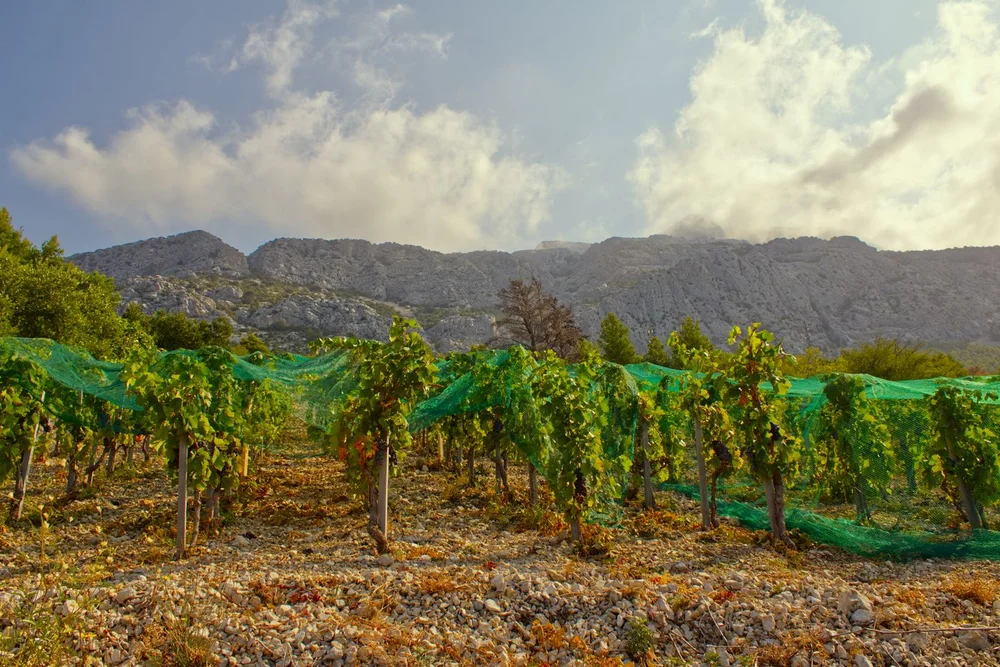
Low-alcohol wines should therefore not be seen as a threat to traditional winemaking, but as an opportunity to broaden wine culture and the range on offer. Producers who recognise this trend early could create a new market niche, especially if they manage to combine contemporary consumer demands with a recognisable Croatian wine identity.
The market is also increasingly seeing alcohol-free wines, which is a complete contradiction of a drink that has always been defined as “a product obtained exclusively by partial or total alcoholic fermentation of grapes of the Vitis species.” A drink with 0% alcohol, in other words, cannot strictly be called wine. One of our producers recently launched such a product, and it will be very interesting to see how the market reacts.
How Is Alcohol-Free Wine Made?
To get such a product from grapes, you first have to make wine, and only then remove the alcohol from it through aggressive technological processes. That second step is where the real challenge lies: how to remove the alcohol while preserving as much as possible of what we love about wine in the first place. Alcohol is not just an ingredient that gives warmth and strength. It plays a part in the wine’s sense of fullness, texture and balance, and it affects the way we perceive its aromas. Once it is removed, the whole perception of the product changes. That is why dealcoholisation is not simply “taking the alcohol out of wine,” but, for most traditional consumers, winemakers and sommeliers, at the very least a barbaric act.
Various technologies are used today for dealcoholisation, among them vacuum distillation, in which alcohol evaporates at a lower temperature thanks to the vacuum. There is also membrane technology, most often reverse osmosis, in which alcohol and part of the water are separated through special membranes, and separating alcohol at relatively low temperatures in columns with rotating cones. All of these share the same goal: separating the ethanol at as low a temperature as possible to reduce the loss of volatile aromatic compounds, which is one of the bigger problems with these processes, since some of the compounds that give a wine its smell and varietal character are irretrievably lost along with the alcohol. After dealcoholisation, it is therefore often not enough simply to put the product back in the bottle. The balance has to be re-established, and part of the lost aromatic properties has to be made up for.
Mouthfeel is another challenge. Wine without alcohol naturally feels lighter and thinner, and the acidity can come across as more pronounced. The producer therefore has to carefully “tune” the final product so that it has enough freshness, but also a certain fullness and length on the palate.
For all these reasons, a quality alcohol-free wine is not simply a wine with the alcohol removed. It is a technologically very demanding product in which, after the aggressive processes of dealcoholisation, a balance between aroma, acidity, sweetness, texture and freshness has to be artificially re-established.
An additional challenge for producers is the fact that consumers compare alcohol-free wine to classic wine. If the product loses too much aromatic complexity or comes across as watery and thin, it will struggle to win over a more demanding wine audience. That is why the future of this category will not depend only on how efficiently the alcohol can be removed, but above all on how much of the original wine’s character can be preserved after the process.
In the end, it is entirely legitimate to ask where modern winemaking is heading. And, as always, time will give the answer.