

 Written by: Krešimir Kožić, Vinski klub
Years of experience among sommeliers and wine professionals show that it is precisely the off-dry style that most easily wins over a broad wine audience. RizlingFest, held on 30 October at Zagreb’s Hotel Zonar, is a chance to check that balance in your own glass.
Think you don’t like Riesling?
Riesling is, with good reason, one of the world’s greatest wine varieties. Few varieties can be at once so light and so deep, delicate and long-lived, and convey so precisely the place where they grow.
Yet few varieties provoke so many preconceptions among the wider public. To some it is too sour, to others too sweet, and many are convinced they simply don’t like it.
But years of tastings and experiences shared with fellow sommeliers and wine professionals point to an interesting conclusion: it is precisely off-dry Riesling that most often finds its way to a broad wine audience.
The reason is not simply that people like sweetness. The secret is balance. Residual sugar rounds off Riesling’s pronounced acidity, while that very acidity keeps the wine from feeling heavy, sticky or tiring. When the two are in the right proportion, we get a wine that is at once fresh, juicy, taut and exceptionally drinkable.
The upcoming RizlingFest, to be held on 30 October 2026 at Zagreb’s Hotel Zonar, is the ideal chance to experience that balance in the glass. The festival is not only for passionate Riesling lovers. It is also for those who feel sceptical about the variety, and for everyone who has not yet found the style of Riesling that suits them.
If you are among them, let me tell you two short stories.
Two anecdotes and one shared secret
When I celebrated my birthday this year, I faced a small wine challenge. As a great Riesling lover, I badly wanted to include the variety in the celebration. But I knew some of my friends were sceptical about Riesling or had simply decided that they „don’t like it“. Most often they associated it with aggressive acidity and wines that demand too much concentration and give too little immediate pleasure.
I decided to serve Long Shadows Poet’s Leap Riesling 2024 from the American state of Washington.
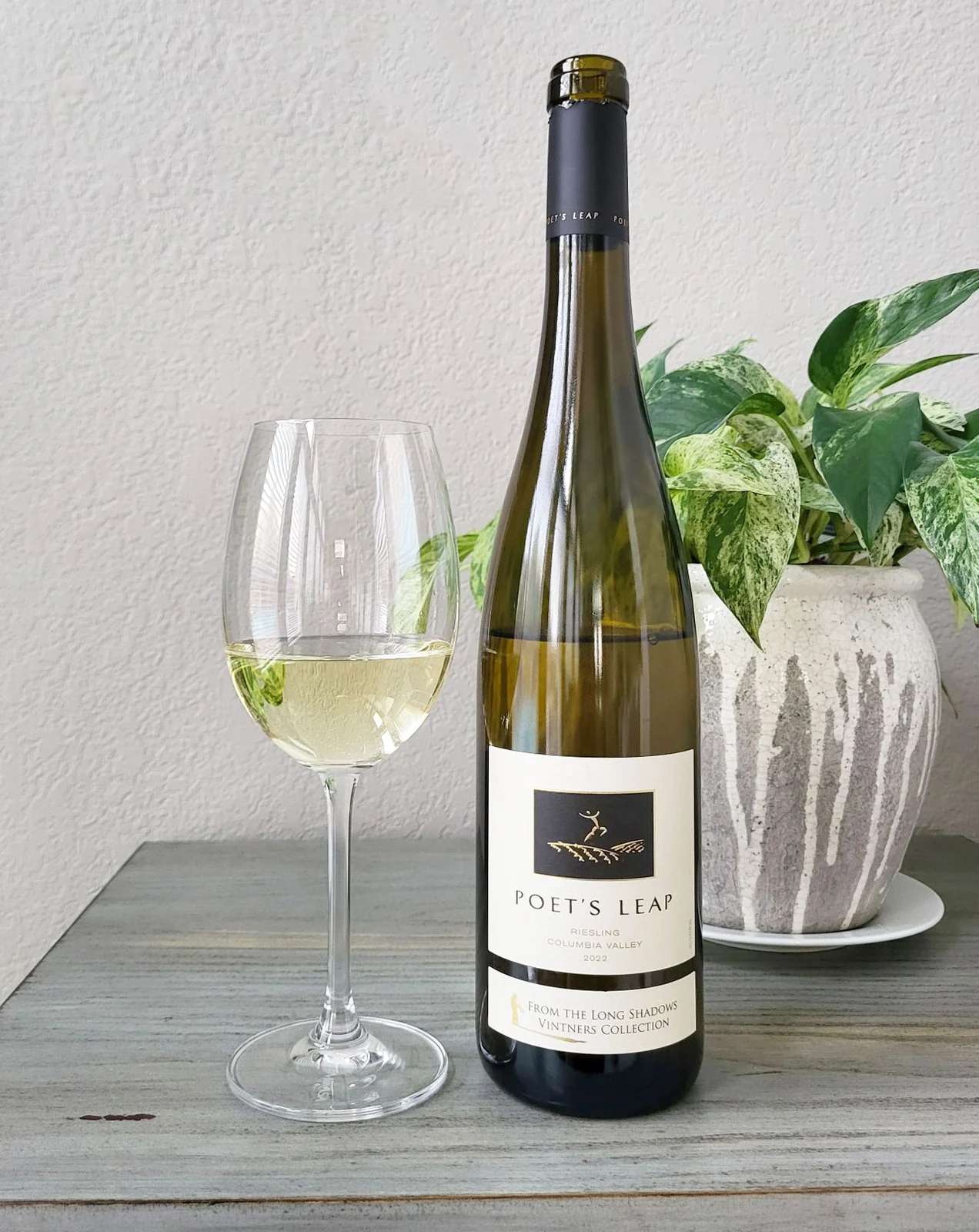
It was a direct hit.
Even the biggest sceptics asked for another glass. The wine kept the freshness and precision typical of Riesling, but a gentle residual sugar softened the impression of sharp acidity and gave it an approachability that won over almost the whole party.
I got a second confirmation in a conversation with a friend, a sommelier at an excellent restaurant. He told me that Zilliken Butterfly Riesling sells exceptionally well even among guests who otherwise rarely order Riesling.
Once again, it was an off-dry style.
Two situations on their own would not be enough to draw a general conclusion. However, both confirm a pattern that has repeated itself over the years at tastings, in restaurants and in conversations with sommeliers and other wine professionals. When Riesling is offered to an audience that has not yet developed a particular relationship with the variety, the off-dry style often meets with the quickest and broadest acceptance.
A good off-dry Riesling does not win with sugar, but with balance.
Sugar is not the enemy
So is residual sugar the secret ingredient that opens the way for Riesling to a wider audience?
The answer is yes, but with one important condition.
We are not talking about simple, cheap wines in which unfermented sugar is used to create body artificially or to hide flaws. In top Riesling, sugar is not a value in itself; what matters is its precise relationship with acidity.
The Germans have a lovely expression for this balance: Spiel zwischen Süße und Säure, the play between sweetness and acidity.
Riesling naturally keeps a pronounced acidity even when the grapes reach a high level of ripeness. That is exactly why it can carry residual sugar without losing freshness. The acidity cuts through the sweetness, and the sweetness rounds off the sharpness of the acidity. The result is not a wine that feels sweet and heavy, but one that can be lively, harmonious and almost dangerously drinkable.
Therein lies one of a good winemaker’s greatest skills: finding the point at which neither acidity nor sweetness imposes itself, but each supports the other.
When the balance is right, you stop thinking about how much sugar is left in the wine. You simply want another sip.
From historic noble to global phenomenon
Riesling has deep historical roots. The oldest known written mention of the variety dates from 13 March 1435, when a purchase of Riesling vines was recorded in Rüsselsheim.
Over the following centuries it became a favourite of European courts and a symbol of the great wines from the banks of the Rhine and the Mosel. In the 19th century some German Rieslings fetched higher prices than the most prestigious Bordeaux.
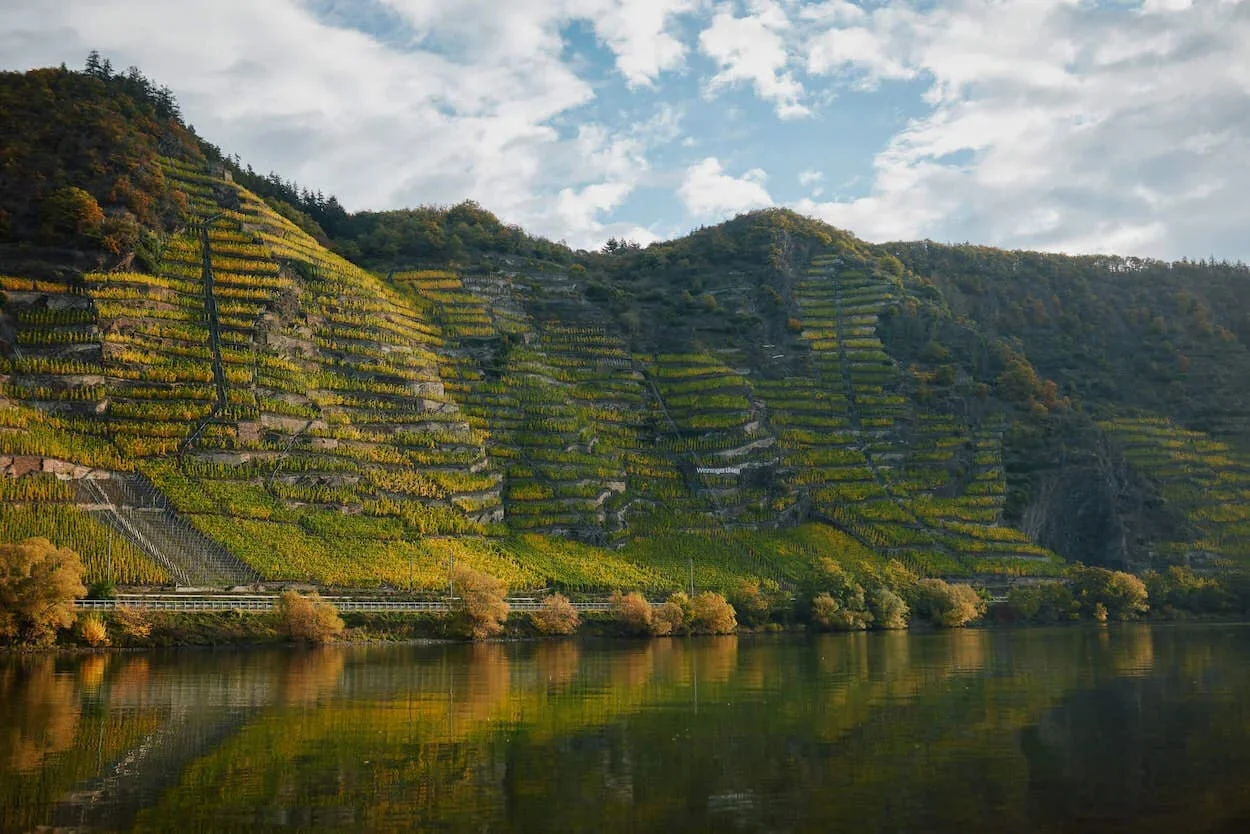
Today Riesling is a global phenomenon. German regions such as the Mosel, Rheingau and Pfalz, France’s Alsace and Austria’s Wachau remain its historic strongholds, but excellent Rieslings are now made all over the world: from the American state of Washington and the Finger Lakes region to Australia’s Clare and Eden valleys and on to New Zealand.
Riesling changes in all these regions, but it does not lose its identity. On slate it can be taut, mineral and almost austere. In warmer conditions it shows more ripe peach, apricot and exotic fruit. In cooler climates lime, green apple, floral aromas and crisp freshness come to the fore.
Like few other white varieties, Riesling precisely conveys the soil, the climate and the character of the vineyard site. It is exactly that ability that makes it one of the most important varieties for understanding the concept of terroir.
How to start? Look for balance, not a sweetness label
If dry Riesling has so far seemed too sharp or markedly acidic to you, don’t give up on the variety because of it. Instead, look for off-dry styles, wines with the German terms feinherb or halbtrocken, and lighter Kabinetts with residual sugar.
It is important to know that Kabinett is not a sweetness label. It is a German Prädikat category linked to the ripeness of the grapes at harvest. A Kabinett can be dry, off-dry or sweeter, so when choosing you should also look at the other terms on the label.
Lighter Kabinetts with residual sugar are among the most beautiful examples of the balance Riesling can achieve. Pronounced acidity gives them freshness and tension, residual sugar rounds off their edges, and lower alcohol adds to their lightness and drinkability.
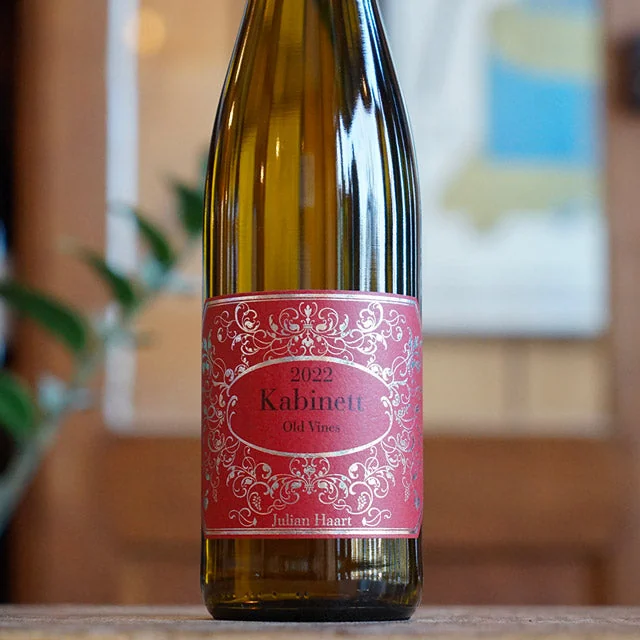
In the glass they often offer aromas of green apple, lime, citrus, white peach and flowers, with mineral nuances that depend on the wine’s origin. The best examples can feel delicate and intense, light and deep at the same time.
So when you first meet Riesling, don’t worry too much about the division into „dry“ and „sweet“. Look for a wine in which no element dominates.
Look for balance.
Why is Riesling one of the world’s greatest varieties?
The approachability of the off-dry style is only one part of a much bigger story.
Riesling is a wine chameleon. It can be completely dry, off-dry, distinctly sweet or turned into one of the world’s longest-lived dessert wines. It can be light and airy, but also structured, deep and able to mature in the bottle for decades.
With age it develops complex aromas of honey, wax, dried fruit, spices and petrol notes, while, thanks to its high acidity, it can keep a surprising freshness.
At the same time it is one of the most versatile food partners. Dry versions go superbly with river fish, seafood and lighter dishes. Off-dry Rieslings work particularly well with spicy Asian cuisine, aromatic dishes, pork and ingredients where a gentle residual sugar softens heat, saltiness or fat.
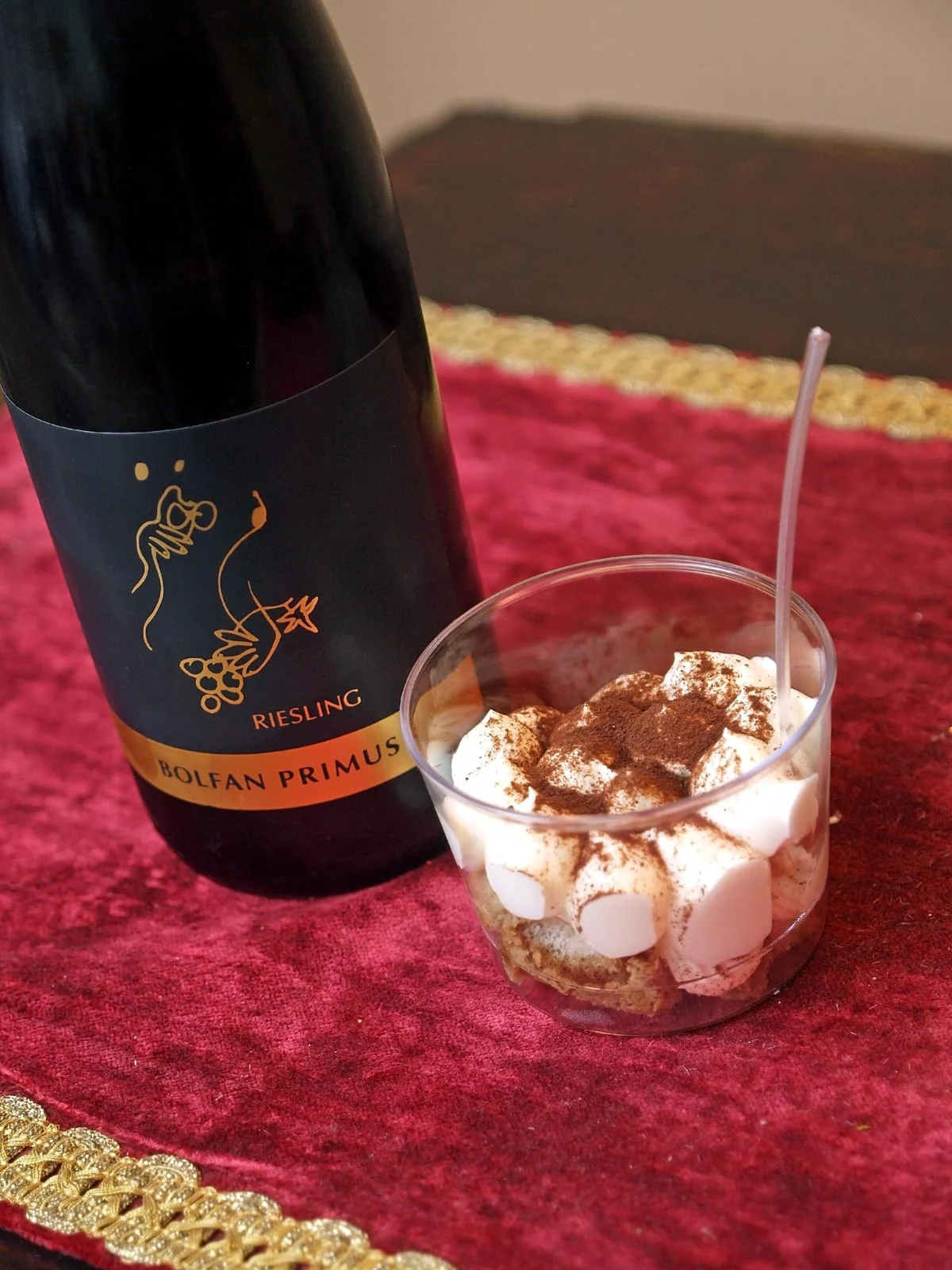
But Riesling’s greatest value may lie in the fact that it can satisfy the experienced collector and the person just getting to know wine equally well. To one it offers terroir, ageing potential and complexity. To the other pure fruit, freshness and immediate pleasure.
And sometimes it offers them all of that in the same glass.
RizlingFest is not only for connoisseurs
That is exactly why RizlingFest is meant for a much wider audience than the circle of passionate connoisseurs of the variety.
Of course, Riesling lovers will be able to compare producers, regions, sites, vintages and different styles there. But even more important is that the festival offers a chance to people who are only discovering the variety or have so far been convinced they don’t like it.
In one place they can taste enough different wines to discover a simple but important fact: there is not just one Riesling.
Perhaps the very dry and crisp style is not for you, but the off-dry one will win you over. Perhaps you associated Riesling only with sweeter wines, and the precision and minerality of dry versions will surprise you. Perhaps only by comparing several wines will you recognise how much the variety changes depending on the region, the site and the way it is made.
The third RizlingFest will be held on Friday, 30 October 2026, at Zagreb’s Hotel Zonar. The festival tasting, where 30 wineries will present their wines, will run from 17:00 to 22:00. Before the festival I will also lead two masterclasses: „Best of Rizling: German Rieslings“ at 14:00 and „Riesling where you do not expect it“ at 15:30.
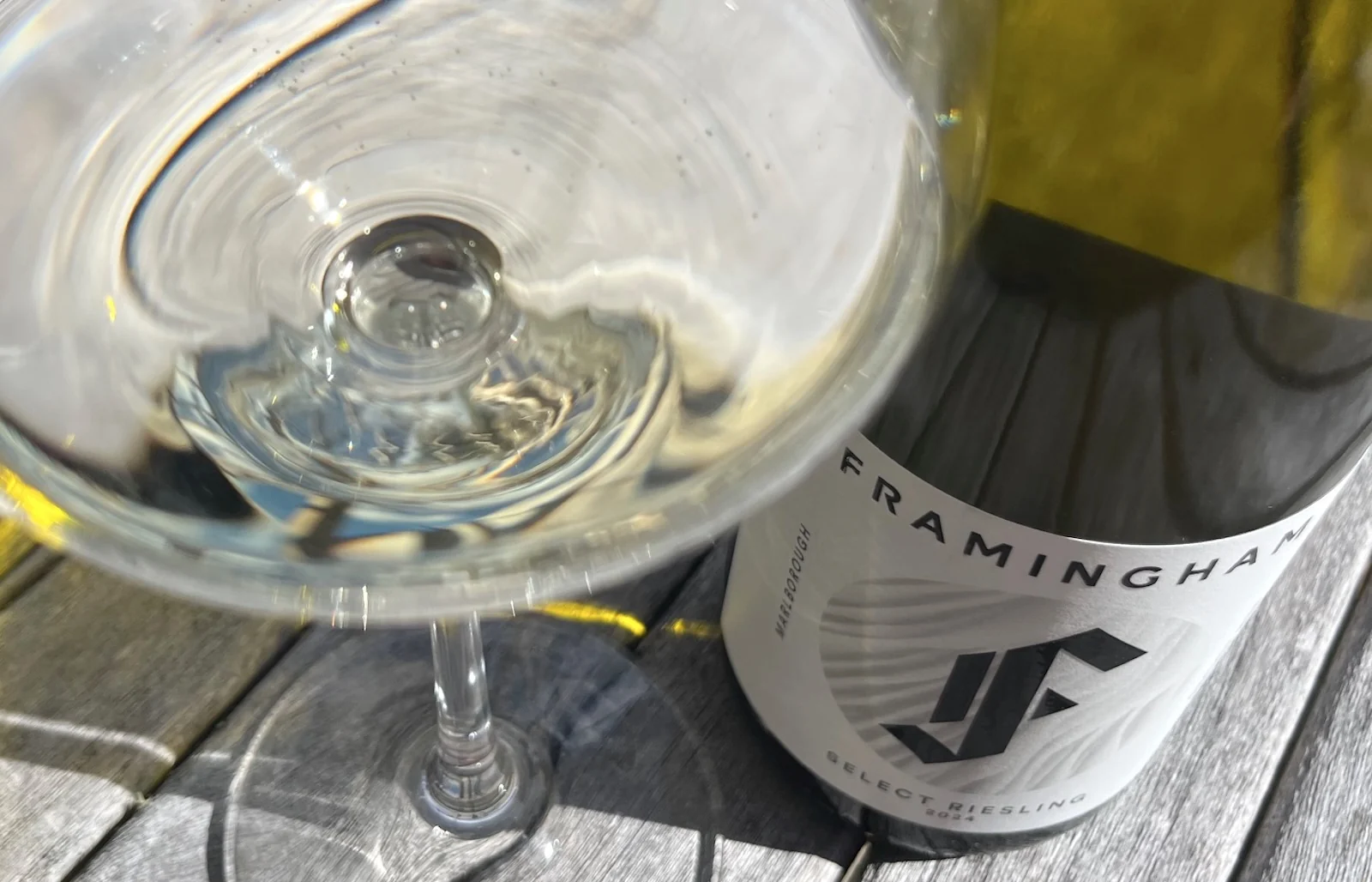
It is a chance to get to know Riesling not through definitions and label terms, but in the best possible way: by tasting it.
Come and taste it without prejudice
Riesling does not ask you to decide in advance whether you like dry, off-dry or sweeter wines. It only asks you to taste enough different styles to find the balance that suits you.
That is exactly why RizlingFest is the ideal place for breaking down prejudices.
If you already love Riesling, you can look forward to exploring its incredible diversity further. If you are sceptical about it, start with off-dry. Perhaps that is exactly where you will find the wine that changes your mind about the whole variety.
Because a good off-dry Riesling neither hides its sugar nor tries to impose itself with it. It shows how exciting a wine can be when sweetness and acidity meet in perfect balance.
If you think you don’t like Riesling, come and check it in the glass.
See you on 30 October at RizlingFest at Hotel Zonar.