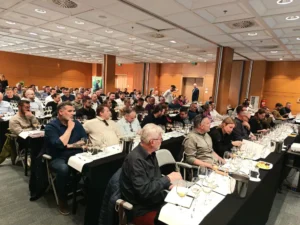


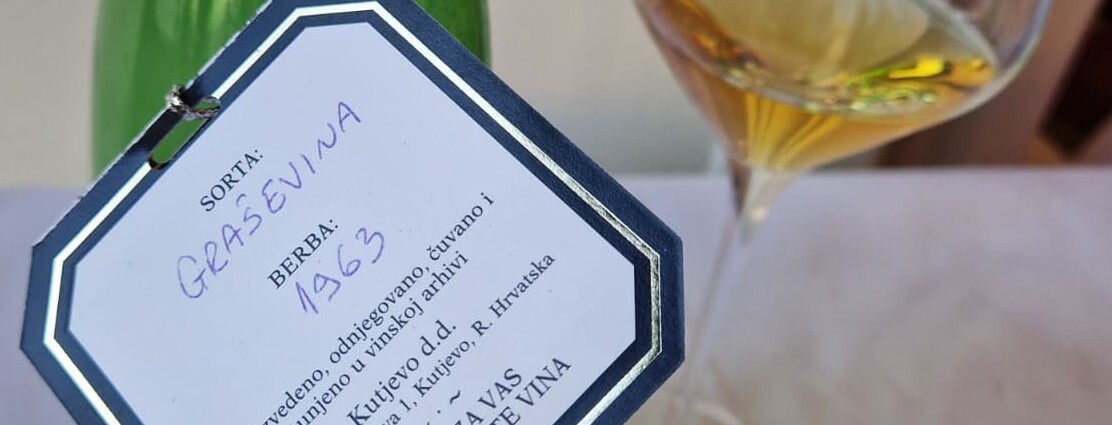
When we were leaving childhood behind and becoming young men, almost all of us from the 1963/1964 generation were in love with Catherine Deneuve. The beautiful French actress was two decades more mature than us – no one then would have dared say older – but we dreamed of her. For decades we dreamed of her. And I remembered her while wide awake, too, after tasting the Graševina 1963 (Graševina is Slavonia’s flagship white) at the Esplanade, during the workshop The Archive Treasure of the Kutjevo Winery. We are of the same generation – I was born in 1964, but I started school with those a year older – and today that wine is as mature as we are. No one will dare call it old, but rather mature, like the actress from the days when we, young then, dreamed of her. I remember her now and then, watching old films; I recalled that she became famous for her role in The Umbrellas of Cherbourg; I remembered her also because Catherine Deneuve rhymes with Grashevine Kutjeuve, but most of all because that wine today, at sixty-two-and-a-half, is as lovely as she was in The Hunger, Tony Scott’s erotic horror from 1983.

She played a wealthy vampiress who owes her longevity to her lovers. I was never Catherine Deneuve’s lover, neither on film nor in reality, but I can say that for the past five years I have been an occasional lover of that Graševina Kutjevo 1963. I have tasted it regularly – five times, I believe – never alone, so perhaps the wine too owes its longevity to its lovers. I only hope we won’t end up like the lovers of Miriam Blaylock, as Catherine’s character was named in the film in which her partners were Susan Sarandon and David Bowie. That Graševina 1963 is a wine outside time. I cannot say it grows ever younger, yet it seems not to age. The colour is deeper, but lively, and looks as if it were 10 years old rather than 39. The nose is calm; it does not strike the nostrils but caresses them and reveals its maturity. The palate is alive, almost sprightly, opening slowly and lasting very long. This is a wine you drink not by the (deci)litre but by the hour, to paraphrase drinkers wiser than I. And it does not call for conversation; it simply asks for silence and time. Besides being drunk slowly, it is one of those wines that also chooses its weather. Early spring and late autumn suit it, and sun is dearer to it than rain.
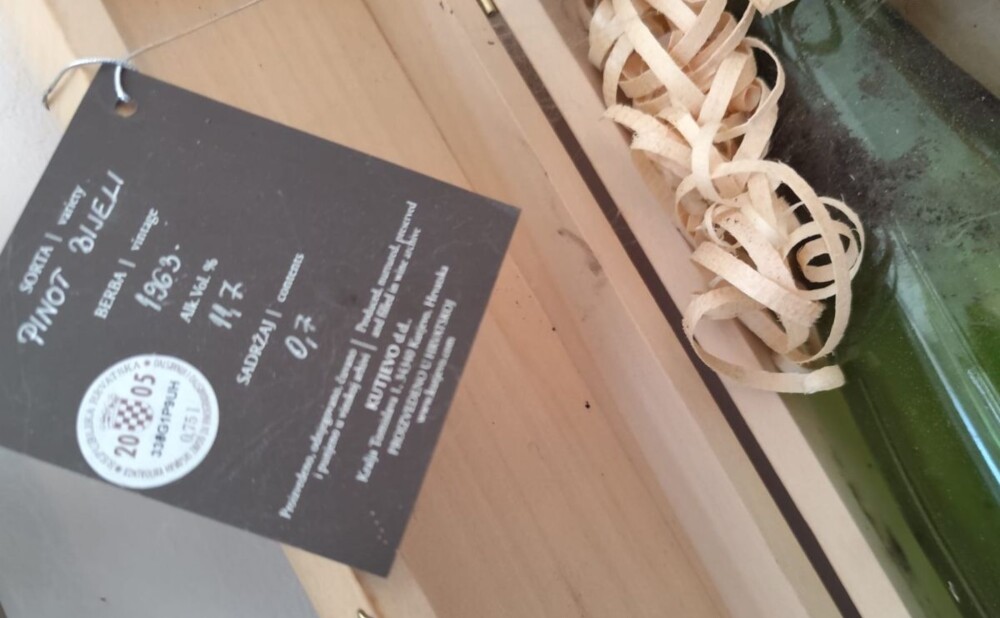
It is worth noting that Kutjevo’s archive also holds a Bijeli Pinot (Pinot Blanc) 1963. In June 2021 it was outstanding, and it can be bought from Kutjevo’s online shop. The price? A mere trifle, as Sir Oliver would say: 237.35 euros. As for the archival Graševinas, the 1960 vintage costs the same. One nine years younger sells for 109.50 euros, while the Graševina 1960 is 237.25. There are also a few archival wines from the end of the last millennium – Sivi Pinot (Pinot Gris), Rajnski Rizling (Rhine Riesling), Muskat Ottonel… – priced around or below 100 euros, and the Graševina select harvest 1999 costs 54.75. Our wine archives were largely destroyed at the end of the Second World War, so the oldest bottles cited are the Bijeli Pinot 1947. In Kutjevo’s archive, at my last snooping, there were six of them (in the photograph below), and one more is on display at the Bornstein wine shop in Zagreb.
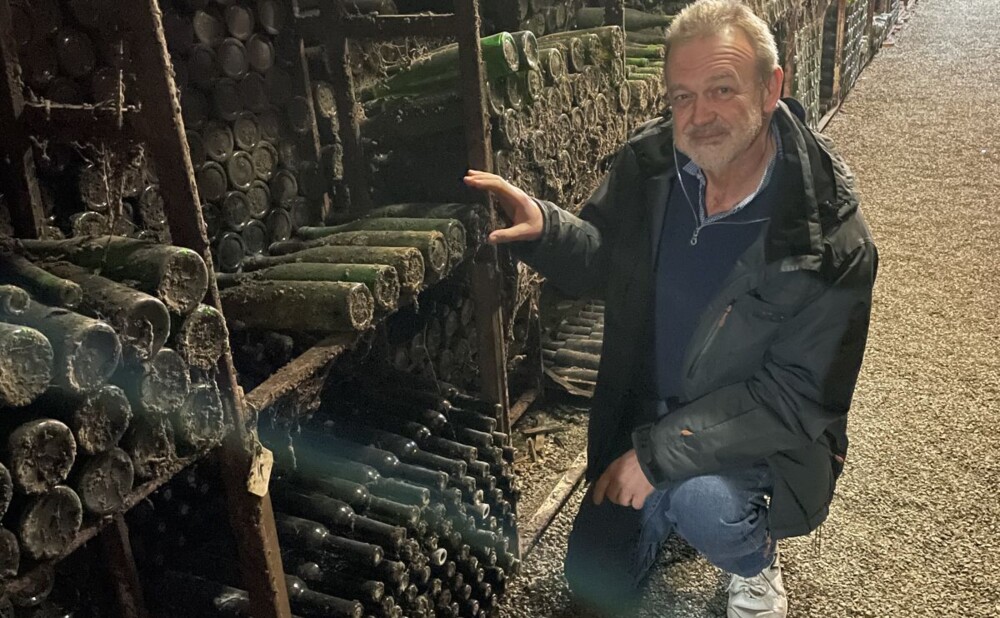
P.S.: At the workshop Graševina – The Archive Treasure of the Kutjevo Winery, after this supposedly off-dry 1963 with 12.1 percent alcohol and 5.9 grams of acidity per litre, an excellent Ledena Graševina (Graševina ice wine) 2018 was served. It has 181.5 grams of unfermented sugar per litre, 10.5 percent alcohol and a wonderful 6.6 grams of acidity per litre. It slips very nicely down the throat and leaves not a trace of cloying sweetness in the mouth. The story had begun with superb Graševinas from the 2023, 2022, 2020, 2018, 2017 and 2016 vintages. These are wines that were in regular sale and not prepared for cellaring, with grapes from the classic sites of Vinkomir, Hrnjevac and Vetovo. Thanks to its pronounced minerality, I liked the most mature one best, though the 2022 and 2018 were also excellent.
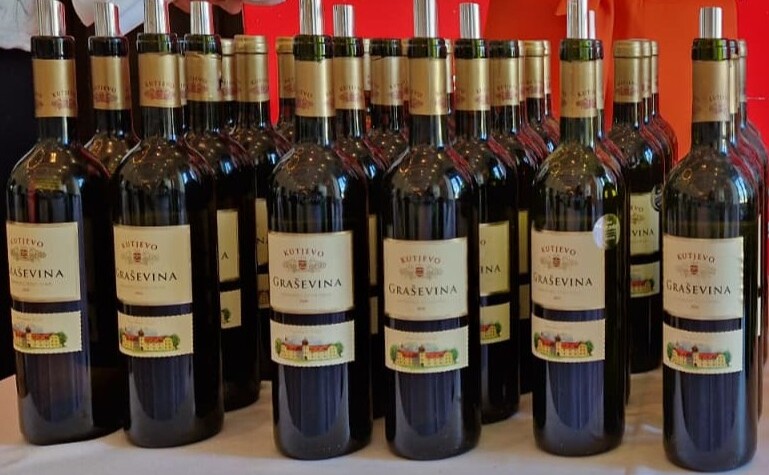
Photographs: Bacchus’s son and Ivana Pranjic/Cork Croatia
01.03.2026.
Written by: Ivo Kozarcanin