

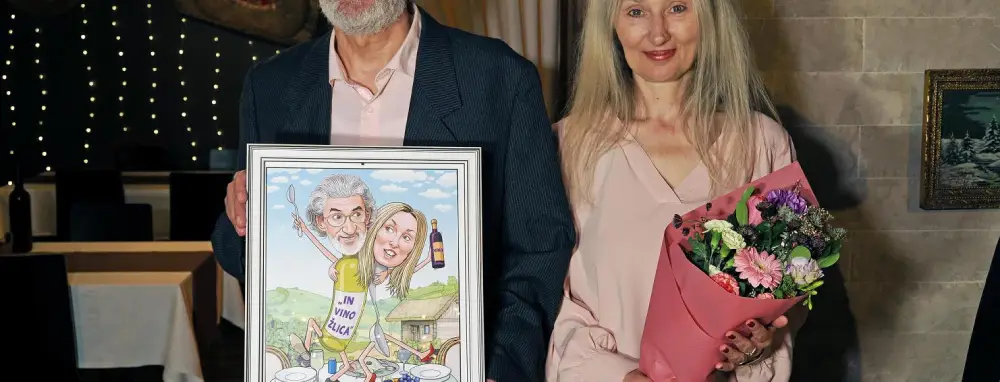
A caricature by Stiv Cinik was a surprise for Renata Cisar and Mustafa Topcagic at the 30th edition of Vina uz zlicu (Wines with a Spoon), the gatherings they have been organising for seven years now. The journalists and bloggers who have followed them for years presented it to them at the Hayat restaurant in Velika Gorica, distinctive for its unusual blend of local Turopolje and Balkan cuisine. In its four years of existence, owner Antonija Batkovic and her team have become known for honest value for money, a pleasant retro ambience, a professional approach and friendly staff. 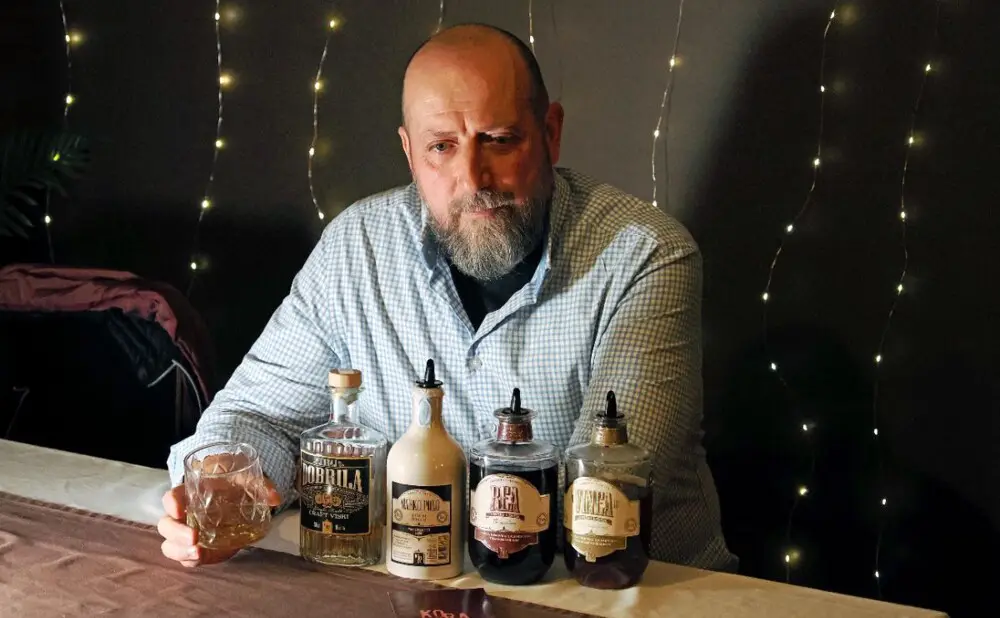
Guests were welcomed by a selection of rakijas and liqueurs from the Koraca Distillery in Motovunski Novaki, in central Istria. Owner Albert Koraca presented Vinea 1616 Malvazino (a liqueur made from Malvazija Istarska, Istria’s signature white), Rea Teranino (a liqueur made from Teran, Istria’s robust indigenous red), Marko Polo (a chocolate liqueur), Elixir Galiot (a herbal rakija with honey) and the Istrian style whisky Juraj Dobrila, named after the region’s eminent bishop. The family makes indigenous rakijas and liqueurs in the traditional way under the brand The Spirit of Wine, all built on a grappa (komovica) base.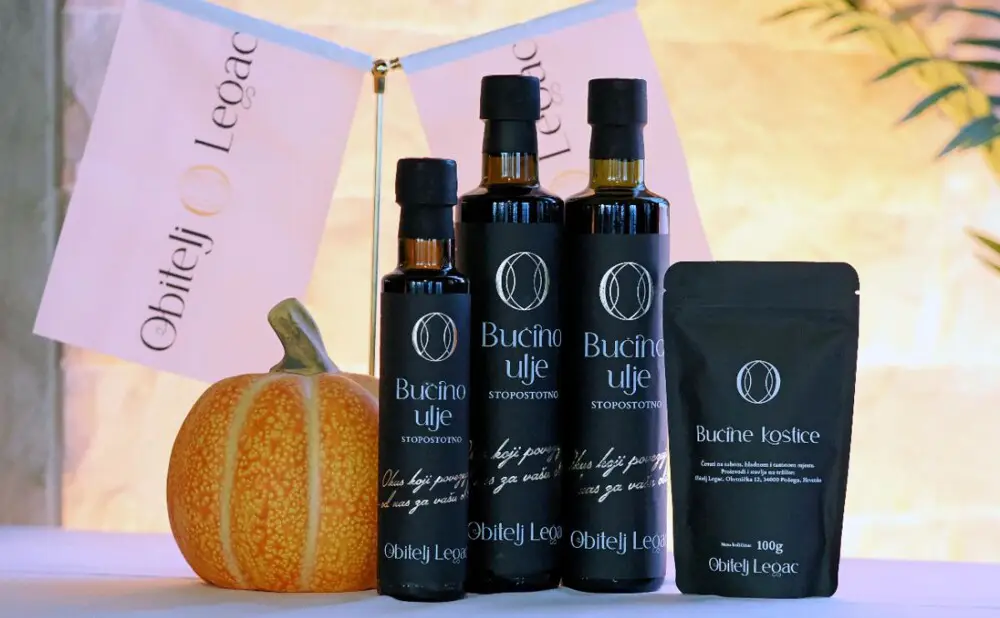
The Hayat restaurant’s home-style specialities were enriched with 100 percent pumpkin-seed oil from the Legac family of Pozega. The Legac family also make a lighter pumpkin-seed salad oil, pumpkin seeds (salted, with garlic or chilli) and pumpkin-seed flour. 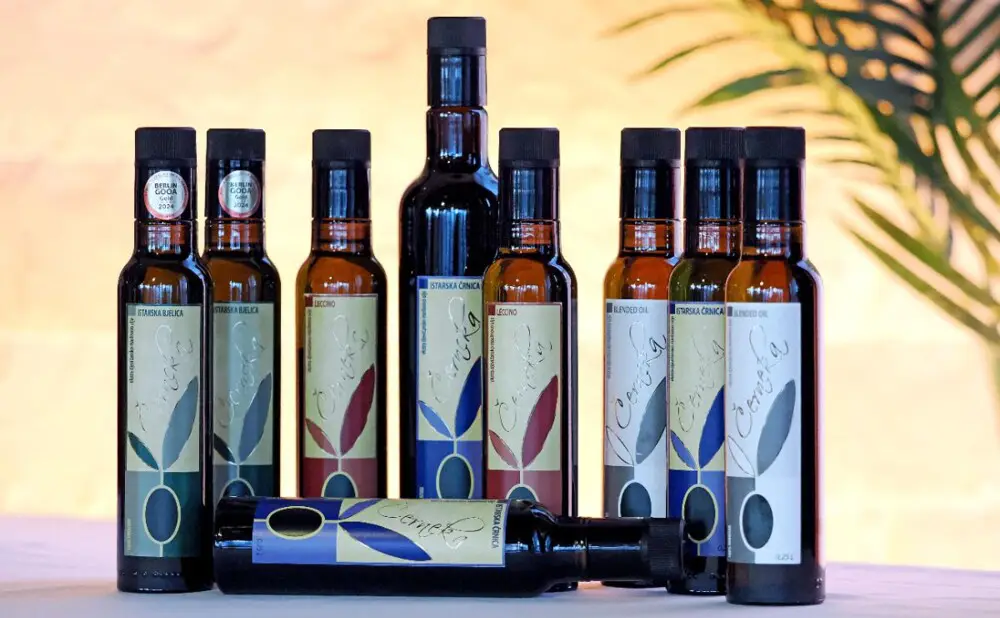
Alongside fine home-made bread flavoured with orange peel, the guests also tasted the Cerneka extra-virgin olive oil from Istria. The family has 3,500 trees in the area of Sovinjak near Buzet. They make three single-variety oils – Istarska Bjelica, Istarska Crnica and Leccino – and a blend of Istarska Bjelica, Leccino, Istarska Crnica, Frantoio, Buza and Pendolino.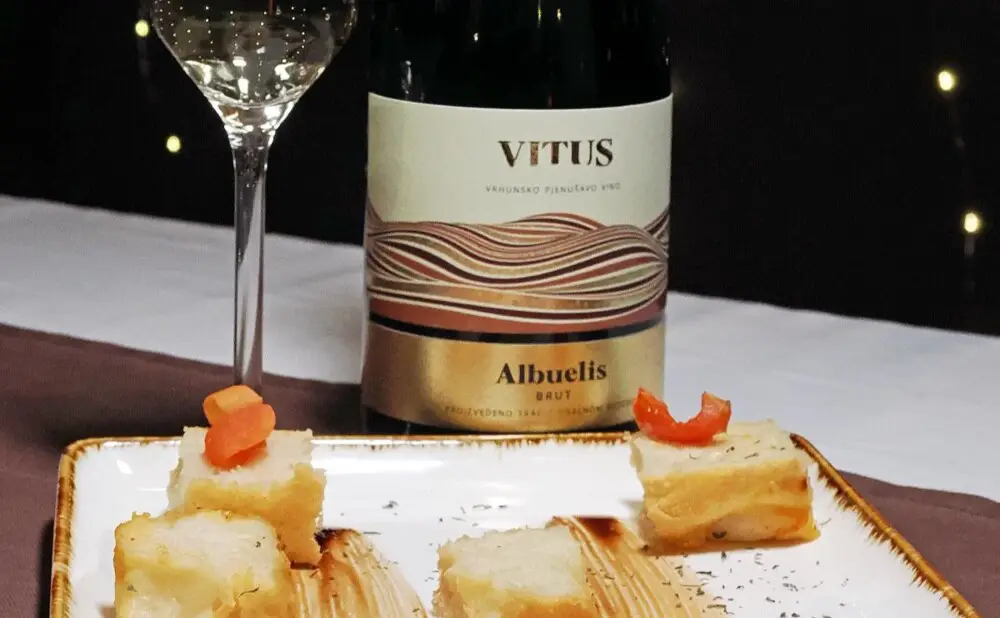
With the first bites – a focaccia with caramelised-onion jam – came a sparkling surprise from Hrvatsko Zagorje: the Albuelis brut of the Vitus winery, made by the classic method from the indigenous Zagorje varieties Starohrvatska Belina and Diseca Ranina. Albuelis is an old grape variety dating all the way back to the Roman Empire, so we named our first premium sparkling wine after it. It is buoyant, light and fresh, well suited to festive moments and also an excellent aperitif, said oenologist Mladen Kantoci. The winery was founded last year in Komor Zacretski near Zabok, and the Vitus brand grew out of the project Revitalisation of the Indigenous Grape Varieties of Hrvatsko Zagorje, carried out on the initiative of Trgocentar from Zabok, the Krapina-Zagorje County and the Faculty of Agriculture in Zagreb.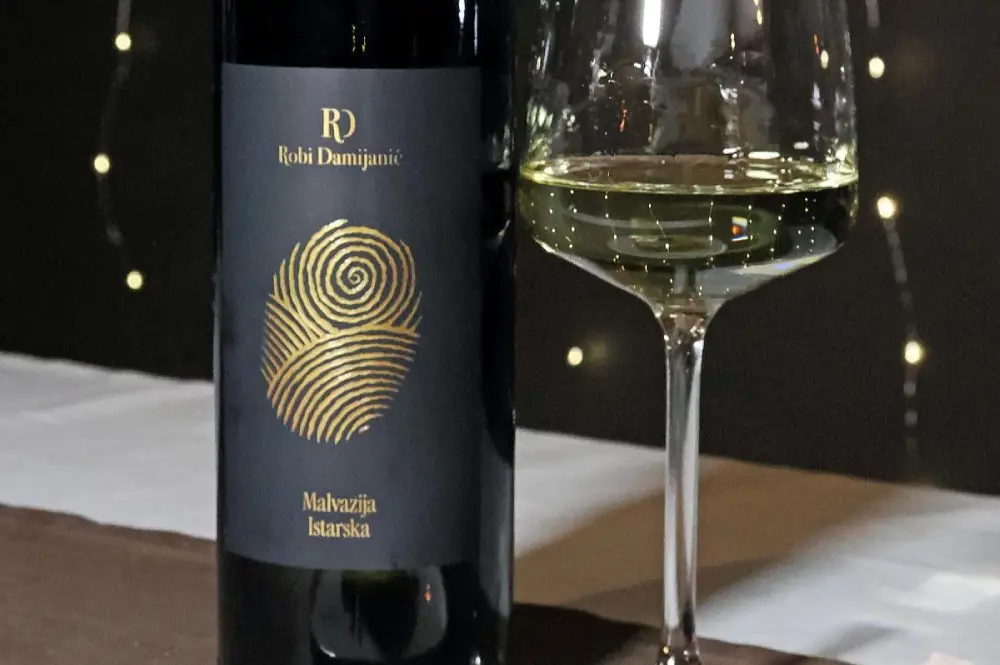
Next came feta cheese in acacia honey, wrapped in a crisp pastry, paired with the Malvazija 2024 of Istrian winemaker Robi Damijanic from Zminj, where the climatic conditions for growing grapes are not especially favourable. Robi has built on the family tradition, growing Malvazija and Cabernet Sauvignon on three hectares, with Merlot and Sauvignon Blanc soon to come into bearing. The Malvazija is fresh, fruity and aromatic, with pleasant acidity and a gentle bitterness on the finish that lends it character.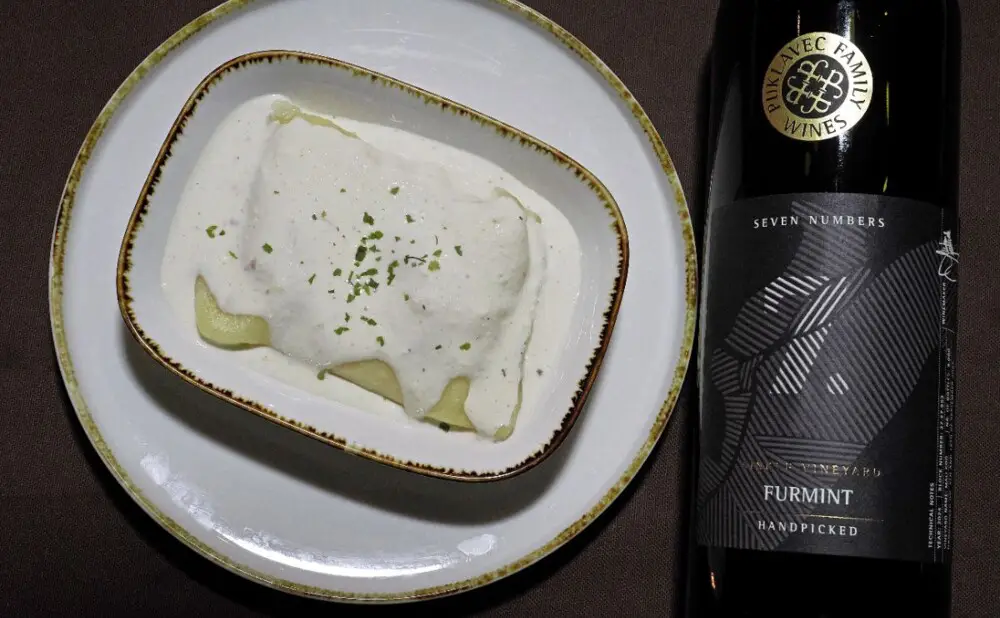
The Turopolje strukli went nicely with the Furmint 7 Numbers of the Puklavec Family Wines winery from Slovenian Stajerska. This is the variety known in Moslavina as Moslavac, in Medimurje as Pusipel, and in Slovenia mostly as Sipon. The Seven Numbers 2024 is full-bodied, with refined aromas and a complex palate. And to explain the difference between Zagorje and Turopolje strukli: the people of Zagorje make them from thin, hand-stretched dough, fill them with fresh cheese, eggs and cream and usually boil them first, then bake them under cream. The people of Turopolje, on the other hand, only boil their strukli. The dough is a little thicker and the filling is made from eggs, cream and a little semolina.
Veal cheeks in a prune sauce with gnocchi were accompanied by the Dingac 2022 of the Skaramuca winery from the village of Pijavicino on Peljesac. Guests declared this food-and-wine pairing the finest of the 30th edition of Vina uz zlicu, a project organised with great enthusiasm by Renata Cisar and Mustafa Topcagic. Made from the Plavac Mali variety (Dalmatia’s flagship red), this wine – Dingac being Peljesac’s celebrated cru – is ruby red, with a harmonious, full palate and an expressive nose recalling red berries. It has an almost ideal balance of alcohol, acidity, minerality and tannin.
To close the gathering, two desserts were served: apple strudel on a vanilla cream on the plate, and the off-dry Jade 2023 of the Belje winery in the glass. The wine is named after the semi-precious stone jade and is made from Graševina and Chardonnay from the Knezevi Vinogradi estate in Baranja. The best bunches were hand-picked and specially selected, and the wine is golden-yellow with lavish aromas of ripe peach and apricot, floral notes of acacia and fine nuances of honey, vanilla and dried fruit. The palate is rounded, full and silky, its gentle sweetness balanced by a pleasant freshness.
Photographs: Nikola Zoko