

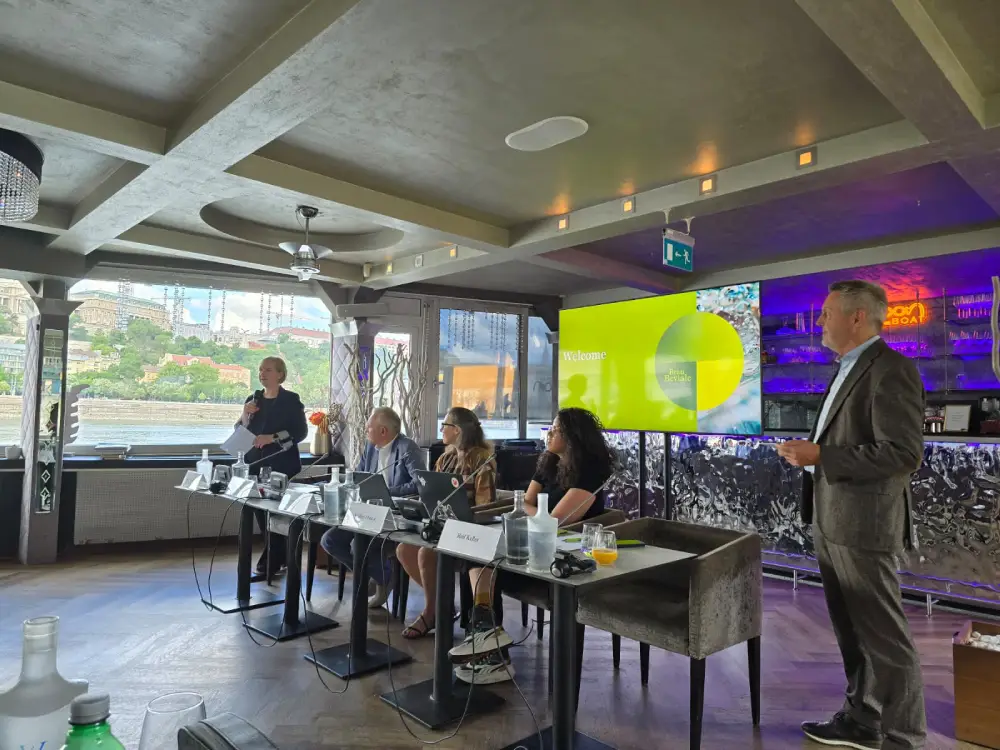
At a press conference on the BrauBeviale 2026 trade fair, held in Budapest on 2 June, the key market trends and growth forecasts shaping the region’s beverage industry were presented. The beverage market is currently developing along two parallel tracks: energy drinks, functional beverages and non-alcoholic concepts continue to record growth, while at the same time the need for togetherness, a convivial atmosphere and shared experiences remains highly important — especially in economically and socially challenging times.
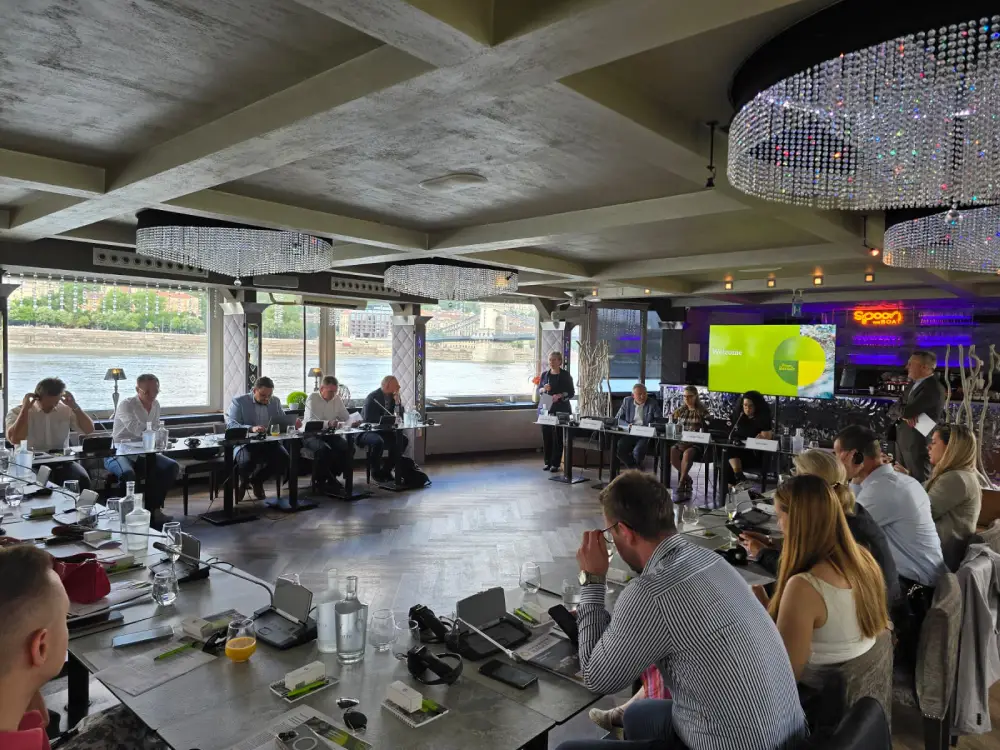
According to Markus Kosak, Executive Director of YONTEX, consumers’ desire for productivity but also for shared enjoyment is opening up new opportunities for producers — something the exhibitors will demonstrate in detail at BrauBeviale 2026 in Nuremberg, from 10 to 12 November 2026. This year’s fair will focus on changing consumer habits, flexible production and profitable non-alcoholic concepts. The exhibitor databases are already available on the official website, and online ticket sales are open.
https://www.braubeviale.com/en-US/home/
According to the figures presented at the conference, in 2025 total consumption of non-alcoholic beverages in Europe is expected to reach an average of around 179 litres per capita, while for Croatia 134.5 litres per capita is forecast. In the category of carbonated soft drinks, Croatia records consumption of 79.5 litres per capita, compared with a European average of 65.38 litres in 2025. While no significant changes are expected at the European level, market researchers forecast growth potential of 3.4 percent for Croatia.
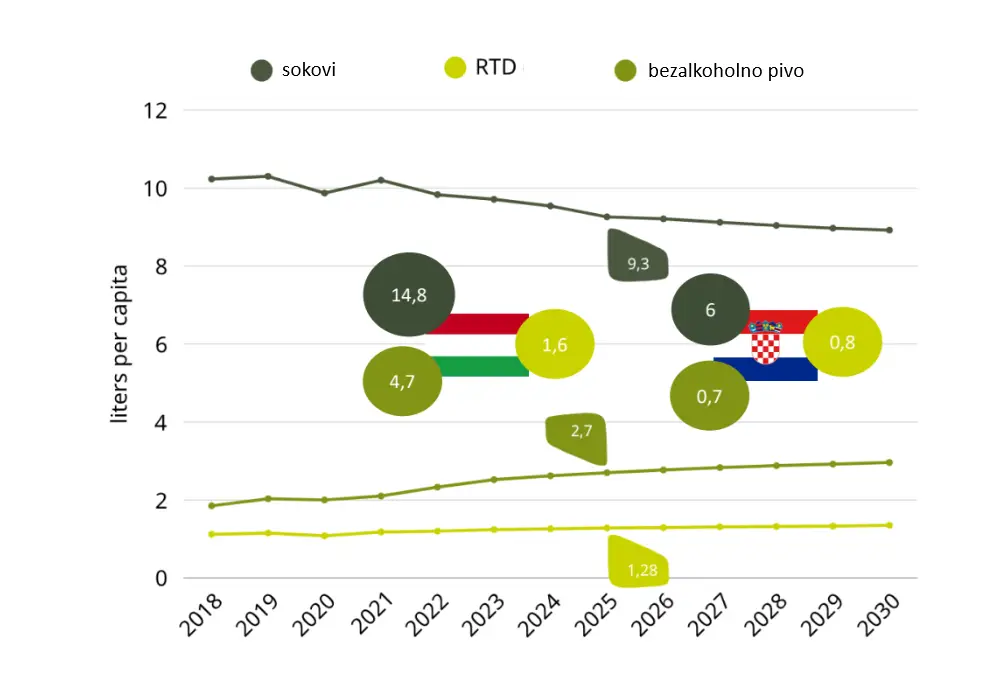
The RTD (Ready to Drink) segment also follows the European growth trends: while a rise of 7 percent is expected at the European level, with average consumption of 1.28 litres per capita, Croatia is projected to grow by 12 percent, with consumption of 0.79 litres per capita in 2025.
The Hungarian and Croatian markets show trends similar to the rest of Europe. Consumption of alcoholic beverages is largely stagnating or declining, while the non-alcoholic beverage market is growing in certain segments.
Non-alcoholic beers are also gaining ever greater importance. In 2024, per-capita consumption of non-alcoholic beer stood at 4.7 litres in Hungary and 0.65 litres in Croatia, while the European average reached 2.7 litres per capita.
At the same time, alcoholic beer continues to hold a strong position in both markets. In 2024, per-capita beer consumption stood at around 67 litres in Hungary and nearly 74 litres in Croatia. The European average for this category was just under 48 litres in 2024, with an expected gradual decline to around 45 litres by 2030.
Analyses by the rheingold institute show that in today’s uncertain world consumers seek personal stability through health, but also through the tradition and togetherness that beer symbolises. “Beer brands are ideal for creating spaces, atmospheres and moments in which togetherness can be experienced and placed at the centre of that experience. Beer brands and the hospitality sector should create places that foster a sense of connection,” explains the institute’s expert Paul Bremer.