


 Written by: dr. sc. Željko Andabak, Vinski klub
Despite continuous warnings from countless front pages, the alarm bells over exceptionally rapid and devastating climate change have grown louder over the past decade. Numerous plant and animal species are disappearing, habitats are being irretrievably lost, the polar caps are melting, and a whole series of extreme climate events is occurring ever more frequently. Just how concerned the Old Continent is can be seen from the European Union’s “European Green Deal”, which aims to make Europe climate-neutral by 2050.
It follows that neither the grapevine nor viticulture and winemaking can escape the all-encompassing impact of climate change. With that in mind, the question arises of how climate change affects the vine itself. The grapevine has accompanied humankind for millennia through every climatic, demographic and economic shift. Although it is one of the most widespread and adaptable plant species, cultivated on every continent inhabited by humans, it is nonetheless seriously threatened by climate change. According to the available scientific research and projections, viticulture and winemaking will undergo enormous changes, of which we will highlight only a few below.
Global warming caused by the greenhouse effect resulted in a global temperature rise of 0.74 °C between 1906 and 2005, with the rate of increase more than doubling over the past fifty years and more. The use of fossil fuels, meanwhile, is responsible for three quarters of total CO2 emissions over the past twenty years. Similar upward trends across hundred-year series have been recorded at the national level as well, amounting to 0.02 to 0.03 °C per decade.
It is important to stress that the climate changes caused by the processes described above are not evenly distributed in space — they are significantly more pronounced in the northern hemisphere. What these changes mean for the world of wine, seen through the eyes of a lover of Bacchus’s nectar, I will try to explain through a few vivid examples.
According to some scientific studies, the United States will lose over 81% of its distinguished, premium or grand cru sites by 2100. Rising temperatures and water scarcity will cause the loss of more than 50% of the vineyard area of the famed Napa Valley. On the other hand, we may find ourselves tasting rare, fine vintages from the Yukon, Oregon or Washington. The most endangered will be the famous small, unique wine regions, or areas known for growing only a handful of varieties — or a single one. Alsace is already recording shorter growing seasons and earlier harvests than ever; Burgundy could become the new Bordeaux; and Tuscany, like Champagne, is “preparing” for a change of varieties. Under some of the more pessimistic scenarios, viticulture will no longer be possible across much of the Mediterranean (Spain, France, Portugal, Greece, Italy, Croatia) due to extreme temperature rise and a lack of water for irrigation. In many famous Australian wine areas, such as the Murray River basin, vineyards will disappear, and New Zealand would no longer be the byword for Sauvignon Blanc. At the same time, in South America vines could be grown at altitudes unimaginable today. Mendoza in Argentina, for instance, where vineyards are planted at over 1,100 metres above sea level, might come to be seen as a humble little hill in the context of such scenarios.
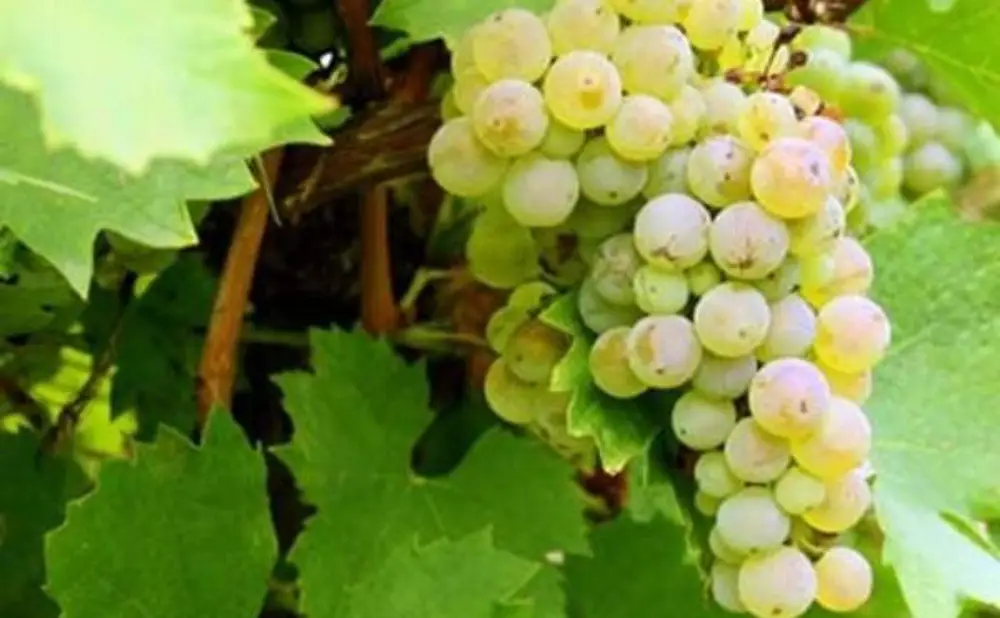
With such scenarios in mind, it is fair to ask what wines we will be drinking in the future. The growing share of warm growing seasons will significantly affect many of wine’s physical and chemical characteristics, and with them our sensory experience of wine. Generally speaking, grapes will accumulate ever more sugar, less acidity, and fewer anthocyanins and methoxypyrazines. For beginners, it is worth noting that anthocyanins are the polyphenols responsible for colour in red varieties, while methoxypyrazines are a group of aromatic compounds particularly pronounced in Sauvignon Blanc and Cabernet Sauvignon. All of this means wines should become less harmonious and less aromatic, with more alcohol.
Although all of the above points to a dark scenario, there is light at the end of the tunnel. Modern science and technological progress are already achieving enormous advances in vineyard management (ampelotechnical and agrotechnical measures) as well as in vinification and winemaking technology, aimed at mitigating galloping climate change and adapting to new and hitherto unknown environmental conditions. Still, it is important to point out that perhaps the greatest loss at the global level will be precisely the disappearance of some of today’s most treasured wine regions — but also the arrival of new varieties and new great wines.
Having applied the adage “Think globally, act locally”, it is time to consider the national perspective. The more southerly parts of Europe (the Mediterranean), including those of Croatia, will be more exposed to the negative impacts of climate change. According to some forecasts, warm weather extremes in the Mediterranean could rise by 4 to 6 °C, while cold extremes would, by the same projections, drop by 2 to 6 °C. Almost half of the vineyards found in Croatia today lie in the Mediterranean zone, which points to the exceptional exposure of Croatian viticulture and winemaking to the coming climate changes.
It should be noted here that Croatian scientists — led by researchers from the Department of Geophysics of the Faculty of Science and the Department of Viticulture and Enology of the Faculty of Agriculture, University of Zagreb — carried out extensive research on this subject between 2017 and 2019, producing valuable data and predictions of future weather conditions within the project Viticulture and Climate Change in Croatia (VITCLIC).
Following the results of this research, a revision of Croatia’s viticultural zones has been proposed, given that the Winkler index (an agro-climatological index) shows a warming trend relative to the 1961–1990 reference period. These findings are extremely important, since viticultural zones form the basis of wine-region classification, which has significant consequences for grape and wine production, including from a legislative perspective. Numerous models of future climate conditions also show significantly greater exposure of the eastern parts of continental Croatia (Slavonia, the Danube region, Srijem, Baranja) as well as the entire coastal Croatia.
The interior of Dalmatia and Istria will become suitable for varieties that today are grown exclusively on southern, sea-facing sites. Southern exposures in these areas may become undesirable, and vineyards will be planted on northern exposures instead. Today’s famous southern sites (Dingač, Postup, Sv. Nedjelja, the slopes above Bol and others) will require significant changes in varieties and in vineyard and cellar techniques. As for continental vineyards, those of north-western Croatia (Zagorje, Plešivica, Međimurje, Bilogora, Moslavina, Pokuplje) will be least affected, and will even be able to grow some later-ripening varieties that are unimaginable in those parts today. Although no climate model can give us exact figures, it will point to the trends — and thus to the significance of all of the above for the future of Croatian viticulture and winemaking.
Since none of us sits enthroned at Delphi like the famed Pythia, it is hard to say unequivocally what the future holds. But perhaps, in our twilight years, we will be drinking a fine Pošip or Graševina from Lika with our grandchildren, wistfully remembering the great Plavac wines of Dingač.