

Wine production on the Croatian banks of the Danube is first mentioned in the 3rd century, in the time of the Roman emperor Marcus Aurelius Probus, and Baranja owes its very name to wine: translated from Hungarian, it means “the mother of wine”. The foundations of today’s Belje were laid by Prince Eugene of Savoy, who was rewarded for his victory over the Ottomans at Senta in 1697 with an estate between the Danube and the Drava. In Kneževi Vinogradi he found a great wine cellar, alongside which he built irrigation systems and planted vines, guided by the principle that only the best was good enough for him.
That old cellar, a gator dug into the hillside in the centre of Kneževi Vinogradi, is first mentioned as early as 1526 in accounts of the Battle of Mohács, and is today the largest wine cellar in Baranja. On three levels and 1,200 square metres rest wooden barrels of Slavonian oak from the Spačva forests, along with a wine archive of more than 20,000 bottles, the oldest of which dates from 1949.
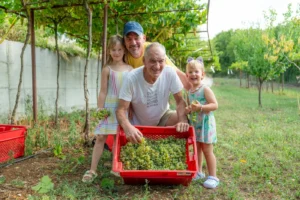
Belje Wines is today the largest Croatian grape producer, with 564 hectares of its own vineyards on the southern slopes of Banovo brdo, where the combination of loess and chernozem gives the vines minerality and abundant nourishment, and the wines are made exclusively from the estate’s own hand-picked grapes. In the heart of the vineyards a new winery was opened in 2011, a complex of more than 10,000 square metres with a capacity of eight million litres, one of the most modern in this part of Europe.
From fresh Graševina to Goldberg
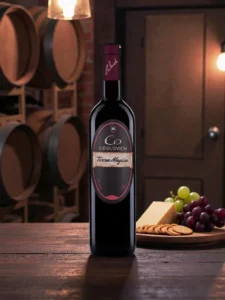
Alongside Graševina, the house’s most important variety, Chardonnay, Merlot, Cabernet Sauvignon, Frankovka and Pinot Noir are grown, and the range is organised in four lines: the fresh Cuvée (Blanc, Rosé, Rouge), the varietal Select, the Premium line from the sunniest sites, aged on fine lees and then in large Slavonian oak barrels, and the prestigious Goldberg. It takes its name from the site at the very top of Banovo brdo which the Romans called Aureus Mons, the golden hill: the grapes are picked in several stages, including late harvests, and before release the wine ages in wood and then for another year in the bottle, in limited quantities.
The quality is confirmed by Decanter golds and regional trophies, Mundus Vini gold medals with titles of best Croatian wine, awards from the Berliner Wine Trophy and the Concours Mondial de Bruxelles and an IWC trophy, while at AWC Vienna 2025 Belje Wines was named the best winery from Croatia for the third time.
The whole story can also be experienced in person: the tour begins at the Banovo brdo lookout surrounded by millions of vines, continues through the modern winery, and ends in the old cellar with a tasting of wines and traditional Baranja specialities.
Website: www.vinabelje.hr