

 Written by: Krešimir Kožić, Vinski klub
How old vines, pre-industrial winemaking and stubborn consistency created one of California’s greatest wine legends
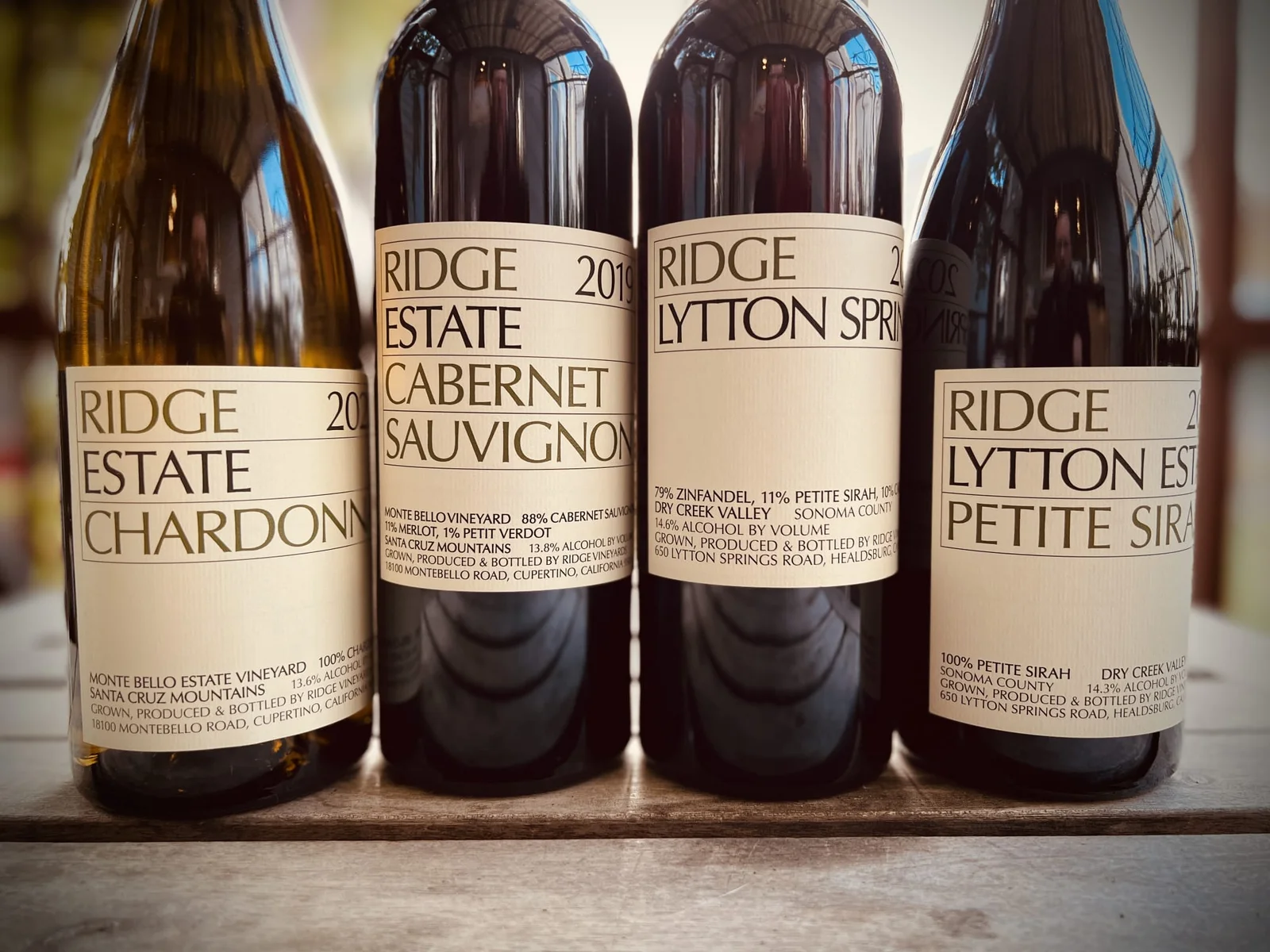
Mention the Californian winery Ridge Vineyards to the average wine connoisseur and the first association will almost always be Monte Bello. This is their cult Cabernet Sauvignon, which earned its global reputation at the legendary Judgment of Paris in 1976 and confirmed its exceptional longevity with a triumph at the rematch tasting in 2006. Yet while Monte Bello represents Ridge’s prestige, its true heart, historical legacy and terroir soul lie in an entirely different and often misunderstood variety: Zinfandel.
While the rest of California in the 1970s and 1980s was eroding Zinfandel’s reputation by turning it into cheap, overly sweet White Zinfandel, and later pushing it to the extremes of over-extracted, jammy “alcohol bombs”, Ridge approached it with the seriousness Californian winemakers usually reserved for Cabernet Sauvignon. The result of that stubbornness is wines such as Geyserville and Lytton Springs, labels that fundamentally redefined the idea of Zinfandel and proved that this variety, when approached with respect, can stand alongside the world’s great wines.
The blind tasting that changed perceptions
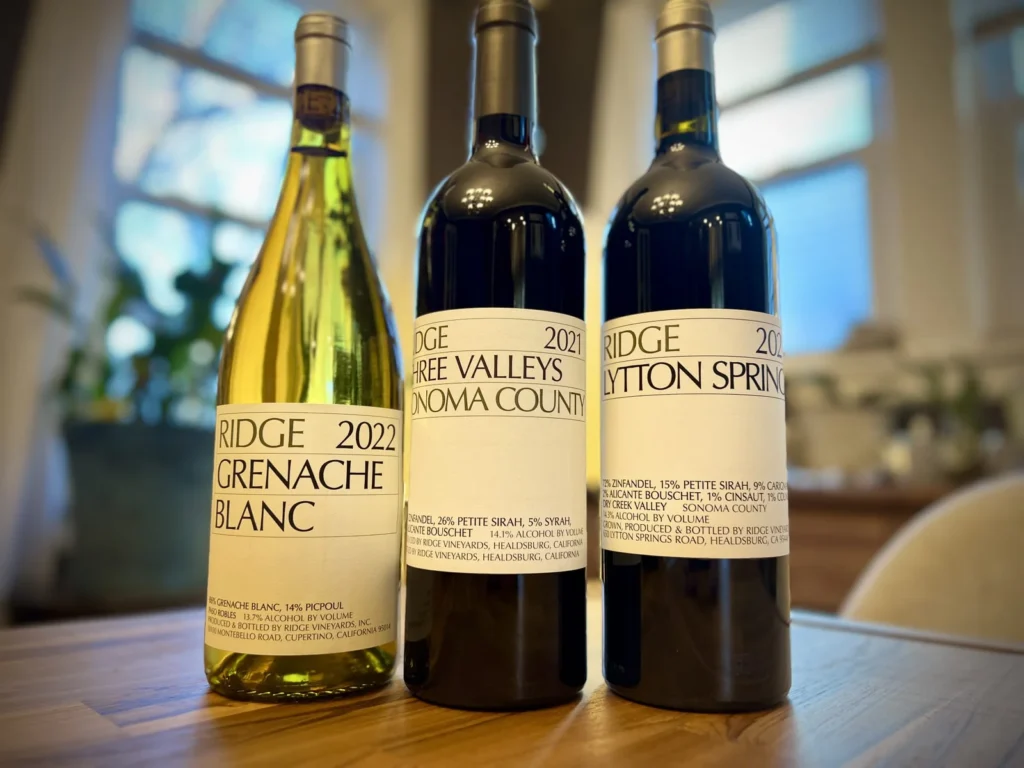
I saw for myself how universal Ridge’s elegance and precision are at the beginning of this year. A close friend, a passionate wine lover and an uncompromising admirer of Dalmatian and regional terroirs, set me an intriguing challenge. The task was clear: find three foreign wines that could stand on equal terms with his personal favourites, all of them top domestic wines: Luka Krajančić’s Pošip Sur Lie 2022, K Nebu Chardonnay 2022 and Kiridžija’s powerful Dingač 2020.
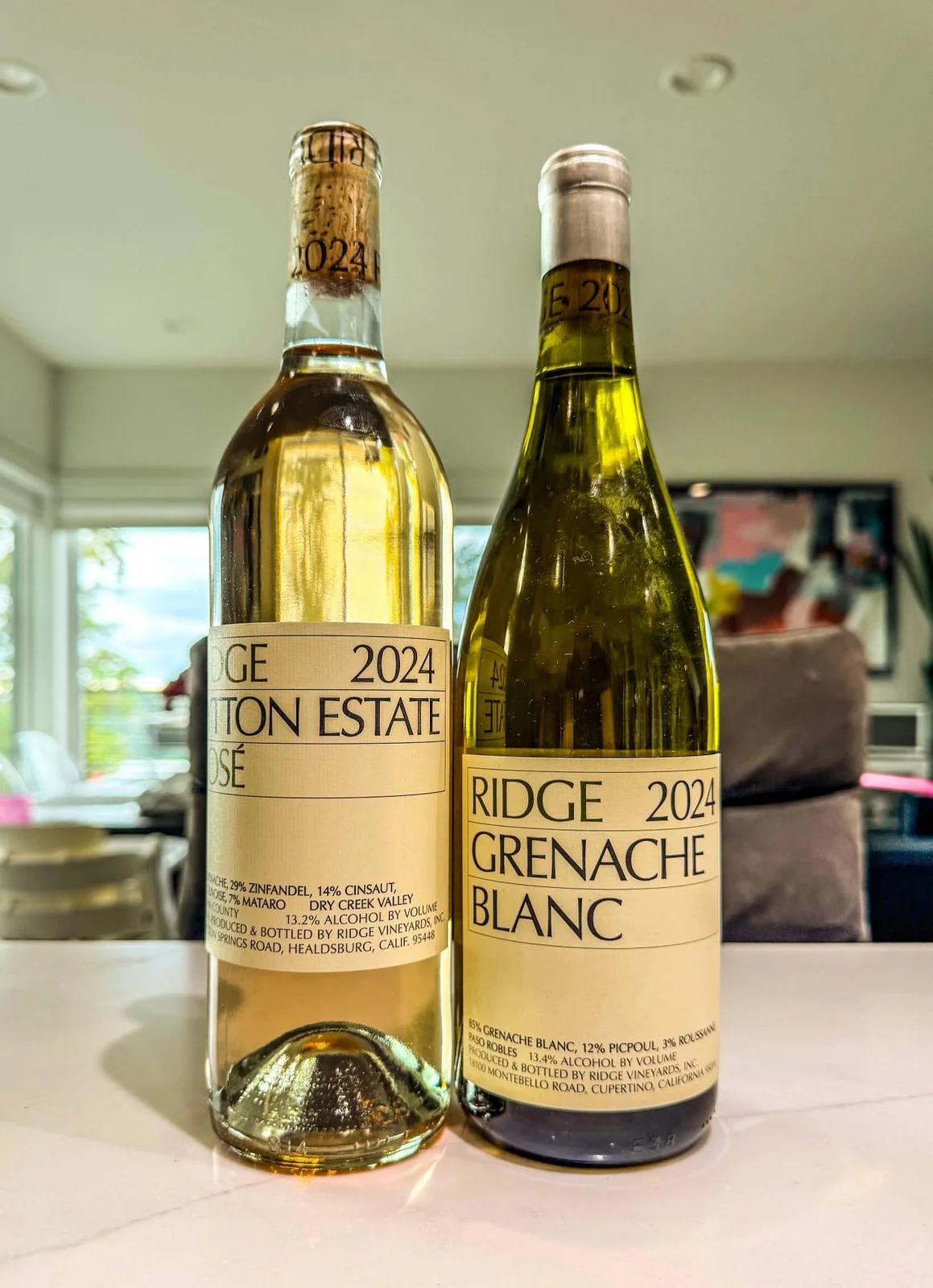
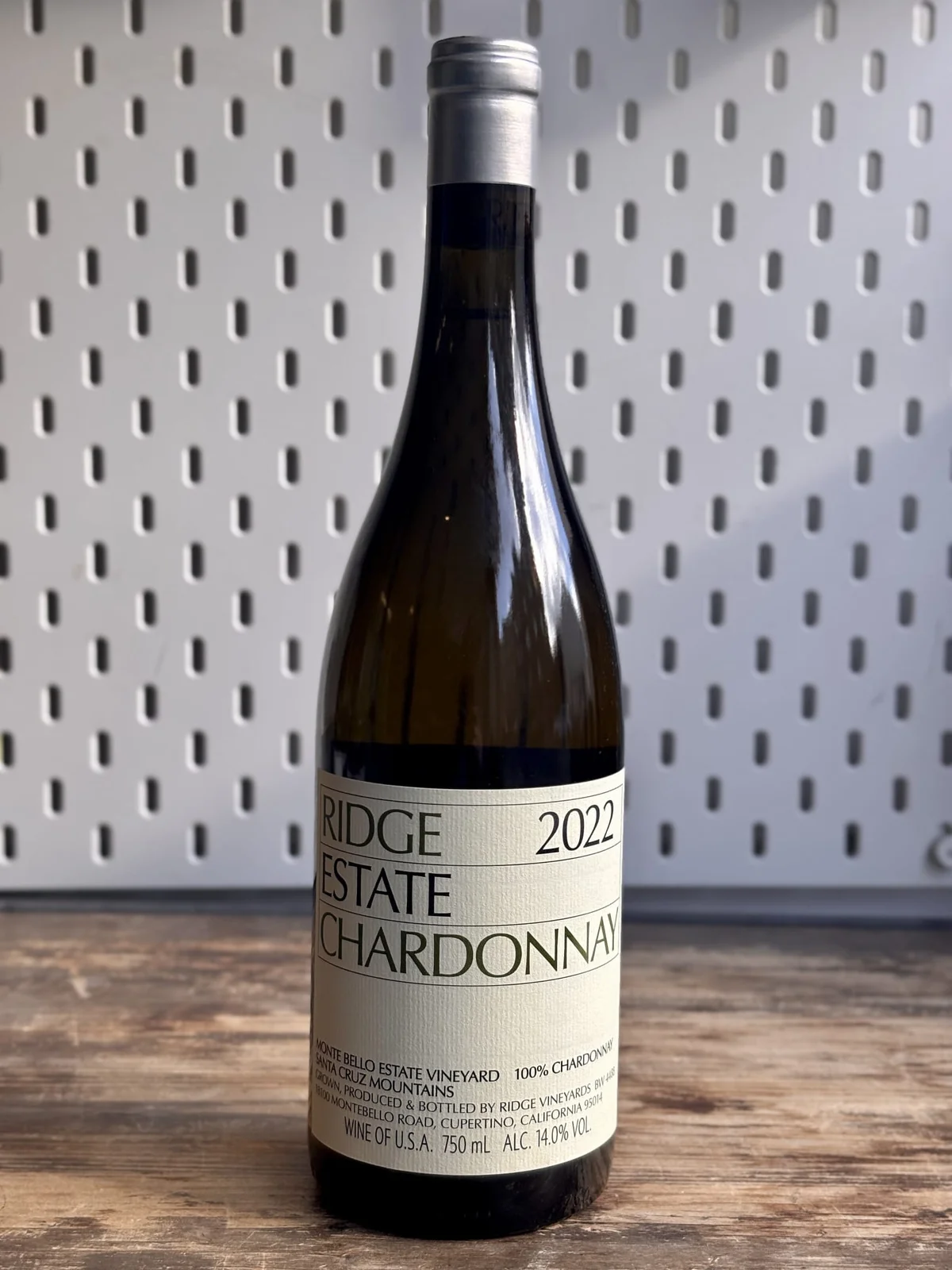
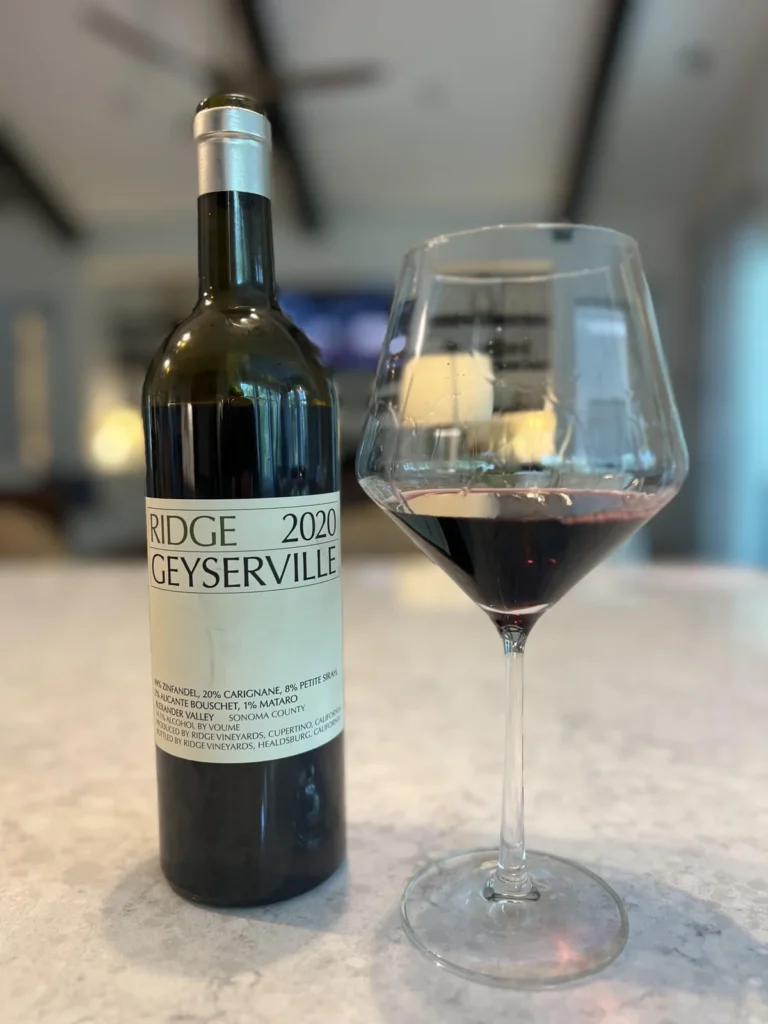
On paper the challenge looked complex, but my answer was immediate and pointed to just one name: Ridge Vineyards. Against Krajančić I set their Grenache Blanc 2023, against K Nebu Chardonnay the Ridge Estate Chardonnay 2022, while the cult Geyserville 2020 stepped into the ring with Kiridžija’s Dingač.
We gathered a group of seven, and the tasting was completely blind. The result? In the context of our tasting, it was almost unanimous: only one person voted for a domestic favourite, K Nebu Chardonnay, while in every other duel the Californian wines surprised and impressed the tasters.
The result did not diminish the greatness of the domestic labels. On the contrary, it was precisely their quality that gave weight to the realisation of how convincing Ridge had been. It was a powerful confirmation of why this winery enjoys almost mythical status in the wine world.
A return to pre-industrial winemaking
To understand why Ridge’s Zinfandel is so different, we need to go back to 1962. In the hills above Silicon Valley, on Monte Bello Ridge, the winery was revived by three Stanford engineers, on a historic estate planted in 1885 by Dr Osea Perrone. They approached winemaking analytically, but with deep respect for the past.
The key turning point came in 1969 with the arrival of the man who would become an icon of world winemaking, Paul Draper. Draper was not a trained oenologist but a Stanford philosophy graduate who had devoted his years abroad to learning traditional methods. His philosophy was simple but radical: less intervention in the cellar demands far more work and precision in the vineyard.
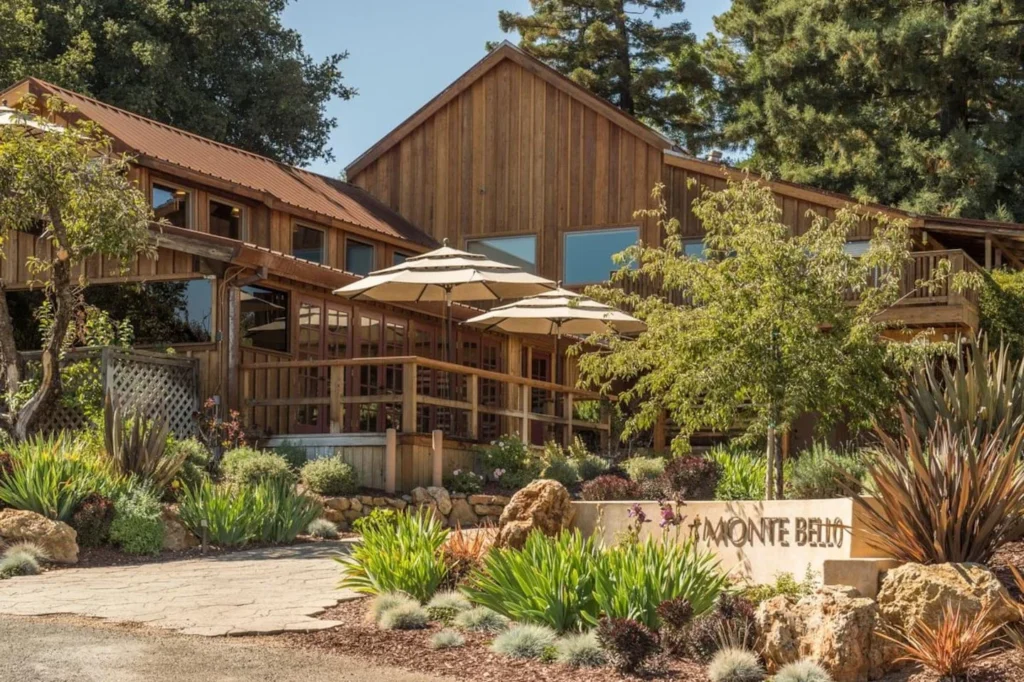
At a time when Californian winemaking was turning into a high-tech industry relying on commercial yeasts, enzymes and countless cellar corrections, Ridge under Draper’s leadership called its approach “pre-industrial” (pre-industrial winemaking). Fermentations rely on naturally present yeasts, and procedures such as sterile membrane filtration, which can strip a wine of part of its texture and character, are avoided. Ridge was also the first major American winery to voluntarily list ingredients on its back label, openly questioning an industry practice that mostly does not disclose additives.
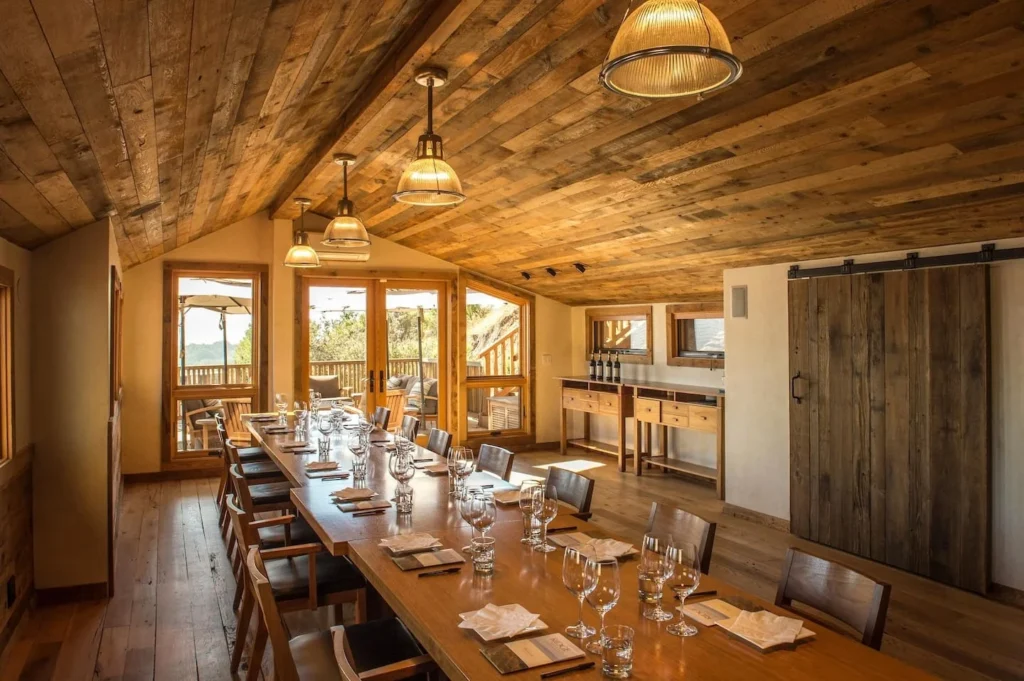
The secret of field blends and old vines
And while Ridge’s Grenache Blanc and Chardonnay showed top-level precision in our blind tasting, the real surprise of the evening for lovers of robust Plavac Mali was Geyserville. Only a wine from special, historic sites can set a Californian Zinfandel against Dingač, avoid jammy overripeness and still keep a firm acid backbone.
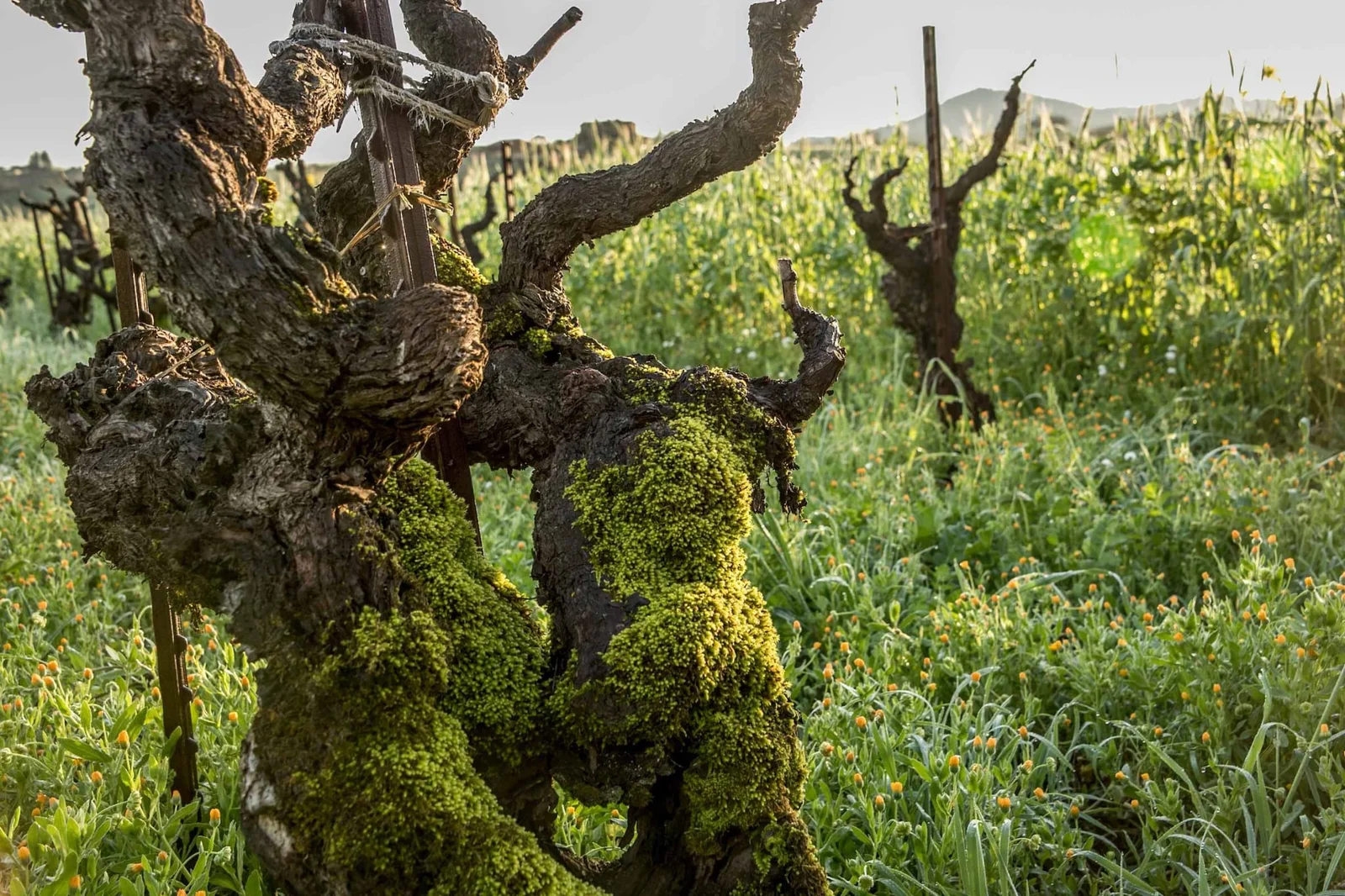
Geyserville, which Ridge has made since its first vintage in 1966, and its sister vineyard Lytton Springs, whose first Ridge vintage was made in 1972, are both in Sonoma County. The Geyserville vineyard is home to vines, some of which are more than 130 years old. But its secret also lies in the fact that it is almost never 100 percent Zinfandel.
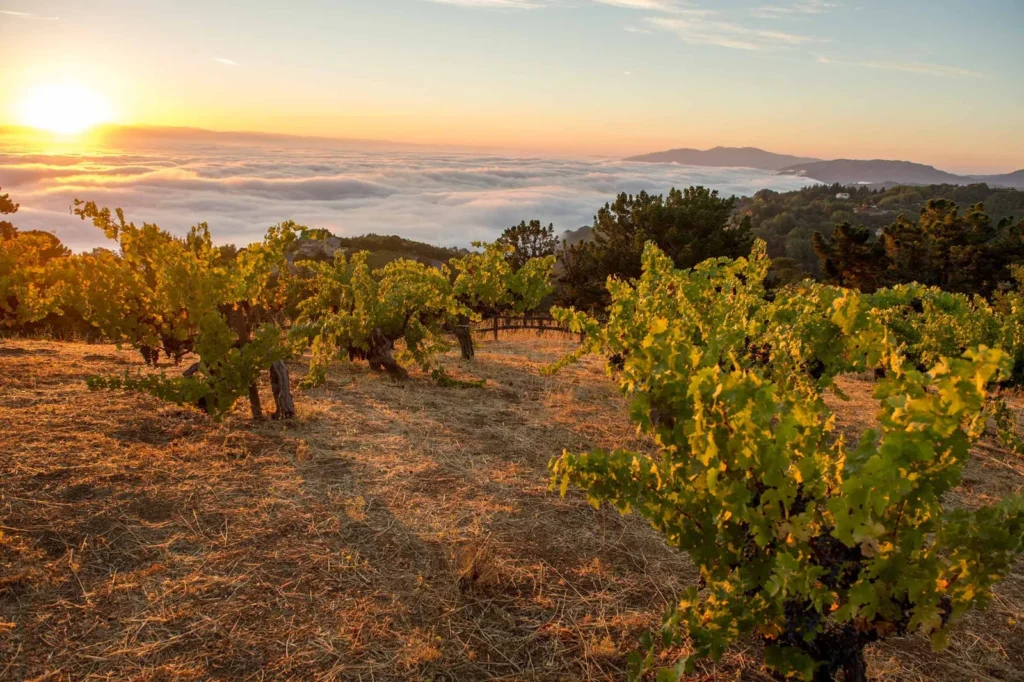
Ridge has preserved the tradition of the 19th-century Italian immigrants who planted their vineyards as a field blend, a historic mixed planting in which different varieties grow side by side and together shape the identity of the wine. In the 2020 vintage, which outshone Dingač in our tasting, the blend was 69% Zinfandel, 20% Carignane, 8% Petite Sirah, 2% Alicante Bouschet and 1% Mataro. Ridge vinifies individual parcels and varieties with care for their character, and the final blend keeps the logic of the old mixed vineyard. Zinfandel brings juicy fruit, Petite Sirah colour and firm tannic structure, Carignane vital freshness and an earthy dimension, while Alicante Bouschet and Mataro add depth and spicy layering. The result is a wine that does not feel like a blend engineered in a laboratory, but like a complete interpretation of a place.
That is why Ridge’s Zinfandels do not chase extreme alcohol. They keep their balance, freshness and the herbal and spicy notes of black pepper and dried herbs, which recall French classics more than the stereotype of the commercial Californian style. Most importantly, these wines can age for 15, 20 or even 25 years, an ability that is still rare among modern Zinfandels.
The present and a lesson in consistency
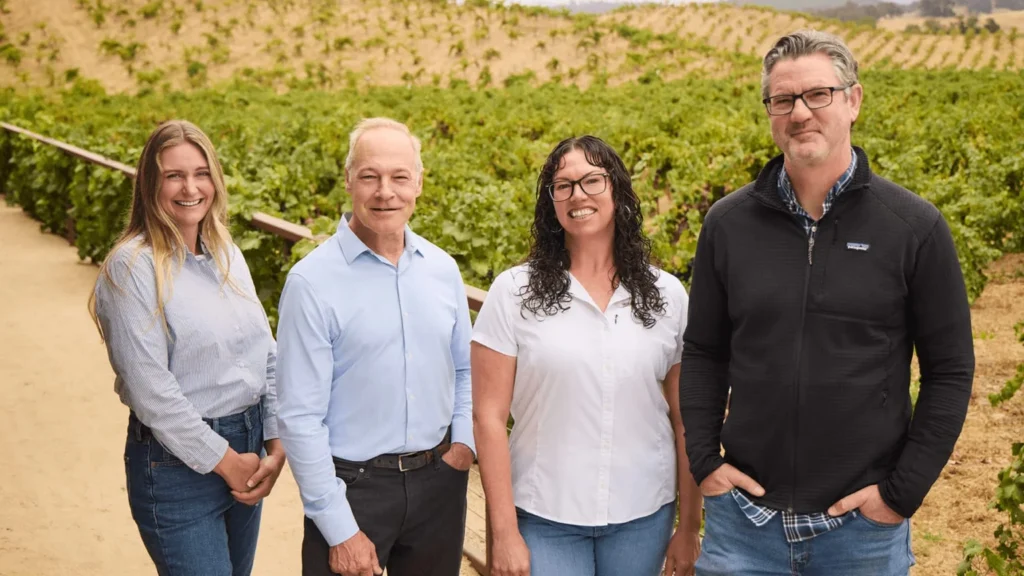
Today, with Paul Draper in well-earned retirement and holding the title of Winemaker Emeritus, the continuity of his philosophy is safeguarded by a team led by John Olney, head winemaker and chief executive, alongside David Gates, long-time head of vineyard operations. At its core, Ridge has not changed: it has remained remarkably resistant to short-lived trends, fashionable styles and market pressure.
What places Ridge among California’s most important wineries is not only the fact that its wines have left a strong mark at great blind tastings, from Paris in 1976 to our friendly gathering earlier this year. Nor is it about elitism: while Monte Bello now commands very high prices, Geyserville remains relatively accessible to a wider audience and offers an exceptional balance of price, character and serious winemaking artistry.
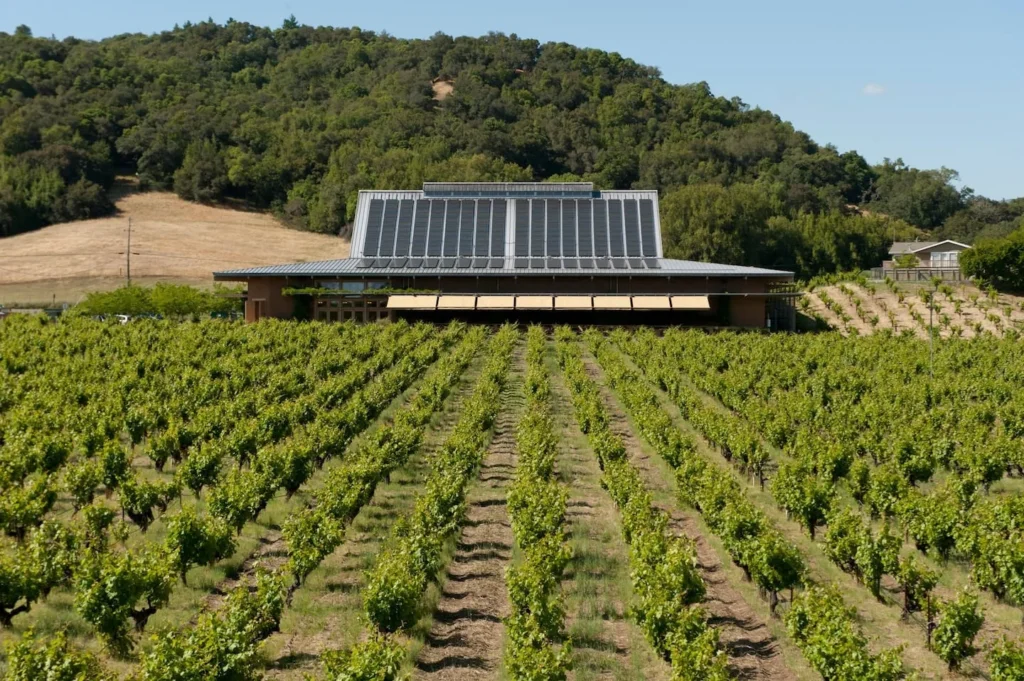
Ridge Vineyards did not redefine Zinfandel by inventing something modern and new. On the contrary, it did so through the courage to preserve the old. Through decades of consistency, refusing industrial shortcuts and stubbornly celebrating old vines, traditional cellar work and terroir, Ridge has proved a great wine truth: honesty to the vineyard will always outlive the fashion of the moment.