

 Written by: Tomo Jakopović
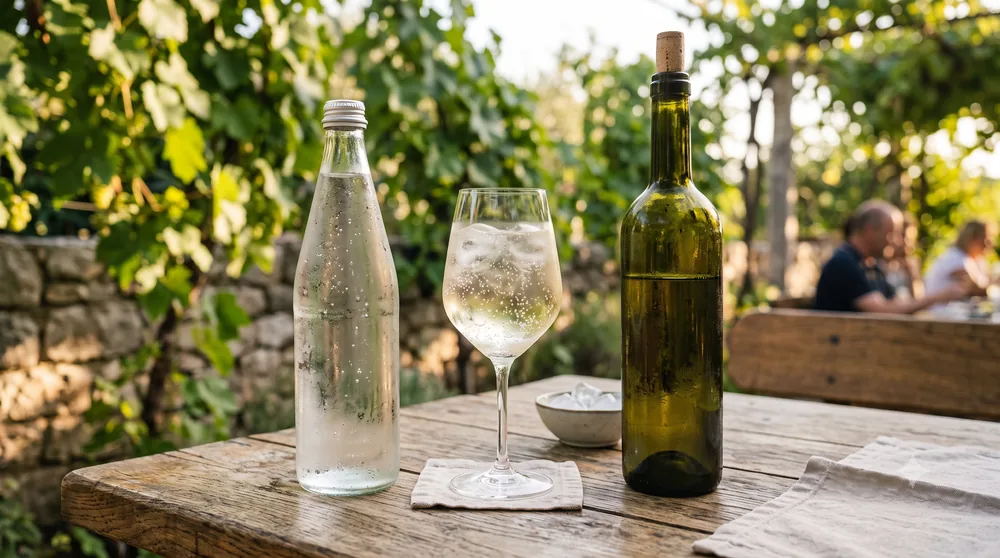
Gemišt is, on the face of it, a simple drink: white wine and sparkling water. In Croatian society, however, it stands for far more than a ratio of wine to bubbles. Over the years Gemišt has outgrown its gastronomic role here and become a symbol of sociability and everyday life. Few drinks reflect the mentality of a people as clearly as Gemišt does for Croatians.
Its importance stems not from luxury, prestige or exclusivity but from precisely the opposite — from accessibility. In time it became the drink of the ordinary person, and that is exactly why it carries such extraordinary symbolic weight. It is there at family gatherings, celebrations, weddings, parish feasts, sporting get-togethers, after a hard day’s work, in local cafés and taverns. It belongs not only to wine culture but to the culture of togetherness. Gemišt may well be the finest cocktail anyone ever devised, and whether we admit it or not, in Croatia it has become a cultural and sociological phenomenon that is hard to explain in full.
Historical development
The roots of Gemišt reach into the Central European cultural space of the Austro-Hungarian Monarchy. The word itself comes from the German gemischt, meaning mixed, and the custom of blending wine with sparkling water spread across the territories of present-day Croatia, Slovenia, Austria and Hungary — precisely across well-developed wine regions.
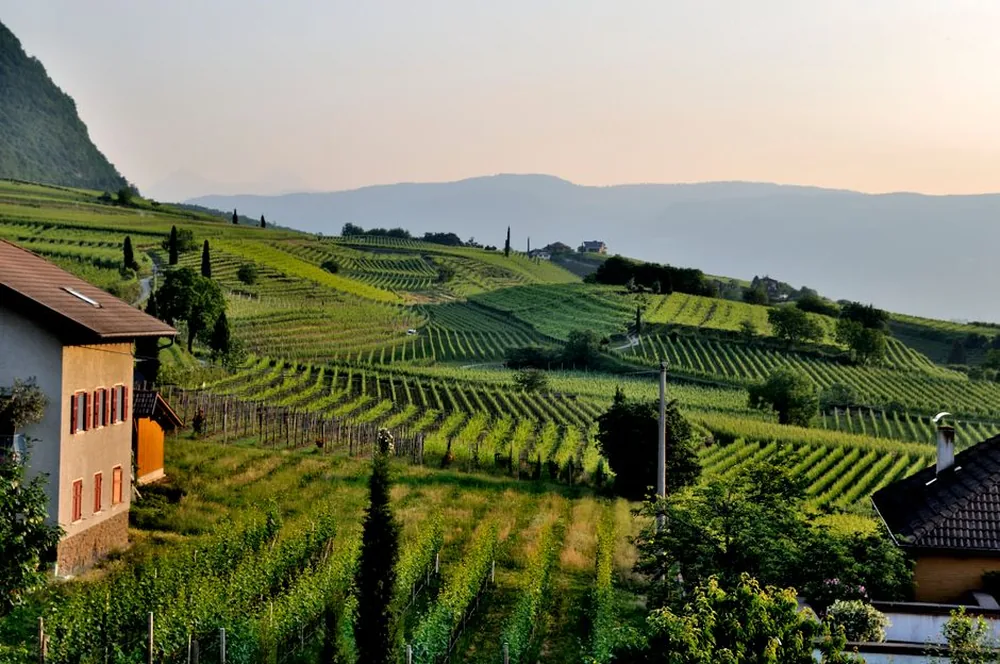
In Croatia, Gemišt took particular hold in Hrvatsko Zagorje, Međimurje, Prigorje, Moslavina and Slavonia, but also throughout the rest of continental Croatia, where wine was an integral part of daily life. Unlike Mediterranean culture, where wine is more often drunk on its own or with a little plain, still water, continental culture developed the habit of diluting wine with sparkling water, making the drink lighter, more refreshing and better suited to long hours of company.
Lately the “correctness” of mixing wine with water has been questioned more and more — and, interestingly, most often by people who came to wine relatively recently through business lunches or wine education of dubious quality. Only the crude and the ignorant, infected with snobbish petit-bourgeois posturing, could call the addition of water to wine, or the drinking of Gemišt, a sacrilege. I reject such attitudes with contempt.
However…
As with everything in life, things need to be set up properly, and Gemišt is no exception — otherwise it will taste poor, and you will have done a disservice to the wine, to the grower who made it and to the person drinking it. Choosing a suitable wine is essential if the Gemišt is to be tasty and refreshing. The wine should be moderately to lightly aromatic, medium to lean in body, and high in acidity. Among the most widely planted varieties suited to wines of this kind are early-harvested Graševina, Kraljevina, Moslavac and Škrlet. Using an aged, structured wine, an aromatic variety such as Muscat or Traminac, a wine raised in oak, an off-dry or semi-sweet wine, a macerated one or — heaven forbid — an archive bottling really can be sacrilege, and there the Gemišt sceptics would have a point. Nor is the choice of water unimportant, though these are the finer points over which devotees of this magical drink debate endlessly, rather like selecting the national football team: everyone believes they are right and that their own choice is best. Waters differ considerably, and not every water suits every wine that makes a good Gemišt. Some are more heavily carbonated, some saline, some a little flat, so the reaction with the wine varies — and picking the best one remains a matter for the Gemišt faithful.
Gemišt as a social ritual
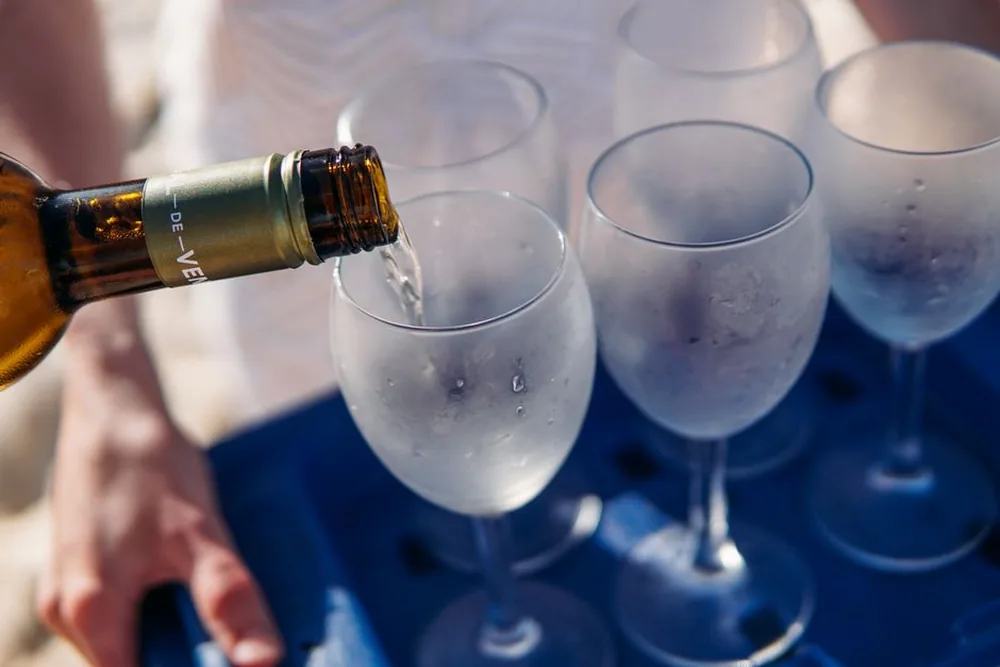
One of the most important characteristics of Gemišt is its social dimension. It is rarely drunk in haste or out of a desire to get drunk. Gemišt is drunk slowly, over the long haul. In many Croatian communities, ordering “a Gemišt” means stepping into a social space where conversation runs for hours. The time spent over a Gemišt is often more important than the drink itself. The table becomes a place for exchanging opinions, political argument, business deals, family stories or simply company. In sociological terms Gemišt serves to bring people together; it connects them and makes them happy. It slows the rhythm of daily life and allows something increasingly rare in modern society: company without a predetermined purpose. Unlike spirits, Gemišt carries a measure of restraint. The mineral water lowers the alcohol concentration, making the drink suitable for gatherings lasting several hours without sudden intoxication. That does not mean one cannot overdo it — and sometimes break into song, because it gladdens the soul — but the cultural message it carries is a different one. It stands for control and enjoyment, not for competition in volume consumed. For that reason Croatian culture has often embraced it as a “working drink” after physical labour, especially in the vineyards, where it is both reward and refreshment.

Identity
People living across continental Croatia frequently tie their everyday lives to Gemišt. It is part of their identity almost as much as tamburitza music, vineyards, hillside cellars or village fêtes — and no one has any business questioning that. In many areas the way a Gemišt is prepared is a matter of local pride. Ratios differ, and arguments about the “proper Gemišt” are often part of a friendly rivalry. So alongside the standard 2-in-8 (the ratio of water to wine), or the two-thirds wine to one-third water most common in the hospitality trade, you may hear someone ask for a “fiftač” (half wine, half water), or a “sportski” (two parts water to one of wine), or else a “škropec”, where a decilitre of wine in a small glass is merely sprinkled with mineral water. Knowing how to choose the wine, hitting the right proportion of mineral water, understanding when a Gemišt is called for and when it is not, and recognising the quality of the local wine are small competences that mark you out as belonging to the local culture.

In the end, Gemišt is one of those rare examples of an everyday habit growing into a sociological and cultural phenomenon. Its significance comes not from its ingredients but from the meaning it has acquired over time — so it sometimes matters more who you drink it with than what you drink, because a glass of Gemišt holds a great deal more than wine and mineral water.