

 Written by: Krešimir Kožić, Vinski klub
Santorini is probably the most famous Greek island. It belongs to the Cyclades archipelago, is unique in many ways, and especially so in its wines.
In its present form Santorini was created by a great eruption in 1613 BC. Its winemaking tradition is one of the oldest in the world; records reach back to the time of the Phoenicians.
I will never forget the first time I tasted a wine from Santorini. A well-known sommelier from a neighbouring country asked whether I would like to taste something special and unique blind. I agreed, of course. He poured me a pale yellow wine with a silvery sheen. I swirled it in the glass and it opened up with aromas that reminded me of a good Chablis. Then I tasted the wine, and it was clear that this was not Chablis.
It struck me more as some incredible fusion of Chablis, elements of a good dry Riesling and something else I could not define at the time. When I heard what was in the glass, I was taken aback.
I wondered what kind of Mediterranean wine this could be.
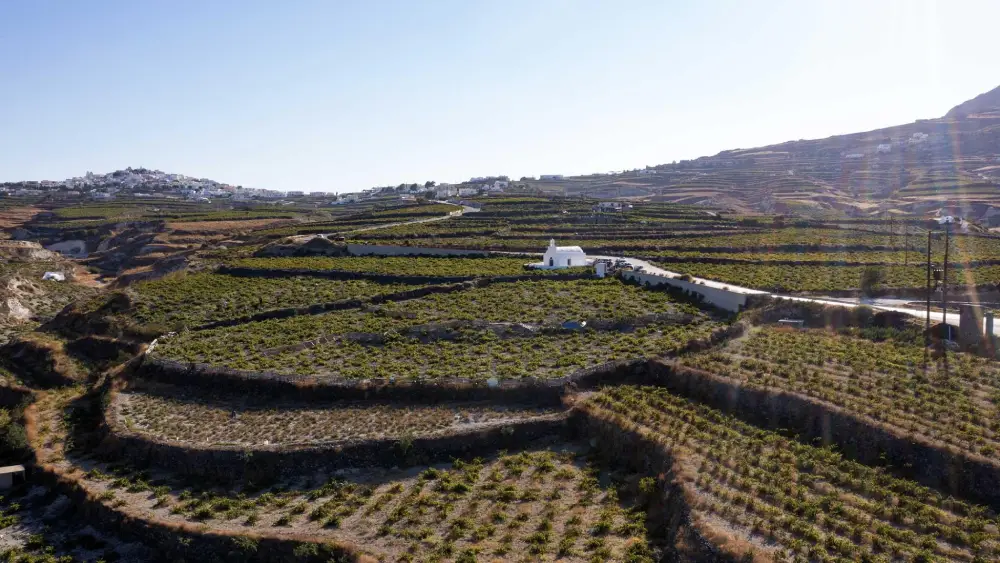
I only knew that I liked it very much. Such a wine has a strange rhythm, like the very energy of the volcanic eruptions that are frequent on this island. When you look at the vineyards and landscapes of Santorini, everything falls into place.

Santorini is a beautiful tourist paradise, but that is not the subject of this article. If that kind of information interests you, you will look for it elsewhere.
There are relatively few vineyards on Santorini, and the growing system together with the island’s very location mean the wines are relatively expensive. But it can generally be said that the quality mostly justifies the price. Wine enthusiasts and sommeliers around the world simply adore Assyrtiko from Santorini.
Among the white varieties, Aidani and Athiri are also found there, and among the reds Mavrotragano and Mandilaria. The total vineyard area on the island is around 1,200 hectares.
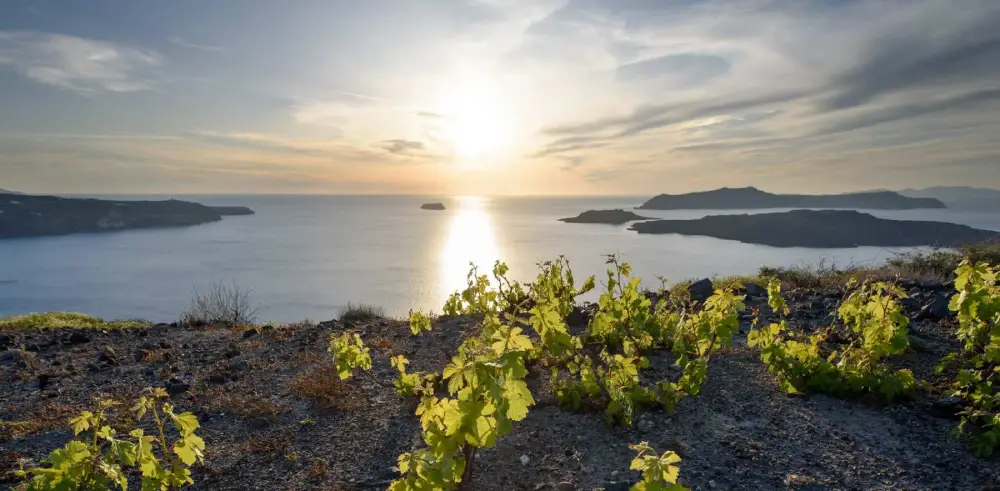
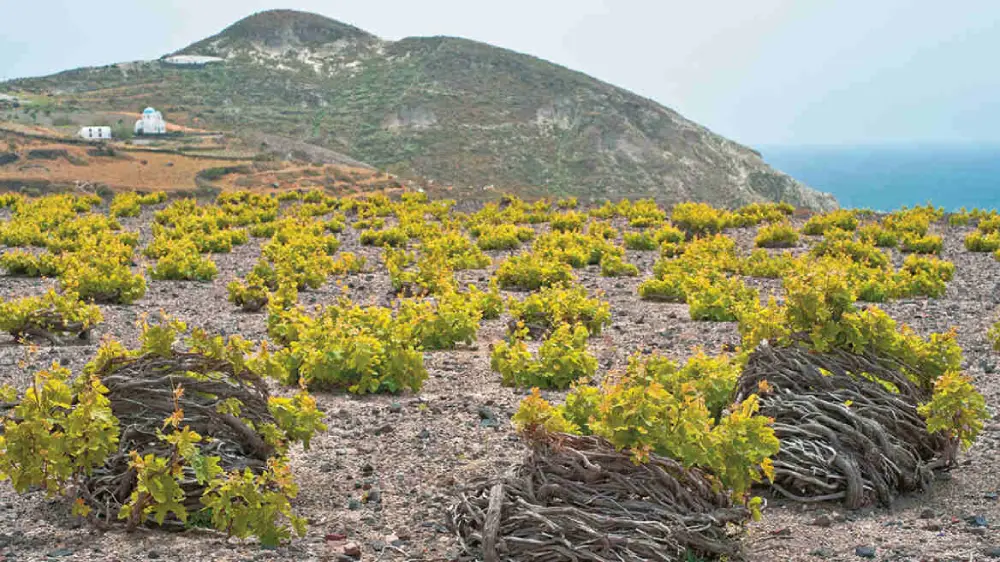
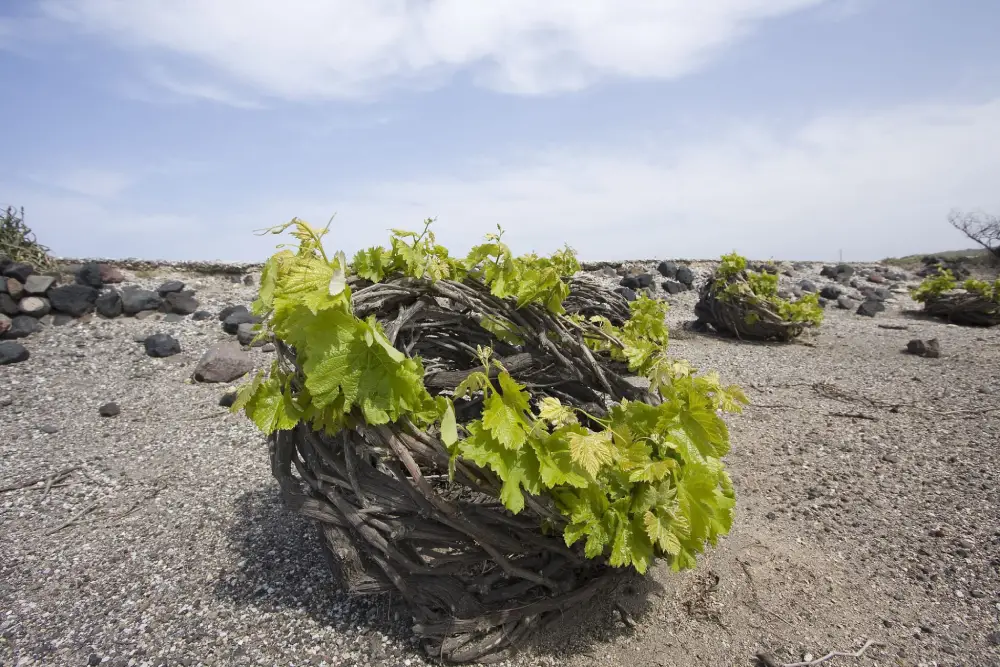
Assyrtiko is the most important variety. It is one of the oldest wine varieties in the world. The vines on the island are generally very old, some going back more than 100 years. It is also interesting that the island is immune to phylloxera, because the parasite cannot survive in volcanic soil. The vines are trained in the traditional koulara system – basket-like bushes resembling a woven basket, which protects the grapes from the effects of wind and sun.
The climate on Santorini is markedly Mediterranean, characterised by high temperatures, low rainfall and high humidity during the growing season. Very strong winds are present too.
How to describe Assyrtiko from Santorini?
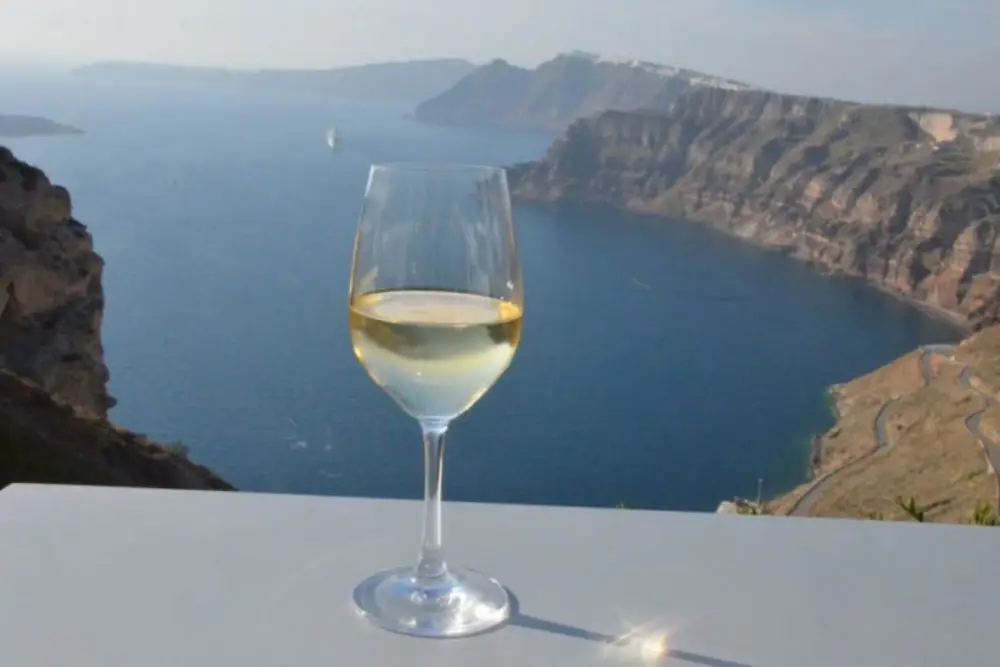
Assyrtiko from Santorini is marked by extremely high acidity, pronounced citrus notes and a clean, almost saline minerality. The body is medium to full, with an exceptional structure that allows long development in the bottle. Honeyed notes may emerge with longer ageing, along with various spice notes in wines aged in wood. But the underlying character is always present.
If you are a lover of Chablis, dry Riesling or especially Etna Bianco, you will surely take to Santorini Assyrtiko.
The wine is long-lived; most reach their peak after four to five years. Another interesting point is the very small variation between vintages, almost unusual for the wine world. Because of the stable climate, differences between harvests are considerably smaller than in most European regions; the variation is only in the quantity produced.
Another important wine is Vinsanto. This is a sweet wine, produced by sun-drying the grapes after harvest. It is a complex sweet wine of pronounced concentration, with a marked oxidative character and, like most sweet wines, it can last for decades.
Wineries I recommend:
- Argyros – traditional production
- Hatzidakis – the first internationally recognised winemaker not originally from Santorini
- Santo Wines – good value for the quality
- Sigalas – a traditionalist
- Vassaltis – the newest project, with exceptionally impressive wines
Since Santorini wines are hard to obtain on our local market, I suggest you use one of the wine search engines and get hold of a bottle or two. Better still, visit Santorini itself and taste the wines on the spot.
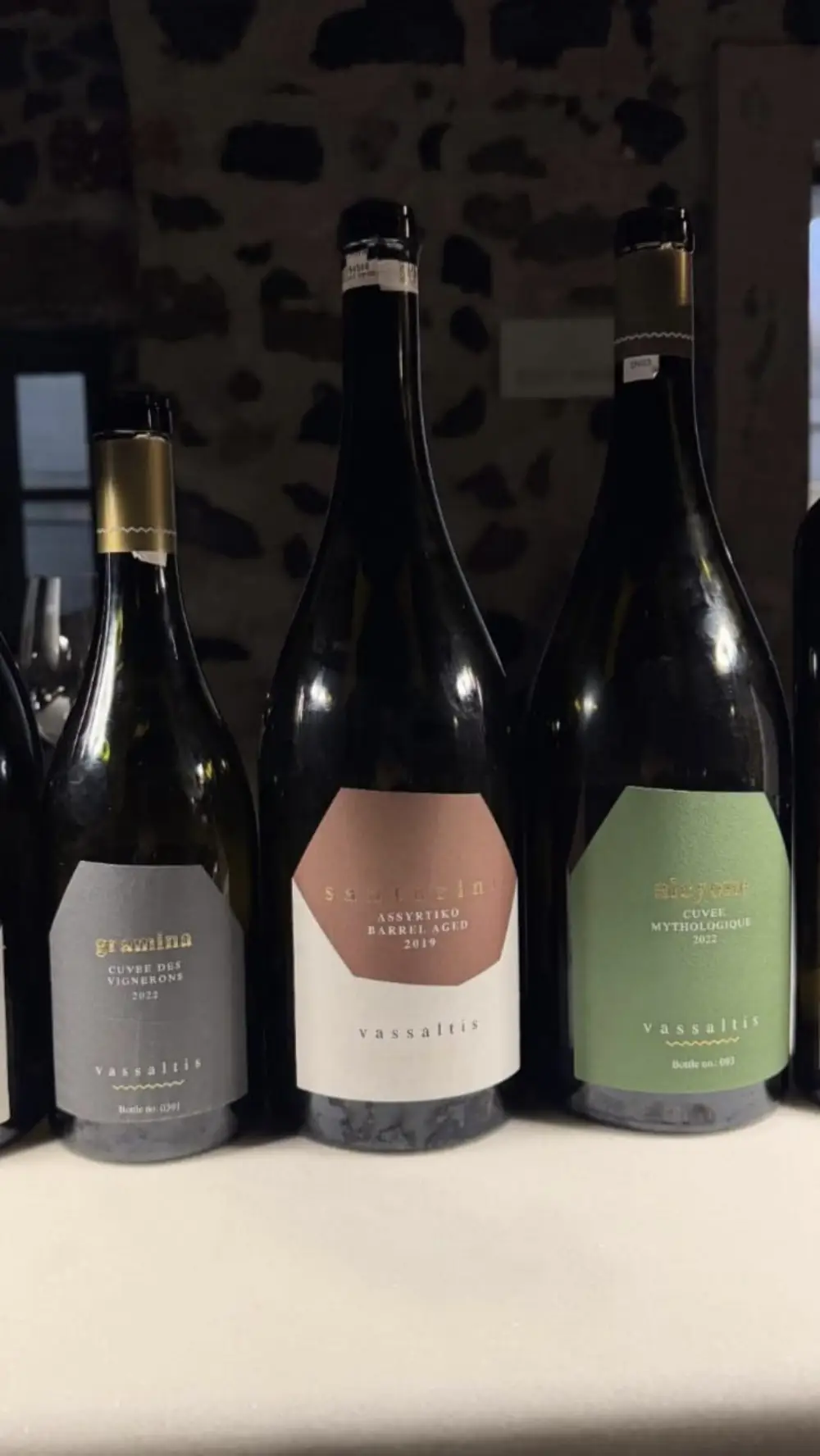
These wines are phenomenal companions to Mediterranean cuisine, especially fish and seafood.
It is a wine that perfectly conveys the character of the place it comes from. And so, if you can, at least once in your life taste a glass of Assyrtiko on Santorini with an unforgettable sunset.