

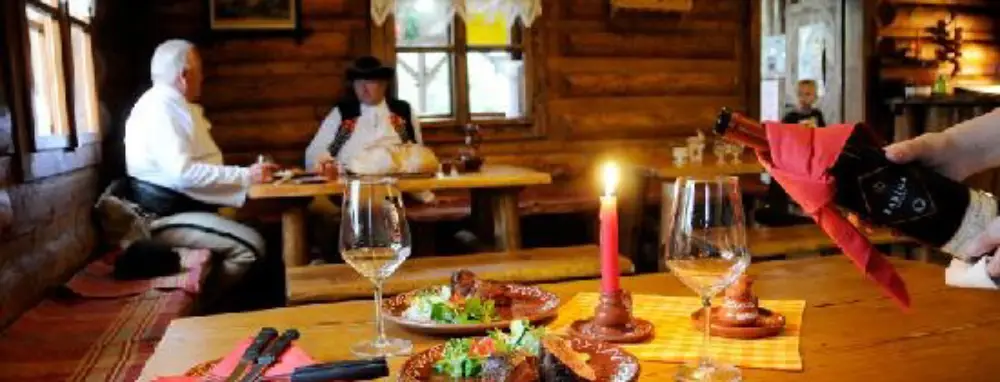
Nobody knows about Slovak cuisine. It’s a shame, Pavol, a chef at a restaurant in Prešov – a market town in eastern Slovakia, roughly halfway between the Hungarian and Polish borders – lamented to me. He is right. Thanks to lower prices, and to decent ski resorts, Slovakia is among Croatians’ favourite winter-tourism destinations, yet few will praise its food-and-wine offer. And there is plenty to praise. I myself once praised to Pavol the potato salad served as a side to cold breaded pikeperch. Slovak potato salad contains not only onion, oil and vinegar. It also has peas, carrot, pepper, mayonnaise… It is a dish that on its own can serve as a snack, and a perfect side to cold meat.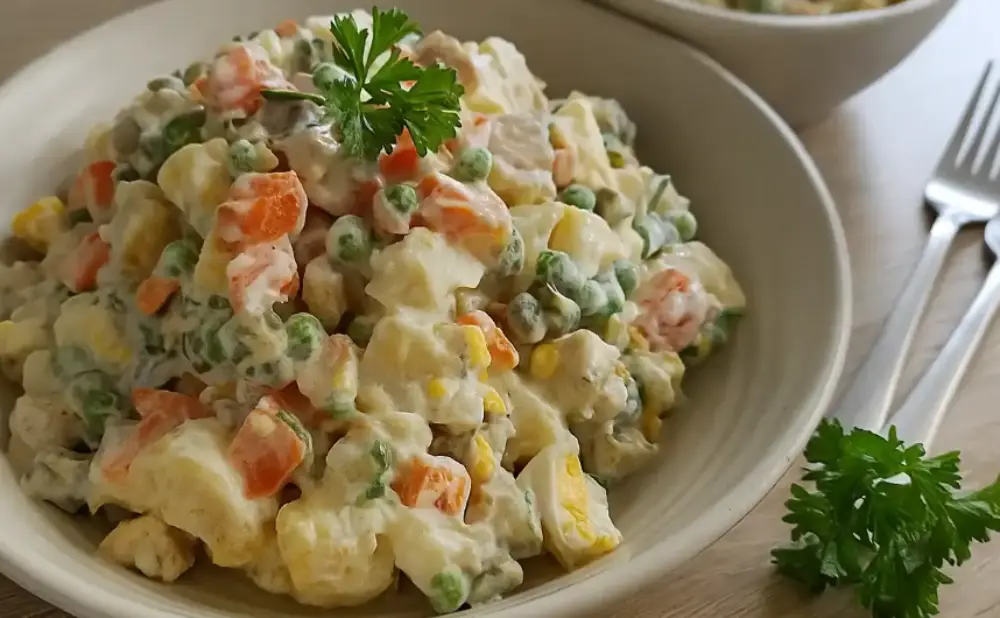
It’s nothing original, Pavol said, then continued: Our dishes are a combination of the culinary traditions of all our neighbours and all our regions. Slovaks are a simple people, workers and peasants who ate whatever grew where they lived. And when, on rare occasions, they travelled somewhere, they watched what others did and adopted what they liked – he explained, adding that in this way, over the last century, recipes emerged that today are characteristic of Slovakia alone. And perhaps of the Czech Republic, because the peaceful separation of the two states did not entirely separate the people or their customs. As for that pikeperch, it is a freshwater cousin of the sea bass, with even juicier flesh. It is also the usual meal on the road from Croatia to the High Tatras, where many will again head skiing this winter, whether driving via Austria or Hungary. What’s more, it is found once you cross the Polish border too, and it is not the only dish shared by all the lands of the former Austro-Hungarian monarchy. 
Breaded pork schnitzel – the pohani svinjski šnicl, or Wiener schnitzel – is another favourite of many travellers through these parts, because there is not much you can get wrong in preparing it. Slovaks love meat and meat products and, however much they may say they are poor, they often eat a great deal of it. They put it in soup, too, with which the usual lunch almost always begins. If it is chicken or beef soup, home-made knedli (dumplings) float in it. They also cook fazuľová soup, as they call bean soup, and serious pieces of meat float in the very popular kapustnica as well. That, in turn, is a sauerkraut soup with pork neck, bacon, sausage, mushrooms and cream, seasoned with clove, caraway, garlic, nutmeg and red paprika… Traditionally it is eaten on Christmas Eve, before the pikeperch with potato salad. A side to such a soup can be potato-dough pancakes rolled out to about half a centimetre thick, cut with a glass and fried in deep fat.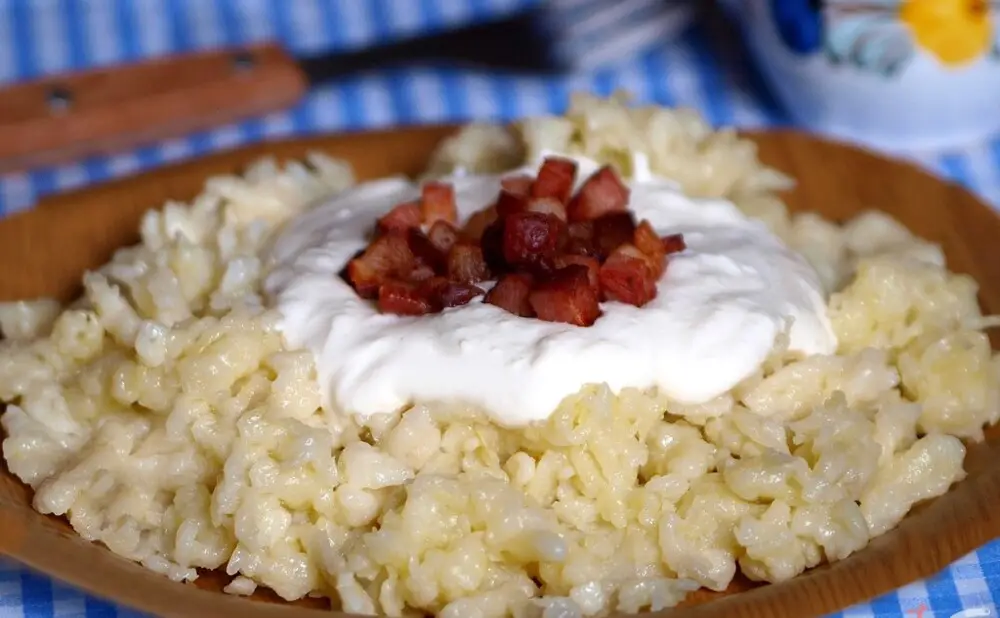
A typical Slovak dish, which can be served as a warm starter, is bryndzové halušky – potato-dough dumplings with the sheep’s cheese bryndza, which resembles feta. They are served on thin slices of crisped bacon. Meat dominates the main courses: poultry of all kinds, pork, beef and game, with lamb and kid only in some parts of this small but beautiful country. They rarely roast meat, mostly breading or frying it, and very often make goulashes and paprikashes – an obvious influence of Hungarian cuisine. Very interesting are the sweet dishes, which recall the cuisine of our western Slavonia, perhaps because a significant number of Slovaks and Czechs settled there during the Austro-Hungarian monarchy. Foremost are jam-filled knedli, similar to ours that we fill with plums or apricots. They also make the cakes popular here too – mačje oči (“cat’s eyes”) and medvjeđe šape (“bear’s paws”) – orehnjača (walnut roll), makovnjača (poppy-seed roll)… Bratislavské rožky, or kiflići (crescent rolls), are such a point of pride for the Slovak capital that the local association for the protection of gastronomic heritage took their name. They are filled with poppy seed and are always offered on the table so that guests can nibble while awaiting more serious fare.
Such food will suit skiers well, worn out and frozen on the slopes of the High Tatras, my chef Pavol laughs, answering whether Slovaks watch their calories. We don’t watch the fat either. We Slovaks believe that natural is always better than refined, so we don’t even use vegetable oils. With us, food is prepared only in pork lard. And that is why it is especially tasty, he claims. And few know that Slovakia is also a rather significant wine country. About 20 percent of the famous Hungarian wine region of Tokaj lies on the Slovak side of the border. Although Hungarians often claim that their Tokajis are better than those made by their northern neighbours, some producers, such as Jaroslav Ostrožovič, can fearlessly enter the wine duel with their Hungarian colleagues. In the Slovak part of that Hungarian wine region there are about 1,300 hectares of vineyards. That is roughly as much as is planted, for example, in Moslavina. Slovaks have five more wine regions, mostly along the southern borders, with a total of almost 20,000 hectares of vineyards – around 3,000 more than Croatia. 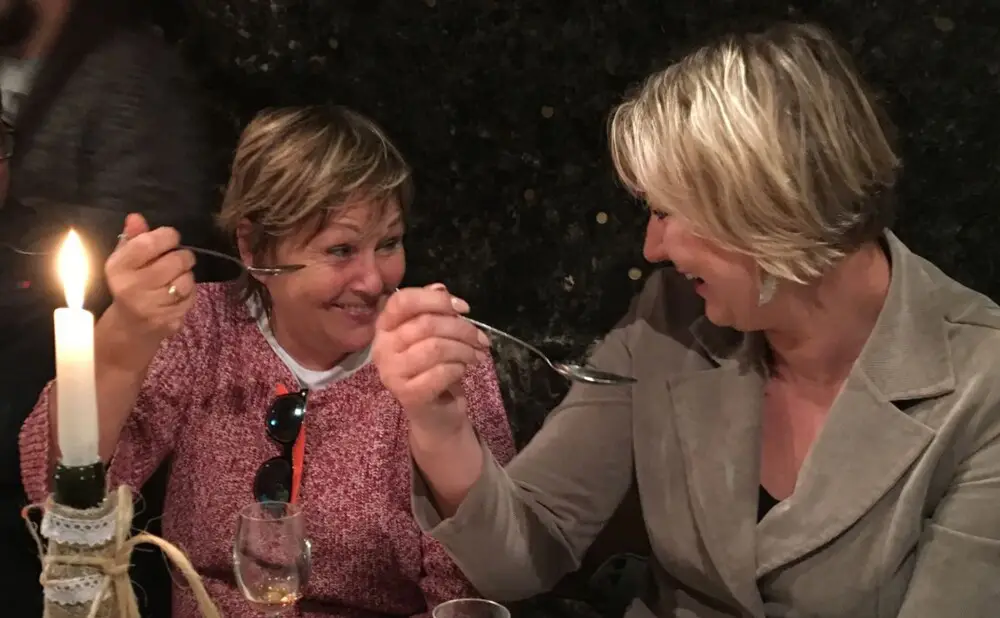
The range of varieties is similar to that in the continental part of our homeland, and the climate is quite cold, so some popular international varieties, especially the reds, have not really thrived. That is why, for decades, Slovaks crossed them to obtain new ones that would grow better, giving most of them names after rivers. Muscat Bouchet, probably a cross of some Muscat and Alicante Bouschet, they crossed with Portugieser, then crossed that new cross of crosses with Sankt Laurent (lovrijenec) and obtained a variety named after the river Danube – Dunaj. Reds from Dunaj are dense, harmonious wines with a nose of cherries and sour cherries. Winemakers say that with time they change slowly in the bottle, just as the Danube flows slowly through Europe, and with the years their palate takes on notes of chocolate. Six more crosses bear the names of Slovak rivers. These are Váh, named after the longest exclusively-Slovak river; Hron (second longest); Nitria (after the river Nitra); Rimava; Rudava; and Torysa. Rosa is a cross of Picpoul (piquepoul), an old variety from the valley of the French river Rhône, with Frankovka (Blaufränkisch) and the rose-scented Traminer Crveni (Red Traminer), from which the wine probably took its name.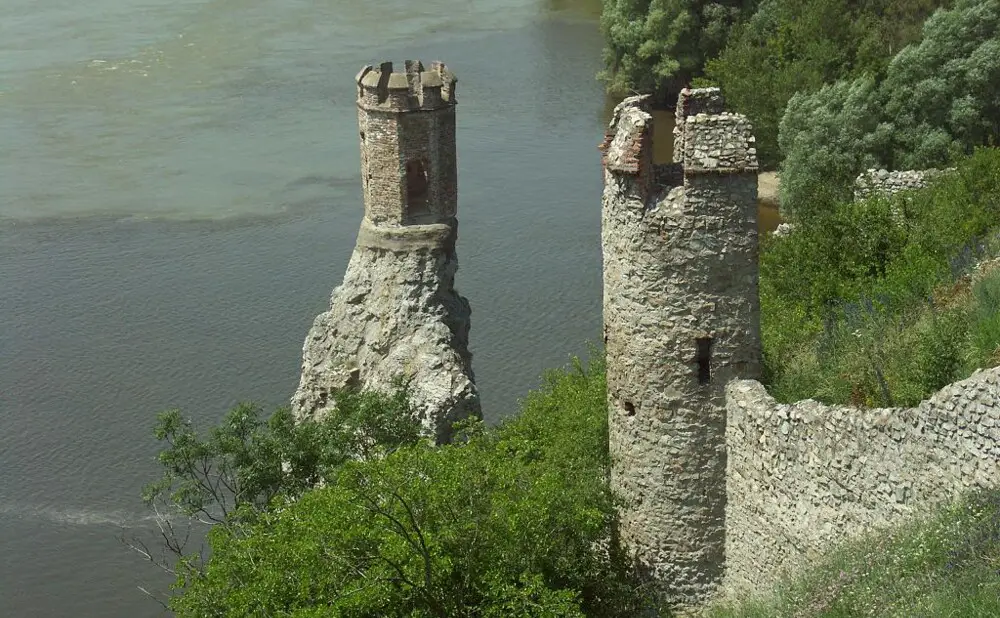
A unique Slovak variety is also the white Devín, which bears the name of the crag above the confluence of the Morava and the Danube and of the eponymous castle, whose rulers controlled river traffic for centuries. It is a cross of the aromatic Traminer and one of the Malvasias. It gives dry wines of powerful body, and as the grapes are often affected by noble rot, it is also suited to Prädikat wines. Such sweet wines smell of dried apricots and honey, and in history were reserved only for Slovak nobles. Today they will be fine for Slovak guests during the ski season too.
06.01.2026.